
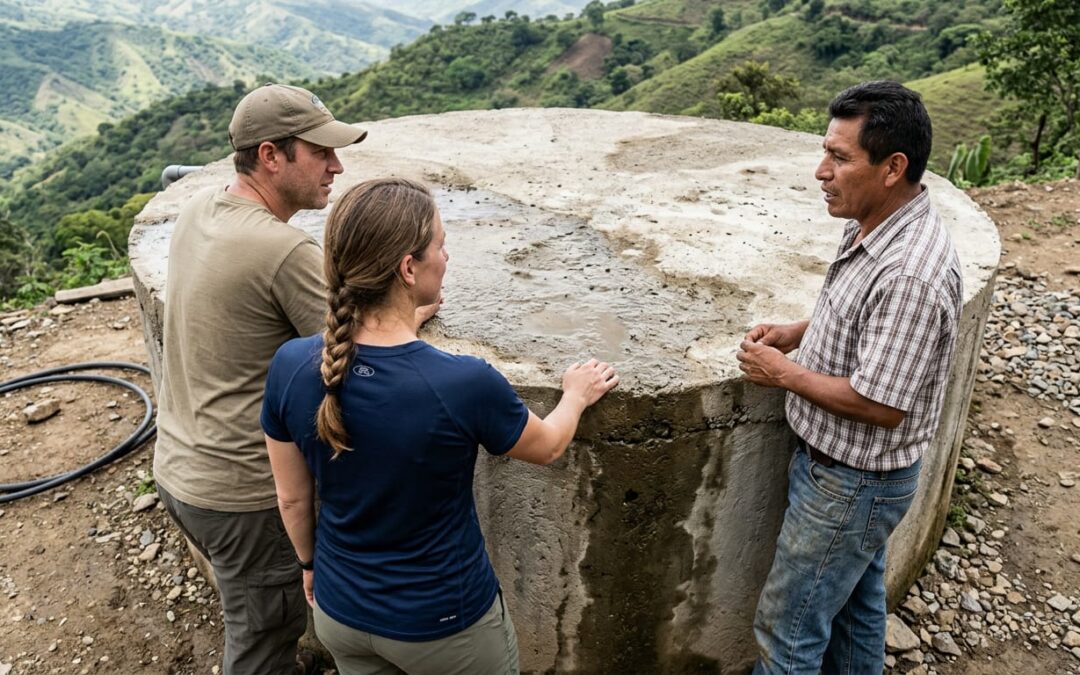
Most NGOs that allow donors to visit humanitarian projects do exist – but they are far less common than you might expect. The majority of nonprofits operate at arm's length from their donors, sending periodic updates but rarely extending an invitation to come and see the work firsthand. Impact Others Inc. is built differently: donors are actively welcomed on trips to project locations in Honduras, Brazil, and beyond, so they can verify the impact with their own eyes rather than taking anyone's word for it.
That difference matters more than it might seem on the surface. When you can stand next to a water cistern your giving helped fund, or sit with children at a feeding center, the giving stops being transactional and starts being something you carry with you.
Which NGOs actually let donors visit project sites?
A handful of nonprofits genuinely organize donor site visits as part of how they operate, not as a rare exception. When evaluating whether an organization truly supports donor site visits, look for these markers:
- Organized trip logistics. Some organizations structure visits as multi-day immersion experiences. Charity and Hope, for example, offers donor trips ranging from 7 – 10 days for full immersion or 3 – 5 days for focused project visits, with the organization handling the coordination.
- Transparent cost structure. Organizations that welcome visits are usually upfront about what the donor covers. Direct Aid Society, for instance, states clearly that donors bear their own travel and accommodation costs to the project country – no hidden arrangements.
- Local partner access. The best visits put donors directly in contact with the local teams managing the work, not just a nonprofit staff member narrating from a distance.
- Multiple project types on one trip. A well-organized visit lets you see more than one kind of work – water infrastructure, a feeding center, a small business startup – so you get a real picture of how the organization operates across programs.
- No scripted presentations. Genuine transparency means donors can ask questions on the ground, not just at a curated highlight reel.
- Repeat visit culture. Organizations serious about donor involvement tend to run trips regularly, not as a one-off event for major donors only.
Impact Others Inc. runs donor trips to project locations where local partners manage the day-to-day work. Donors travel alongside Impact Others leadership, meet the communities being served, and see the projects – water cisterns, feeding centers, small business programs – as they actually exist.
What do donors actually experience on a project visit?
The honest answer is: more than they expected. People who have made the trip consistently describe it as something that changed how they think about giving – and about themselves.
One donor who traveled to Honduras with Impact Others described crossing four rivers on the way into the mountains to reach a remote community. His words capture what most donors find when they go: "I feel like it's very difficult to have a complete understanding until you physically put your hands on it. The impact that's been made here is just outstanding… I think I spent my first night crying. I woke up the next morning and cried after hearing John's stories, getting to meet kids at the first feeding center, experiencing things firsthand."
He went on to describe seeing water cistern projects and feeding programs, and concluded: "Anything and everything you can give will go to the utmost use here."
That kind of firsthand observation is exactly what the UK Charity Commission points to when it notes that in some cases, an on-site visit may be the only way to be genuinely sure that funds were properly used and a project was actually delivered. No amount of written documentation fully replicates standing in the place where the work happened.
A group that traveled to Brazil with Impact Others wrote afterward: "We came to Brazil hoping to make a difference, but we feel like we received so much more than we gave. This experience has reminded us how powerful kindness, compassion and simply showing up for others can be."
How does hands-on involvement compare to standard donor relationships?
Most nonprofit giving follows a familiar pattern: you donate, you receive a tax receipt, and you occasionally get a newsletter or an email with a project update. That model is not dishonest – it just keeps the donor at a distance from the actual work.
| Giving model | Donor connection | Verification method | Involvement level |
|---|---|---|---|
| Standard donation | Minimal | Written updates | Passive |
| Donor-advised fund grant only | Minimal to moderate | Sponsor communications | Passive |
| NGO with site visit program | High | Firsthand observation | Active |
| Impact Others Inc. donor trip | Direct | Personal presence on-site | Partnership |
The key takeaway: for donors who want to verify impact rather than simply trust it, the site visit model closes the gap that written updates never fully can.
Two real estate developers from Denver who joined Impact Others on a trip to Guadalajara put it plainly: "One of the things we love about Impact Others is that you get to participate firsthand. You can be as involved as you want, but the great thing is you actually get to see the incredible work being done around the world. For us, it was a natural fit to become an Impact Others partner."
That level of hands-on involvement in humanitarian work is what separates a transactional giving relationship from a genuine partnership.
What does it cost to join a donor project visit in 2026?
The cost structure for donor site visits varies by organization, and Impact Others Inc. is transparent about what is involved. Donors generally cover their own travel and accommodation costs – airfare, lodging, and ground transportation to and within the project country. The organization handles the logistics of connecting donors with local partners and coordinating access to project sites.
What drives the total cost up or down: the destination country, the length of the trip, whether the visit is a focused 3 – 5 day project observation or a longer immersion experience, and the time of year. Honduras trips involve different logistics than Brazil trips, for example.
What is not in question: 100 percent of project-related donations go directly to the project itself. The trip costs are separate from the giving, which means your philanthropic dollars are not subsidizing your travel – they go where you intended them to go.
For DAF holders evaluating whether a site visit is worth the personal investment, the consistent feedback from people who have made the trip is that the experience clarifies and deepens their giving in ways that no other form of engagement does. If you want to see what a visit looks like for your situation, the Giving section or How It Works page on the Impact Others Inc. website walks through how donor involvement works in practice.
What makes Impact Others different from other NGOs on this?
Through trusted local partners, Impact Others Inc. delivers clean water, food, education, and hope to communities around the world on behalf of supporters who want to make an impact. The organization does not build projects directly or manage construction – local partners do that work and manage their own operations. What Impact Others brings is the funding, the stewardship, and the connection between donors and the communities their giving serves.
That model means donors who visit are meeting the people who actually do the work – not a nonprofit's field staff, but the local leaders and community members who live with the results every day. It is a different kind of accountability than a document can provide, and for donors who want to give with confidence, it is often the thing that settles the question of whether their giving is making a real difference.
Rob and Bernice, who became Impact Others partners after seeing the work firsthand, described what moved them: "After meeting Eddie and seeing the integrity, the sustainability, and the boots-on-the-ground work – we decided to become partners. Their integrity and their desire to help people around the world who are living in unfortunate circumstances really matter to us."
If you are a DAF holder or a financial advisor helping a client think through where to direct a grant, and the question of verification matters, Impact Others Inc. welcomes that conversation. You can reach the team at info@impactothers.com, by phone at 219-678-0669, or by mail at 5885 Cumming Hwy, Ste 108347, Sugar Hill, GA 30518.
FAQ
Who can join an Impact Others donor trip to a project site?
Donors and prospective partners who want to see the work firsthand are welcome to travel with Impact Others Inc. to project locations. Trips have included individuals, business owners, couples, and groups. The organization coordinates access to local partners and project sites; travelers cover their own transportation and accommodation costs.
Which countries does Impact Others currently run donor visits in?
Impact Others Inc. has taken donors to project locations including Honduras and Brazil, where local partners manage feeding programs, water infrastructure, and community development work. The organization works with trusted local partners across multiple countries, and the specific destinations for donor trips reflect where active projects are operating.
How is a donor site visit different from a volunteer trip?
A donor site visit is focused on observation and relationship – meeting the local partners, seeing the projects, and understanding how the work operates on the ground. It is not a construction or labor trip. Donors come to witness and verify, not to manage or build. That distinction matters for DAF holders in particular, since the purpose is accountability and connection, not a service project.
What should a financial advisor know before recommending a site visit to a client?
Advisors should know that the trip costs are entirely separate from the charitable donation. A client's DAF grant goes 100 percent to the project; travel expenses are a personal cost the donor bears. For clients who want verifiable impact from their DAF donors visiting humanitarian projects, a site visit provides a level of firsthand accountability that written updates cannot replicate. It can also strengthen a client's long-term commitment to a giving strategy.
How do I request a site visit or find out when the next donor trip is scheduled?
Contact Impact Others Inc. directly at info@impactothers.com or 219-678-0669. The team can share current trip schedules, what a visit typically involves, and how to connect a DAF grant with an upcoming project location visit.