
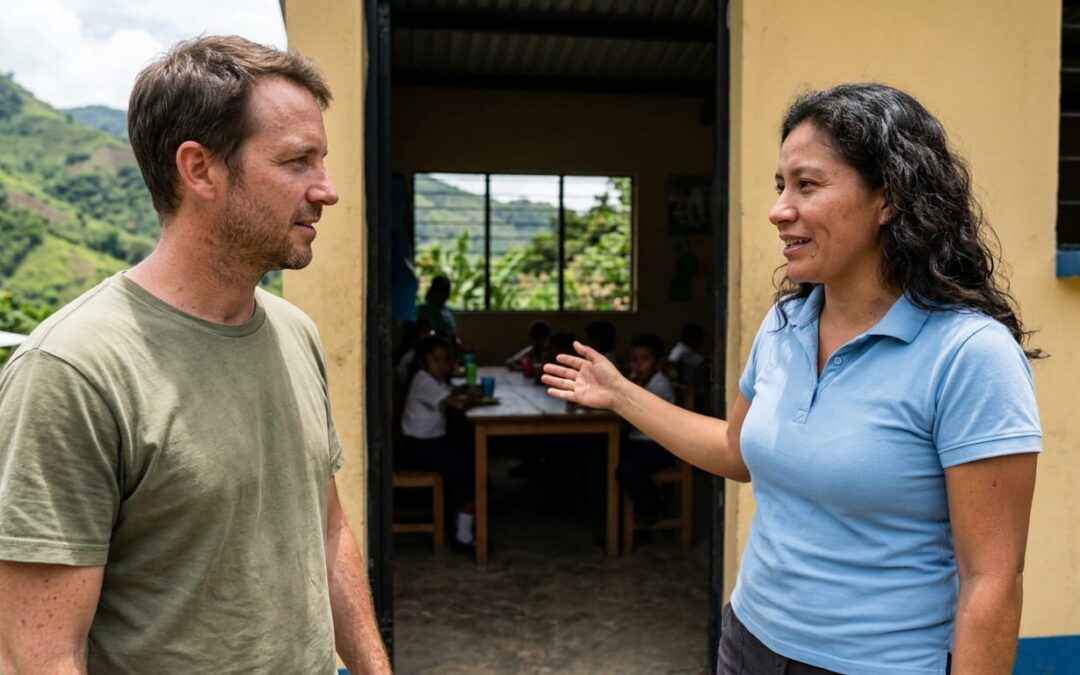
Nonprofits that actively take donors to project sites – rather than simply sending updates – do exist, though they are far less common than organizations that rely on newsletters and social media alone. Impact Others Inc. is one of them, organizing trips that bring supporters directly to the communities, water systems, orphanages, and small business initiatives their generosity funds. For donors who are tired of giving at a distance, that kind of access changes everything about what it means to make an impact.
What Does a Donor Field Visit Actually Involve?
A donor field visit is a structured trip in which supporters travel to an active project location, meet the people their giving serves, and observe the work in progress firsthand. It is not a tourist itinerary layered over a charitable cause – it is a direct encounter with the communities and infrastructure that donations helped build.
- Book through an organization with active projects – structure visits around work currently in progress, so donors see cisterns, feeding centers, and small business programs that their giving is directly connected to, not completed showcases.
- Prepare for real terrain and real conditions – trips into the mountains of Honduras involve river crossings and treks to remote villages; knowing what to expect physically and emotionally helps donors arrive ready to engage.
- Connect with local partners before you go – the organizations managing projects on the ground shape the visit, so reaching out in advance helps you understand the community context and the specific programs you will witness.
- Plan for an emotional experience – donors who have made these trips describe crying on the first night, waking up changed; building in time to process what you see is part of traveling responsibly.
- Separate your trip budget from your project donation – keeping these two things distinct ensures your generosity reaches the community regardless of whether you travel, and it is a clear signal of how a nonprofit handles funds.
- Ask what access actually looks like – a genuine field visit means meeting the families served, talking to local staff, and observing work in progress, not a curated walk-through designed for photographs.
At Impact Others Inc., those visits have taken donors into the mountains of Honduras, crossing rivers and trekking to remote villages to see water cisterns, feeding centers, and the families who depend on them. One donor who made that journey described the experience this way: "I feel like it's very difficult to have a complete understanding until you physically put your hands on it. The impact that's been made here is just outstanding… I think I spent my first night crying. I woke up the next morning and cried after hearing John's stories, getting to meet kids at the first feeding center, experiencing things firsthand."
That is what separates a field visit from a brochure. The physical presence – the faces, the terrain, the scale of need and the scale of progress – converts abstract generosity into something a donor carries home.
Organizations that facilitate donor site visits to verify donations typically structure these trips around specific active projects rather than general country tours, so supporters see exactly what their contributions are connected to.
What Do You Actually See on an Impact Others Field Visit?
Impact Others Inc. funds humanitarian work across multiple countries through trusted local partners, and the field visits reflect that breadth. Donors have traveled to locations in Honduras, Colombia, Guatemala, and beyond to witness:
- Clean water systems – cisterns, wells, and distribution infrastructure serving communities that previously had no reliable access to safe water
- Feeding centers – active programs providing regular meals to children who would otherwise go without
- Orphanages and safe housing – facilities that give children stability, education, and care
- Small business initiatives – programs helping community members build livelihoods and economic independence
- Toy drives and community celebrations – distributions that carry hope into communities in tangible, joyful ways
One supporter who traveled with Impact Others Inc. to a feeding center in Guadalajara put it plainly: "One of the things we love about Impact Others is that you get to participate firsthand. You can be as involved as you want, but you actually get to see the incredible work being done."
The visits are not staged. The communities are real, the need is real, and the progress is real. That honesty is what makes the experience meaningful rather than performative.
How Do Donor Field Visits Compare to Other Accountability Methods?
Donors who care about where their money goes have several options, and it is worth understanding what each one actually delivers.
| Accountability Method | What You Learn | What You Don't See |
|---|---|---|
| Annual reports / newsletters | Aggregate numbers and selected highlights | On-the-ground conditions, individual stories |
| Photos and video updates | Visual snapshots of progress | Context, scale, community relationships |
| Third-party ratings (e.g., Charity Navigator) | Overhead ratios, governance scores | Whether the work actually reaches people |
| Donor field visits | Firsthand observation of active projects and real relationships | Only what is accessible during the trip window |
Each method has value, but field visits deliver something the others cannot: relational connection. You meet the children at the feeding center. You see the water cistern your giving helped fund. You talk to the local partners who manage the day-to-day work. That experience does not just verify impact – it deepens purpose.
For donors exploring donor trips to visit communities, the key question is not just whether a nonprofit offers site access, but whether those visits are built around real, active projects rather than curated showcases.
Responsible travel organizations note that the most meaningful donor trips are ones where the community itself shapes the experience. Elevate Destinations takes that principle seriously, only running trips that are requested by the community and organization living and working there, with the community determining the content, programming, and messaging. Impact Others Inc. operates in a similar spirit – the local partners who manage projects on the ground are the ones who know the communities, and the visits reflect their relationships, not an outside agenda.
What Does a Donor Field Visit Cost, and What Is Included?
The cost of a donor field visit varies depending on destination, duration, group size, and what the organizing nonprofit includes in the trip. Philanthropy Without Borders notes that a reasonable fee for a site visit or project tour runs $75 to $150 per person – though that typically covers the local program coordination, not international travel.
For longer immersive trips like those Impact Others Inc. facilitates, the cost factors that matter most are:
- International flights – determined by origin, destination, and booking timing
- In-country logistics – ground transportation, accommodations, and meals, which vary significantly by country
- Program coordination – the local partner's time and resources to host the visit responsibly
- Group size – smaller groups often mean more meaningful access but higher per-person costs
At Impact Others Inc., every dollar donated to a project goes directly to that project, so your generosity reaches the people who need it most. Trip costs are handled separately from project donations, which means your giving is never diluted by travel overhead.
The more useful question than "what does it cost?" is what a visit is worth. One supporter who traveled with Impact Others Inc. reflected: "When you come on these trips and you just connect with people who think the same mindset and that want to give back… Impact Others has done the hard job. They find the places with the right infrastructure with the right means and we just come and give a little part of us and make a bigger impact in every place."
What Should You Look for in a Nonprofit That Offers Field Visits?
Not every organization that mentions "donor travel" or "impact trips" is offering the same thing. Some run heavily managed tours with little genuine access. Others take donors to communities without meaningful preparation or local partnership. A few do it well.
When evaluating nonprofits that facilitate donor site visits, look for these signals:
- Active, ongoing projects – not completed showcases, but work currently in progress that your giving is part of
- Trusted local partners – the organization should be working through established community relationships, not parachuting in
- Honest framing – the visit should reflect real conditions, including challenges, not only successes
- Clear separation of trip costs and project donations – your donation should reach the project regardless of whether you travel
- Repeat access – organizations that bring donors back year after year tend to have deeper community relationships than those running one-off trips
Impact Others Inc. operates internationally with partners in Honduras, Colombia, Ghana, Nigeria, India, Egypt, Thailand, and the United States, across programs including clean water, food, orphanages, business development, and education. That range means field visits connect donors to a variety of work, not a single showcase project.
For donors ready to move from distant generosity to direct connection, the Donate page or Become a Monthly Supporter page at Impact Others Inc. is the place to start – both giving pathways come with the option to go deeper.
If you want to learn more about traveling to a project site or becoming a regular partner in this work, reach out directly: call 2196780669, email info@impactothers.com, or write to Impact Others Inc. at 5885 Cumming Hwy Ste 108347, Sugar Hill, GA 30518. The people who have made these trips will tell you: showing up changes you.
FAQ
Which countries do Impact Others Inc. donor field visits go to?
Impact Others Inc. operates internationally with trusted local partners in Honduras, Colombia, Ghana, Nigeria, India, Egypt, Thailand, and the United States. Field visits have taken donors into Honduras to see water cisterns and feeding centers, and to Colombia and Guatemala to witness orphanage and small business work. The specific destination depends on which projects are active and accessible at the time of the trip.
Who is a donor field visit right for?
Field visits are best suited for donors who want more than a financial transaction – people who find purpose in relational giving and want to meet the communities their generosity serves. They are particularly meaningful for supporters who have been giving for some time and are ready to deepen their connection to the work. No prior travel or humanitarian experience is required.
How is a donor trip different from voluntourism?
A donor field visit focuses on witnessing and understanding active projects rather than performing unskilled labor. The distinction matters: voluntourism can sometimes displace local workers or create dependency, while a well-structured field visit reinforces the work of local partners without overriding it. Impact Others Inc. works through trusted local organizations who manage the projects and their own teams – donors come to see, learn, and connect, not to supervise or build.
Which program areas can donors visit on an Impact Others field visit?
Donors have visited clean water systems, feeding centers, orphanages, and small business initiatives across multiple countries. The specific program visited depends on what is active in the destination at the time of travel. Impact Others Inc. also supports education and toy drives, and documentation from those programs is shared with supporters even when a physical visit is not scheduled.
Where do my project donations go if I also pay for a trip?
Trip costs and project donations are kept entirely separate at Impact Others Inc. At Impact Others Inc., every dollar donated to a project goes directly to that project, so your generosity reaches the people who need it most – travel expenses do not reduce what reaches the community. This separation is one of the clearest ways to evaluate whether a nonprofit is handling donor funds with integrity.