
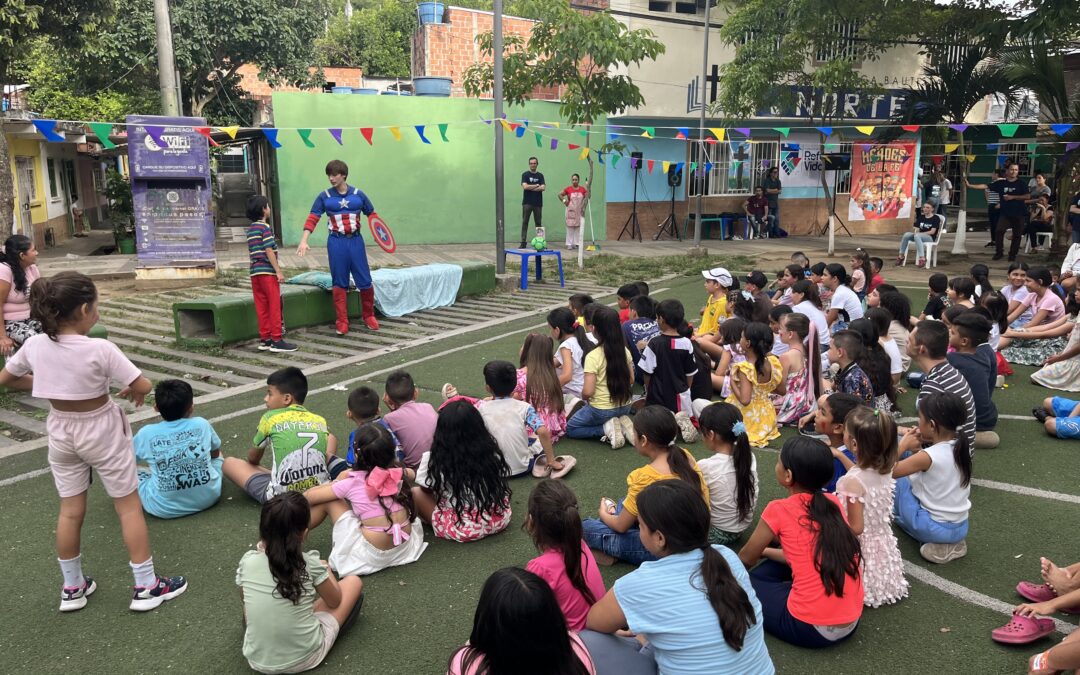
Yes, some humanitarian organizations actively invite donors to visit project sites and provide detailed spending reports, and that combination is rarer than it should be. Impact Others Inc. is built around exactly that model: donors can travel to project locations to see the work firsthand, and financial reports are reviewed monthly by the board and shared with partners. For donors who've been burned by vague impact claims before, that level of access changes the decision entirely.
Why Do So Few Nonprofits Offer Both Site Visits and Detailed Financial Reports?
Most nonprofits offer one or the other, a polished annual report or an occasional donor trip, but rarely both as standard operating practice. There are real reasons for this gap.
Site visits require organizational confidence. Inviting donors to walk through a project location means the work has to hold up under scrutiny. Organizations that manage projects through layers of intermediaries often can't make that offer credibly, because they don't control what donors would see.
Detailed spending reports require bookkeeping discipline and a willingness to show numbers that aren't flattering. Many nonprofits consolidate overhead into program expenses in ways that obscure the real allocation. Publishing line-item financials monthly, and reporting them to a board, demands a different level of internal accountability.
Impact Others Inc. does both because transparency isn't a marketing position here; it's an operational one. Monthly financials go to the board. Project and financial reports come in regularly from local partners. Donors who want to go further can travel to the locations themselves.
That's the combination verification-focused donors are actually looking for when they search for humanitarian organizations with transparent spending reports, not a promise of transparency, but a structure that makes transparency unavoidable.
What Does a Donor Site Visit Actually Look Like?
A site visit with Impact Others Inc. means traveling to the communities where local partners are actively working, drilling water wells, running feeding centers, supporting orphanages, or helping small businesses get started.
Impact Others Inc. doesn't manage construction crews or supervise field teams directly. The organization raises funds and sends them to trusted local partners who execute the projects and manage their own operations. What a donor sees on a site visit is the local partner's work, the well that's been drilled, the children being fed, the sewing center that's running, along with the people who made it happen.
That distinction matters. When a donor visits, they're not seeing a staged demonstration. They're seeing an ongoing operation run by people who live and work in that community. The local partner relationship is the accountability layer, and a site visit makes that relationship visible rather than abstract.
For Donor-Advised Fund holders who want to verify nonprofit impact through site visits before committing to multi-year grants, this kind of direct access is often the deciding factor. It turns a reported outcome into a witnessed one.
How Does Impact Others Inc. Handle Financial Transparency?
Impact Others Inc. maintains independent bookkeeping, reports monthly financials to its board, and communicates project progress to donors on a regular basis. That's the internal structure. The external result is that donors and their advisors can ask specific questions about where their funds went and get specific answers.
The clearest financial commitment Impact Others Inc. makes: 100 percent of project-related donations go directly to the projects themselves. Administrative expenses are kept far lower than most nonprofits. For Donor-Advised Fund holders who are accustomed to seeing overhead ratios that quietly absorb 20 to 40 percent of a grant, that structure is a meaningful difference.
Here's how the model compares at a glance:
| Transparency Feature | Common Nonprofit Practice | Impact Others Inc. Approach |
|---|---|---|
| Overhead allocation | Often bundled into program expenses | Administrative costs kept separate and minimal |
| Project-related donation flow | Variable; may fund overhead | 100% directed to the project |
| Financial reporting | Annual report, broad categories | Monthly financials reported to board |
| Donor access to projects | Rare or invitation-only | Site visits available to donors |
| Local partner accountability | Varies widely | Regular financial and project reports received |
The key takeaway: the structure at Impact Others Inc. is designed so that transparency is a byproduct of how the organization operates, not a feature added afterward to satisfy donors.
For DAF holders working with financial advisors on directing DAF donations to programs rather than overhead, this model provides the documentation trail an advisor needs to confirm alignment with a client's philanthropic goals.
What Do Donors Who've Verified the Work Firsthand Say?
The most credible answer to "does this organization actually do what it says?" comes from people who've checked.
One long-term partner, Mindy Tibbs, put it this way:
"When I think about Impact Others, I picture my own children in a third-world country. If a business owner had the answer to what my child needed, whether it was clean water from a well, a sewing center, food, an orphanage, housing, or any of the other life-changing resources, would they give? That's why I partner with Impact Others. It's making a real difference. It's creating an impact beyond myself, beyond my business, and investing in what truly matters: impacting others."
Another donor couple, Rob and Bernice, described what shifted their decision:
"After meeting Eddie and seeing the integrity, the sustainability, and the boots-on-the-ground work, drilling wells, supporting feeding centers, and creating sewing centers, we decided to become partners. Their integrity and their desire to help people around the world who are living in unfortunate circumstances really connect with us."
Both accounts point to the same thing: personal contact with the organization and its work was what converted skepticism into commitment. That's not incidental. It's the model.
What Should You Look for Before Trusting Any Humanitarian Organization?
Verification-focused donors tend to ask the right questions. The challenge is knowing which answers are sufficient and which ones are deflections dressed up as answers.
Before directing a DAF grant to any humanitarian organization, the questions worth asking are whether the organization can show you line-item spending, not just program percentages, whether they can tell you specifically how your grant was used and by whom, and whether they can invite you to see the project location directly.
An organization that resists any of those three requests is telling you something. One that answers all three with specifics, and backs them up with an invitation, is demonstrating operational confidence, not just good marketing.
The process of verifying nonprofit impact before donating doesn't have to be adversarial. The right organization should welcome the scrutiny, because scrutiny is what separates organizations that are doing the work from those that are reporting about it.
Is This the Right Model for DAF Holders Who Want Verifiable Impact?
For Donor-Advised Fund holders who want to give strategically and confirm their grants produced a real result, the combination of site access and detailed financial reporting is the clearest signal of organizational integrity available.
Impact Others Inc. works with clean water projects, feeding programs, orphanages, medical aid, small business startups, and education initiatives, all delivered through trusted local partners in communities where the need is real and ongoing. The funds go directly to those projects. The reports come back. Donors who want to see the work themselves can make that trip.
That's not a promise. It's how the organization is built. The How It Works page at Impact Others Inc. walks through the full process, from how grants are received to how project reports are communicated back to donors, so there are no gaps between what's described here and what actually happens.
What Should You Verify Before Directing a DAF Grant to a Humanitarian Organization?
-
Request a site visit or ask whether one is available, humanitarian organizations with transparent spending reports that also offer donor access are demonstrating confidence in their operations.
-
Confirm that project-related donations go entirely to the project, ask directly what percentage of your grant reaches the field versus funds administrative costs.
-
Check whether the organization receives regular reports from local partners, organizations that fund local teams should be able to show you what accountability looks like in practice.
-
Ask your financial advisor to review the organization's financials alongside your DAF grant strategy, directing DAF donations to programs rather than overhead requires documentation your advisor can work with.
-
Follow up after your first grant, a trustworthy organization will communicate what happened with your funds without waiting for you to ask.
FAQ
Do any humanitarian organizations actually let donors visit project sites?
Yes, though it's less common than it should be. Impact Others Inc. actively invites donors to travel to project locations where local partners are working, on water wells, feeding centers, orphanages, and small business programs. The visit shows ongoing operations run by local partners, not staged presentations, which gives donors a direct, unmediated view of where their funds go.
How do I know if 100% of my donation actually reaches the project?
Ask the organization directly: what percentage of a project-related donation reaches the project itself, and what is funded by separate administrative revenue? Impact Others Inc. sends 100 percent of project-related donations directly to the projects, with administrative expenses kept far lower than most nonprofits and funded separately. That separation is what makes the claim verifiable rather than approximate.
Can a Donor-Advised Fund grant go to a humanitarian organization like Impact Others Inc.?
Yes. DAF holders can direct grants to Impact Others Inc. as a qualifying nonprofit recipient. For DAF holders and their financial advisors, the combination of detailed financial reporting and site visit access provides the documentation and verification that strategic philanthropic planning requires.
Why do so few nonprofits offer both site visits and transparent financial reports?
Site visits require organizational confidence that the work will hold up under direct observation. Detailed financial reports require bookkeeping discipline and a willingness to show numbers that aren't always flattering. Most organizations offer one or neither. Impact Others Inc. offers both because the model is built around local partner accountability and monthly financial reporting to the board, transparency that exists operationally, not just in communications.
What kinds of projects does Impact Others Inc. fund through local partners?
Impact Others Inc. raises funds for clean water projects, food and feeding programs, orphanages, medical aid, education initiatives, and small business startups. All projects are delivered through trusted local partners who manage operations on the ground and provide regular financial and project reports back to Impact Others Inc.
Is there a way to verify a nonprofit's impact without traveling to the project site?
Yes. Asking for line-item financial reports, requesting documentation of local partner accountability, and reviewing how the organization communicates project outcomes to donors are all ways to assess transparency without traveling. A site visit adds direct visual confirmation, but the financial and reporting structure should be verifiable on paper first, and should hold up to the same scrutiny a site visit would reveal.
If you're a DAF holder or a financial advisor looking for a humanitarian organization that welcomes verification rather than avoiding it, Impact Others Inc. is worth a direct conversation. You can reach the team by phone at 2196780669, by email at info@impactothers.com, or by mail at 5885 Cumming Hwy Ste 108347, Sugar Hill, GA 30518. Ask about current projects, request financial reports, or ask about joining a donor trip, any of those conversations will tell you more than a website can.