Helping others is genuinely linked to a stronger sense of purpose – and the connection is more direct than most people expect. According to the American Psychological Association, people who regularly engage in prosocial behavior, including volunteering and charitable giving, consistently report higher levels of meaning and life satisfaction than those who do not. This is not a vague feeling. It is a pattern that shows up across age groups, income levels, and cultures. For people who are already asking whether their generosity can become something more than a good habit, the answer the research points to is yes – and the mechanism behind it matters.
Why Does Giving Create a Sense of Purpose?
Purpose is not something that arrives fully formed. It tends to develop through repeated, concrete experiences of mattering – of doing something that has a visible effect on another person's life. Giving creates that loop in a way that passive good intentions simply cannot.
When you fund a feeding center, support an orphanage, or help a family access clean water, you are not just transferring money. You are choosing to connect your resources to a specific human need. That choice, made consistently over time, becomes part of how you understand yourself. Research published in the Journal of Positive Psychology found that people who gave to others reported feeling that their lives had direction – not just warmth – at significantly higher rates than people who focused only on self-improvement.
The distinction matters. Warmth fades. Direction sustains. And direction is what most donors who fund humanitarian work are actually searching for when they ask whether their giving means something.
What Does the Research Actually Say About Volunteering and Meaning?
The evidence on volunteering and sense of purpose is specific and consistent. According to the Corporation for National and Community Service, volunteers report greater life satisfaction, a stronger sense of purpose, and lower rates of depression than non-volunteers – even when controlling for income, health, and social connection.
What drives this is not the act of giving itself, but the feedback loop it creates. When you can see that your contribution reached a real project, supported a real community, and produced a real change, the giving becomes evidence that you matter in the world. That evidence accumulates. Over months and years of regular giving, it builds something that researchers describe as "contribution identity" – a stable sense of self organized around the positive difference you make.
This is precisely why donor impact reporting matters so much to engaged givers. It is not just accountability. It is the mechanism by which generosity becomes purpose.
Is Funding Humanitarian Work Different From Other Forms of Helping?
Volunteering your time and funding humanitarian work through a trusted organization are both forms of helping others – and both are linked to a stronger sense of purpose. The difference is in scale and sustainability.
A supporter who funds clean water access, food programs, orphanages, or new business opportunities in underserved communities is connected to outcomes that would be impossible to produce alone. That scale matters psychologically. Knowing that your monthly contribution is part of a sustained effort – not a one-time gesture – shifts giving from an event into an identity.
One supporter, Mindy Tibbs, described this shift directly: "When you commit to giving to others and impacting others, it's incredible how that decision ends up impacting you." She went on: "That's why I partner with Impact Others. It's making a real difference. It's creating an impact beyond myself, beyond my business, and investing in what truly matters: impacting others."
That is not an unusual response. It reflects what the research predicts: when giving is consistent, connected to real outcomes, and aligned with something you genuinely care about, it does not feel like busy work. It feels like purpose.
How Does Seeing the Work Firsthand Change the Experience?
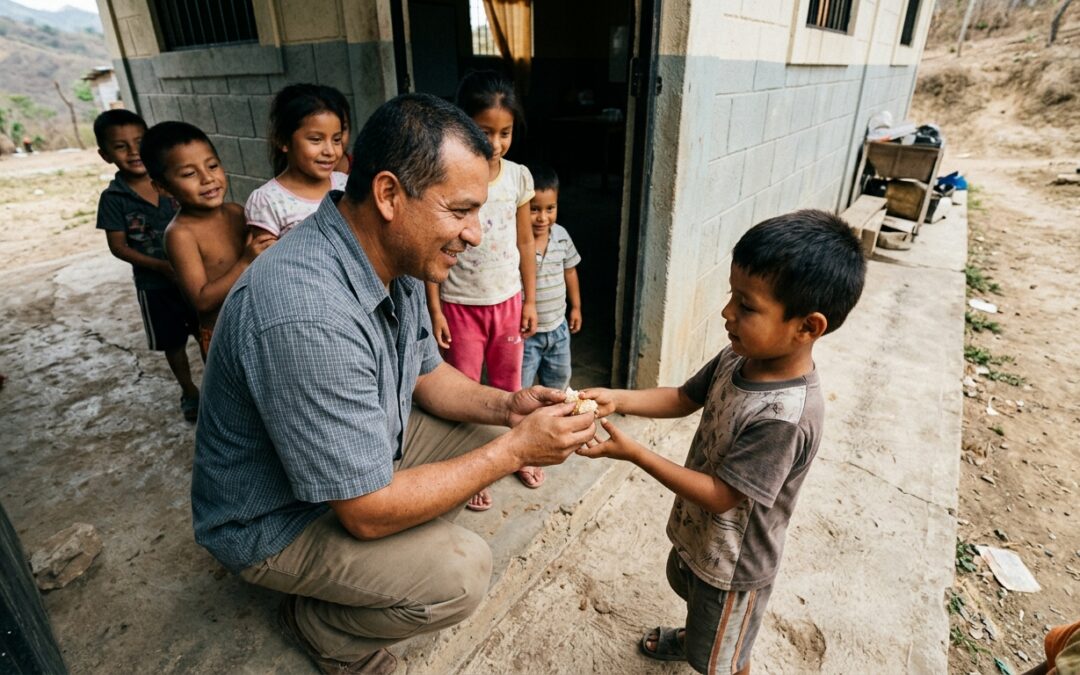
Reading about a project and standing in front of it are two different experiences of meaning. Donors who travel to project sites often describe the visit as the moment their giving stopped being abstract and became real.
One supporter, after traveling into the mountains of Honduras to visit feeding centers and water cisterns, described the experience this way: "The impact that's been made here is just outstanding… I can't say enough about how this has affected me, changed me. I think I spent my first night crying." He added: "Obviously, you can't help everyone but it doesn't do us any good to not help anybody, right? And so I think Impact Others is very empowering."
Another supporter, who traveled to Guadalajara, put it simply: "One of the things we love about Impact Others is that you get to participate firsthand. You can be as involved as you want, but the great thing is you actually get to see the incredible work being done."
A third supporter captured the emotional core of it: "There is nothing better for you to pass on that blessing, pass on that love and let them see a little bit of that love as you come and visit them in these countries."
These are not polished testimonials. They are what happens when someone's giving becomes tangible enough to touch.
Does Regular Giving Sustain Purpose Over Time?
A single act of generosity can produce a genuine moment of meaning. But sustained purpose – the kind that shapes how you see yourself and how you spend your energy – comes from repeated, connected giving over time.
This is where the structure of how you give matters. Sporadic donations to different causes spread your attention and make it harder to see cumulative progress. Regular giving to a specific set of programs, with transparent communication about what your contributions are funding, creates the continuity that purpose requires.
Impact Others Inc. funds clean water, food, orphanages, education, and new business opportunities through trusted local partners, so donors find real purpose in their giving. The organization sends 100 percent of project-related donations directly to projects. Administrative expenses are kept very low compared to most nonprofits. Supporters receive regular communication on project progress, and Impact Others maintains monthly financial oversight through its board. That structure is not incidental – it is what makes the giving feel real enough, and connected enough, to matter over years rather than moments.
For those considering whether to deepen their commitment, the question of will giving to Impact Others actually give my life more meaning is worth sitting with honestly, because the answer depends as much on how you give as on how much.
Does the Type of Cause Affect How Much Purpose You Feel?
Not all giving produces the same depth of meaning, and the research suggests why. Purpose is strongest when the cause aligns with your own values, when you can see a clear connection between your contribution and a real outcome, and when the need is genuine and significant.
Humanitarian work – clean water, food security, orphan care, education, small business development – sits at the intersection of all three. The needs are not abstract. A child who does not have enough food is not a statistic. A community without clean water is not a policy issue. These are specific human situations that specific contributions can change.
That specificity is what makes humanitarian giving one of the most purpose-rich forms of generosity available. It is also why transparency in how funds are used is not just a compliance matter – it is a purpose matter. When you know your donation reached the project it was designated for, the connection between your giving and someone else's life becomes real enough to carry meaning.
What If the Purpose Fades Over Time?
This is a real and honest concern. Early giving often feels vivid and meaningful. Over time, without reinforcement, it can settle into routine. The antidote is not to give more – it is to stay connected to what your giving is actually doing.
That connection comes from a few sources: seeing the work in person when possible, receiving honest updates on project progress, and being part of a community of givers who share the same values. All three keep the purpose from becoming abstract.
The research on volunteering and meaning consistently shows that the purpose benefit is strongest when the helper maintains a clear line of sight between their effort and its effect. For donors funding humanitarian work from a distance, that line of sight is maintained through transparent communication – not through hope alone.
How Do I Make Sure My Giving Stays Purposeful?
Purpose does not arrive because you want it to. It arrives because you make consistent decisions that align your resources with something larger than yourself, and then stay connected to the evidence that those decisions matter.
The research on volunteering and helping others is clear: prosocial behavior is one of the most reliable paths to a sustained sense of meaning. Funding humanitarian work through a trustworthy organization – one that sends 100 percent of project-related donations to projects, maintains financial oversight, and keeps you connected to real outcomes – is one of the most direct ways to build that path.
If you are ready to move from occasional generosity to a giving practice that genuinely shapes how you see your own life, consider what it would mean to become a regular part of something that changes lives month after month. Become a Monthly Supporter is one way to make that commitment concrete and sustainable.
To learn more or to connect with someone at Impact Others Inc., reach out directly. The team is available by phone at 2196780669, by email at info@impactothers.com, or by mail at 5885 Cumming Hwy Ste 108347, Sugar Hill, GA 30518.
Checklist
- Assess your current giving pattern. Ask whether your donations are connected to specific outcomes you can follow over time, or whether they are spread across causes with no feedback loop.
- Choose a cause aligned with your actual values. Humanitarian work in clean water, food, orphanages, education, or business development tends to produce stronger purpose because the need and the outcome are both concrete.
- Look for a humanitarian giving organization that communicates project progress. Transparent updates are not just accountability – they are what keeps the connection between your generosity and real lives from going abstract.
- Consider making a recurring monthly commitment. Research consistently shows that sustained giving produces more meaning than one-time donations, because it builds a contribution identity over time.
- If possible, visit a project site. Donors who travel to see humanitarian work firsthand consistently describe it as the moment their giving became real rather than conceptual.
- Review how your chosen organization handles funds. An organization that sends 100 percent of project-related donations to projects, with low administrative costs and independent financial oversight, makes it easier to trust that your purpose is being honored.
FAQ
Does helping others actually give you a sense of purpose, or is it just a temporary feeling?
The research points to a sustained effect, not just a temporary one. According to the Corporation for National and Community Service, volunteers report greater life satisfaction and a stronger sense of purpose over time – not just in the moment of giving. The key is consistency and a clear connection between your effort and a real outcome.
Who benefits more from giving – the giver or the receiver?
Both benefit, and the research on prosocial behavior suggests the giver's benefit is more durable than most people expect. People who give regularly report higher rates of meaning, direction, and life satisfaction than those who focus primarily on self-improvement. The receiver gains material support; the giver gains a contribution identity that shapes how they understand their own life.
Which type of giving produces the strongest sense of purpose?
Giving that is consistent, connected to a specific cause you care about, and accompanied by honest feedback on outcomes tends to produce the deepest sense of purpose. Humanitarian work – funding clean water, food programs, orphanages, education, or small business development – scores high on all three because the needs are concrete and the outcomes are visible.
How does seeing a humanitarian project in person affect a donor's sense of meaning?
Donors who visit project sites consistently describe the experience as transformative rather than incremental. One supporter who traveled to Honduras to see feeding centers and water cisterns described it as something that "affected me, changed me" – a shift from abstract generosity to lived meaning. The donor trip to see humanitarian projects is one of the most direct ways to close the distance between giving and purpose.
What happens to purpose if I stop giving for a period of time?
Purpose built through giving tends to fade when the giving stops, because it is maintained by the ongoing feedback loop between contribution and outcome. Restarting with a structured, recurring commitment – rather than occasional one-time donations – is the most effective way to rebuild that sense of meaning.
How do I know my donation is actually reaching the people I want to help?
Look for organizations that send 100 percent of project-related donations directly to projects, maintain independent financial oversight, and communicate project progress to donors. Impact Others Inc. does all three: funds go directly to trusted local partners who manage the work, monthly financials are reviewed by the board, and donors receive updates on how projects are progressing.
Where does the research on volunteering and purpose come from?
Multiple bodies of research support the link between helping others and a stronger sense of purpose, including findings from the Corporation for National and Community Service and studies published in the Journal of Positive Psychology. The consistent finding across this research is that prosocial behavior – including both volunteering time and funding humanitarian work – is one of the most reliable predictors of sustained meaning and life satisfaction.