
Long-term giving is the stronger choice for most donors who want their generosity to build something lasting. A one-time gift is the better fit for someone responding to an urgent, time-sensitive need or testing a new organization before committing. Impact Others Inc. connects everyday supporters with humanitarian work around the world, giving each gift a clear purpose and a real outcome to stand behind, whether a donor gives once or chooses to walk alongside a project over time.
The difference is not about the size of a gift. It is about what kind of relationship a donor wants with the work their generosity funds.
What Actually Changes When You Give Long-Term vs. Once?
Both matter, but they do different things.
A one-time donation fills an immediate need – food for a feeding center during a crisis, supplies for an orphanage, toys for children in the hills of Honduras who ran toward a delivery truck before they even saw what was inside. That moment is real and it counts.
Recurring giving does something structurally different. It gives local partner organizations the ability to plan. A European Court of Auditors special report on humanitarian education found that most projects in its sample did not run long enough to address children's needs in a protracted crisis. That finding applies well beyond education: short funding cycles interrupt work that requires years, not months, to take root.
The International Rescue Committee found that in cash-transfer programs in Somalia, longer-term programs cost $0.37 to transfer $1 to recipients, compared with $0.67 for short-term programs – a 44% cost difference. Sustained funding is not just more impactful; it stretches every dollar further.
Can You Actually Follow a Project Over Time, or Is It a Black Box?
This is the right question to ask before committing to ongoing giving, and the answer shapes everything about whether long-term giving feels purposeful or frustrating.
Impact Others Inc. receives regular project and progress updates from its trusted local partners and communicates that progress to donors, so supporters can follow the work their giving supports over time. This is not a vague promise of "transparency." It means donors who give on a recurring basis build a sustained relationship with specific work in the field – a feeding center, a water project, an orphanage – rather than making a disconnected series of gifts into a void.
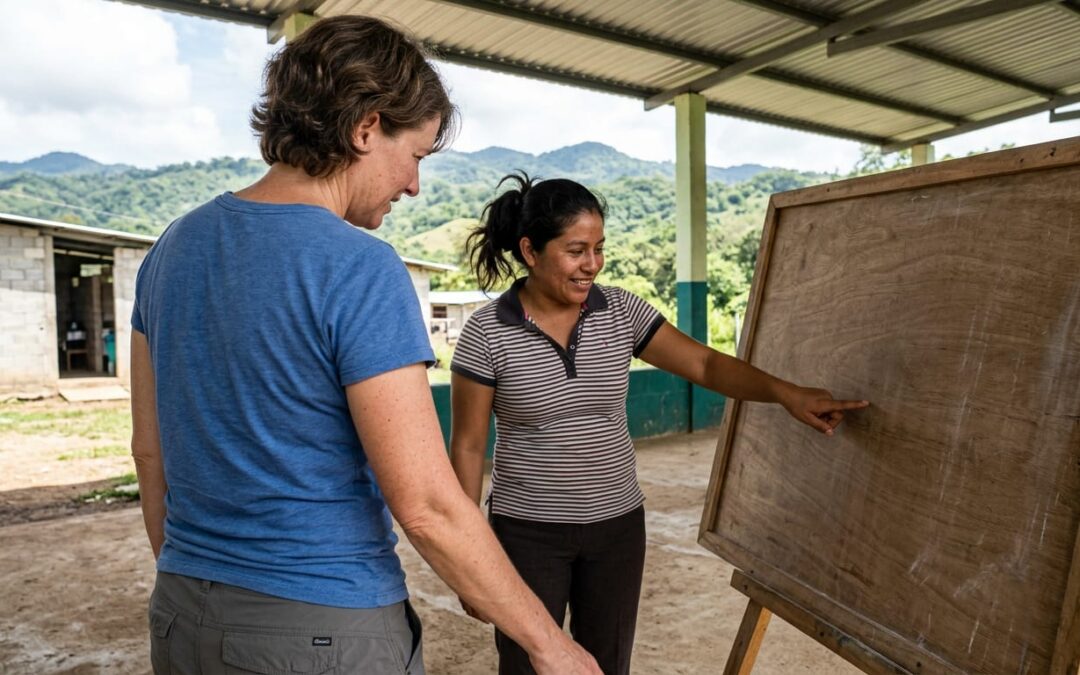
The most direct form of that connection is a site visit. Impact Others Inc. takes donors on trips to project locations so supporters can see the work firsthand and meet the communities being served. One donor who made that trip to Honduras described crossing four rivers to reach remote mountain communities, visiting water cisterns and feeding centers, and said: "I feel like it's very difficult to have a complete understanding until you physically put your hands on it. The impact that's been made here is just outstanding." That kind of connection does not come from a one-time gift processed online. It comes from choosing to stay.
When you're thinking about how to choose a nonprofit for monthly giving, the ability to follow a project over time – through updates, photos, and the option to visit – is one of the clearest signals that an organization takes stewardship seriously.
What Does Ongoing Giving Cost Compared to a Single Gift?
The cost of a recurring gift is whatever amount a donor sets – there is no required minimum at Impact Others Inc. that would price out everyday supporters. What matters more than the dollar amount is the commitment to consistency, because that is what local partners can actually build on.
What drives the real "cost" comparison between long-term and one-time giving is not the monthly amount itself but what each approach accomplishes per dollar. Sustained funding allows local partners to operate efficiently, avoid the disruption of funding gaps, and focus resources on the people they serve rather than on repeatedly restarting programs. As the IRC data above shows, that efficiency is measurable: longer-term programs cost significantly less per dollar delivered to the people who need it.
One thing that sets Impact Others Inc. apart from most nonprofits: 100 percent of project-related donations go directly to the project. Administrative expenses are kept deliberately low. That means a recurring monthly gift – even a modest one – reaches the work in full, every month. The case for monthly giving often comes down to this: consistent smaller amounts, sent in full to the work, add up to more sustained impact than a single larger gift that arrives once and then stops.
What Happens to the Work When Recurring Donors Stop Giving?
This is the risk side of long-term giving that deserves a direct answer. When funding for an ongoing project drops, local partners face hard choices: reduce the number of children fed, delay maintenance on a water system, or cut staff at an orphanage. The communities being served do not pause while funding catches up.
That is not a guilt-based argument for giving – it is an honest description of how these programs work. Understanding what funding gaps do to a project helps donors see that their ongoing commitment is not just generosity; it is structural support for work that cannot run on uncertainty.
The flip side is equally true: a donor who commits to giving monthly, even at a modest level, becomes a reliable foundation that local partners can plan around. Mindy Tibbs, an Impact Others partner of four years, put it plainly: "When you commit to giving to others and impacting others, it's incredible how that decision ends up impacting you." Her giving started as a percentage of every dollar that came into her business – a recurring structure that grew alongside the work it supported.
Which Approach Is Right for You Right Now?
For most donors who want to feel genuinely connected to the work their giving funds, recurring monthly giving is the stronger choice. It builds a relationship with specific ongoing projects, allows local partners to plan and sustain their work, and gives the donor a real thread to follow over time – through updates, photos, and the option to visit the communities being served.
A one-time gift is the right starting point for someone who wants to test the connection before committing, or who wants to respond to a specific, time-sensitive need. Both are legitimate. Neither is wrong.
What matters is finding an organization where the work is real, the stewardship is honest, and the donor's generosity reaches the people it was meant for. If you are ready to explore what ongoing giving looks like in practice, the Impact Others Inc. partner page is the natural next step.
Reach out directly at info@impactothers.com, call 2196780669, or write to Impact Others Inc. at 5885 Cumming Hwy Ste 108347, Sugar Hill, GA 30518. The work is ongoing – and there is a place in it for you.
FAQ
Who benefits most from long-term humanitarian giving vs. a one-time donation?
Communities facing ongoing needs – children in feeding programs, families dependent on maintained water systems, kids in orphanages – benefit most from sustained giving because their needs do not resolve after a single gift. One-time donors make a real difference in urgent or time-sensitive situations, but recurring donors are the foundation that keeps programs running month after month.
Which types of projects at Impact Others Inc. are ongoing vs. one-time efforts?
Most of the work Impact Others Inc. funds through its local partners is ongoing by nature: feeding centers that serve children daily, water systems that require maintenance, orphanages that operate year-round, and small business programs that support families over time. Toy drives and specific supply deliveries are seasonal or one-time efforts. Recurring donors are most directly connected to the programs that run continuously.
Where can I see what an ongoing Impact Others project actually looks like in the field?
Impact Others Inc. takes donors on trips to project locations in countries including Honduras, Ghana, Nigeria, India, Egypt, Colombia, and Thailand. Donors who join those trips visit feeding centers, water projects, orphanages, and business programs firsthand. For donors who cannot travel, project progress is communicated through updates and documentation from local partners so supporters can follow the work over time.
How do I know my recurring donation is actually reaching the project and not covering overhead?
Impact Others Inc. sends 100 percent of project-related donations directly to the project. Administrative expenses are kept deliberately low compared to most nonprofits. Donors who want to verify the work firsthand can join a site visit to see the projects their giving supports in person – which is one of the clearest accountability measures any humanitarian organization can offer.