
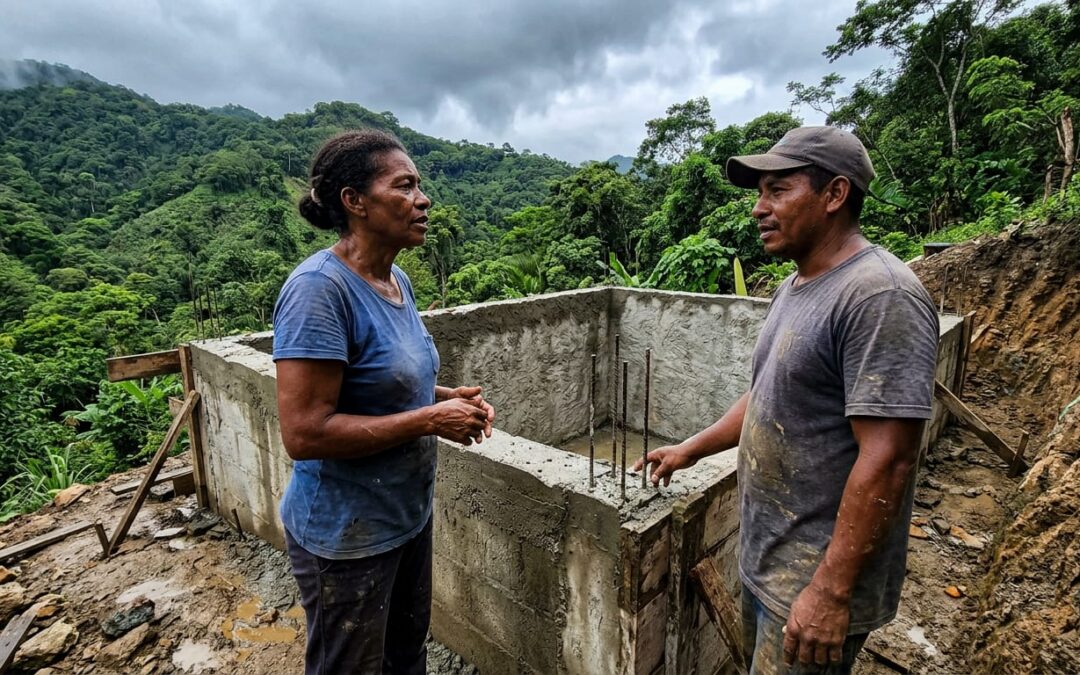
When a humanitarian project faces delays or unexpected challenges, the work does not stop and donors are not left without an update. Delays are a real part of working in underserved communities – supply chains break down, weather interrupts construction, local regulations shift, and funding transfers can stall. What matters is how an organization handles those moments: whether it communicates honestly, maintains financial accountability, and keeps the project moving forward.
Impact Others Inc. operates as a funding and stewardship organization, not a construction or field management team. That distinction shapes everything about how delays are handled. Because trusted local partners manage projects and their own expenses on the ground, they are the primary source of information about what is causing a delay and what steps are being taken to resolve it.
Why Do Humanitarian Projects Face Delays in the First Place?
Delays in humanitarian work are common, and the causes are rarely simple. The most frequent sources of disruption fall into a few categories:
- Funds transfer complications. The U.S. Government Accountability Office identified funds transfer delays and denials as the most frequently cited banking challenge in humanitarian work – a structural problem that affects even well-funded organizations.
- Weather and seasonal conditions. Road access to remote communities can close entirely during rainy seasons, halting construction or supply delivery for weeks.
- Local regulatory and permitting issues. Approvals from local governments or community leaders sometimes move on timelines that outside organizations cannot control.
- Supply chain disruptions. Materials, equipment, or skilled labor may not be available on the original schedule, particularly in rural or mountainous regions.
- Community dynamics. Projects that serve real communities involve real people, and sometimes the right path forward requires additional consultation or adjustment.
Understanding these causes matters because it reframes delays not as organizational failures but as honest realities of purposeful work in difficult places.
How Does Impact Others Communicate When a Project Is Delayed?
When a project faces delays or unexpected challenges, Impact Others communicates what local partners have shared so donors are informed rather than left without an update. That communication is grounded in what the local partner has shared – not in speculation or polished messaging designed to minimize concern.
This is a deliberate approach. Because local partners manage projects and their own expenses on the ground, they are the primary source of information about what is causing a delay and what steps are being taken. Impact Others does not manufacture progress updates; it passes along what is genuinely known, and it says so when something is still being worked through.
Donors who have traveled to project sites with Impact Others understand this firsthand. One donor who visited a water cisterns project in the mountains of Honduras described crossing four rivers to reach the community – a journey that illustrates exactly why timelines in remote areas are genuinely unpredictable. "I feel like it's very difficult to have a complete understanding until you physically put your hands on it," he said. That kind of direct exposure changes how donors think about delays: not as broken promises, but as evidence that the work is happening in places where nothing is easy.
What Financial Accountability Exists When Timelines Shift?
Financial accountability at Impact Others Inc. does not pause when a project timeline shifts. Impact Others maintains independent bookkeeping and regular board oversight, which creates a financial accountability structure that continues even when project timelines change. Funds directed to a project remain designated for that project.
The OCHA Global Guidelines cap contingency budget lines in humanitarian projects at 4 percent of total direct project costs – a standard that reflects how seriously the sector treats financial discipline even when circumstances change. Impact Others applies the same discipline internally: 100 percent of project-related donations go to the project itself, not to administrative overhead, so a delay does not redirect donor funds elsewhere.
For DAF holders and their financial advisors, this matters practically. A grant recommendation made to Impact Others Inc. is tied to a specific project and stewardship structure. Delays do not dissolve that structure. The accountability framework – independent bookkeeping, board-level oversight, and local partner communication – holds regardless of whether a project runs on schedule.
How Should Donors Think About Delays as Part of Responsible Stewardship?
Humanitarian work in underserved communities involves real-world complexity, and transparent communication about challenges is part of responsible stewardship – not a sign that something has gone wrong. The organizations most worth trusting are the ones that tell you when something is harder than expected, not the ones that only share good news.
Rob and Bernice, who became Impact Others partners after meeting the team and seeing the work firsthand, described their reasoning plainly: "After meeting Eddie and seeing the integrity, the sustainability, and the boots-on-the-ground work – drilling wells, supporting feeding centers, and creating sewing centers – we decided to become partners." Their confidence was built on what they observed directly, not on polished timelines.
Mindy Tibbs, an Impact Others partner for four years, put it this way: "When I think about Impact Others, I picture my own children in a third-world country. If a business owner had the answer to what my child needed – whether it was clean water from a well, a sewing center, food, an orphanage, housing, or any of the other meaningful resources – would they give?" That framing reflects what intentional giving actually requires: a willingness to stay the course when the work is hard, not just when it is easy.
Through trusted local partners, Impact Others Inc. delivers clean water, food, education, and hope to communities around the world on behalf of supporters who want to make an impact. That mission does not change because a road washed out or a permit took longer than expected. It continues – and donors are kept informed as it does.
For donors who want to see the work rather than just read about it, the Impact Others donor site visit program offers the most direct form of accountability available.
If you have questions about how Impact Others handles a specific project or want to understand the stewardship structure before directing a grant, reach out directly. The team is reachable by phone at 2196780669, by email at info@impactothers.com, or by mail at 5885 Cumming Hwy Ste 108347, Sugar Hill, GA 30518.
FAQ
Who is responsible for managing a project when something goes wrong on the ground?
Local partners manage projects and their own expenses on the ground. When a delay or unexpected challenge occurs, those partners are the primary source of information about the cause and the path forward. Impact Others communicates what the local partner has shared, rather than making independent claims about field conditions it cannot directly observe.
Which kinds of delays are most common in international humanitarian projects right now?
Funds transfer delays and denials are among the most frequently cited challenges in humanitarian banking, as documented by the U.S. Government Accountability Office. Beyond banking, weather-related access problems, local permitting timelines, and supply chain gaps are consistent sources of disruption – particularly in remote or mountainous communities where projects like water cisterns and feeding centers are often located.
How does a delay affect where my donation actually goes?
A delay does not redirect project-designated funds to other uses. Impact Others sends 100 percent of project-related donations to the project itself, and independent bookkeeping tracks those funds separately from administrative expenses. The financial accountability structure continues even when a project timeline shifts.
Who can visit a project site to see the work in person?
Impact Others takes donors on trips to project locations so they can see the work with their own eyes. Donors have traveled to sites in Honduras, and the program extends across Impact Others' international partner locations. Direct site visits are one of the most concrete ways to verify that a project is progressing, regardless of what the original timeline showed.