
You can verify whether an international humanitarian nonprofit is doing real work – and you should before committing regular donations. The clearest signals are transparent partner relationships, documented project activity, public tax filings, and the opportunity to see the work firsthand. Impact Others Inc. connects everyday supporters with humanitarian work around the world, giving each gift a clear purpose and a real outcome to stand behind. Based on what Impact Others Inc. has tracked and seen across its own operations, the most reliable verification combines public records, direct documentation, and firsthand access.
Here is how to evaluate any international nonprofit before you give.
What Are the Most Reliable Ways to Verify International Nonprofit Work?
The most reliable verification methods combine public records, direct documentation, and firsthand access – not just a polished website.
-
Check IRS Form 990 filings. U.S. nonprofits file a Form 990 annually, which is publicly available through databases like ProPublica Nonprofit Explorer or Candid (GuideStar). The 990 shows program expenses, administrative costs, executive compensation, and whether the organization reports international activity.
-
Look for named local partners. A legitimate international nonprofit names the organizations it works through in specific countries – not vague references to "on-the-ground teams." Ask who the local partner is, how long the relationship has existed, and what oversight is in place.
-
Request project documentation. Photos, project updates, and community context are reasonable things to ask for. Organizations doing real work in the field have them.
-
Ask about donor site visits. The strongest form of verification is standing in the place where the work happens. Some organizations make this possible; many do not.
-
Confirm IRS compliance for international operations. A U.S. charitable organization operating internationally must have its international activities permitted under its organizational documents and must serve its charitable purpose, as Crowe noted in 2023. That requirement is reflected in the 990 and in how the organization describes its foreign activities.
-
Look at how funds are controlled. The IRS expects domestic charities to maintain control over foreign funds through written agreements with recipients, investigation of how funds are used, and field investigations to confirm funds are spent according to the agreement, per IRS guidance. Ask any nonprofit you're considering how they handle this.
What Does a Legitimate International Nonprofit Actually Look Like Up Close?
The difference between a nonprofit that is doing real work and one that is not often becomes obvious the moment you are physically present. Paperwork can be managed; communities cannot be fabricated.
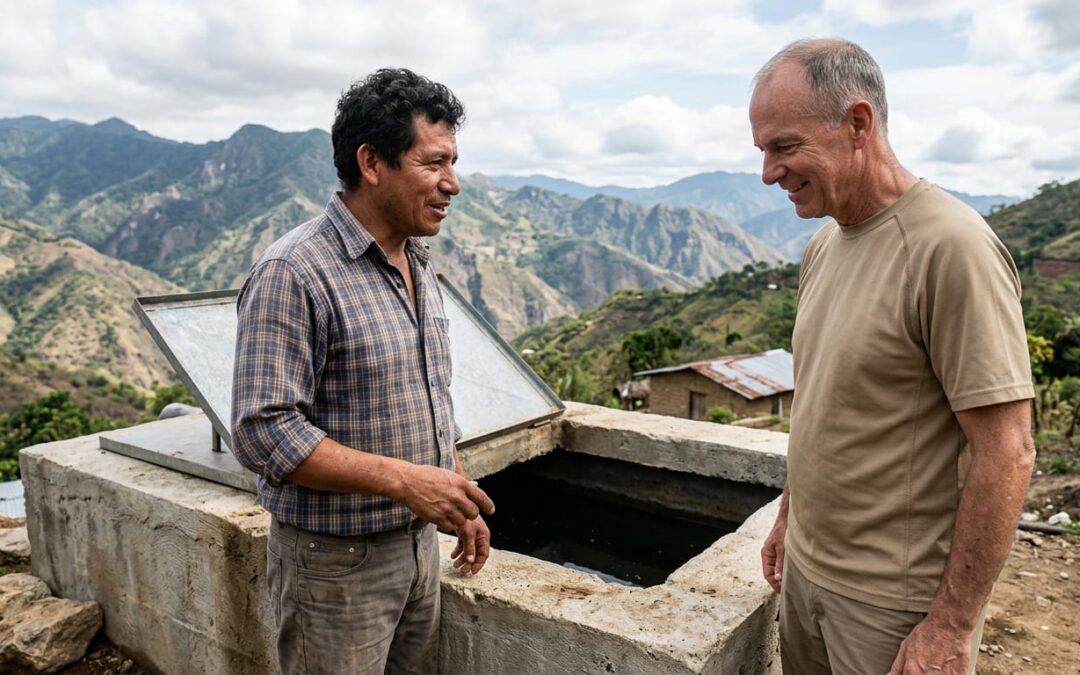
One donor who traveled with Impact Others Inc. to the mountains of Honduras described crossing four rivers to reach a remote community. "I feel like it's very difficult to have a complete understanding until you physically put your hands on it," he said. "The impact that's been made here is just outstanding… from the water cisterns project that we visited and got to see to the amount of people that have been fed and continue to be fed on a daily basis."
That kind of account cannot be manufactured. It describes a specific geography, a specific project type – water cisterns – and a specific community. When a donor can travel to a location, meet the local partner, and see the infrastructure, that is the most direct form of verification available.
Another donor, a real estate developer, described joining a trip to Guadalajara and deciding it was the right fit for their giving structure. "One of the things we love about Impact Others is that you get to participate firsthand. You can be as involved as you want, but the great thing is you actually get to see the incredible work being done around the world."
Impact Others Inc. also takes donors on trips to its locations so they can see the work that is being done – this is not a special program or a premium tier. It is part of how the organization operates with transparency.
How Does the Funding Structure Reveal Whether a Nonprofit Is Legitimate?
How a nonprofit moves money internationally is one of the clearest indicators of whether its work is real and whether it is managed responsibly.
A well-structured international nonprofit maintains written agreements with its local partners, tracks how funds are used, and keeps its administrative costs low enough that the majority of donations reach the actual project. Impact Others Inc. currently sends 100 percent of project-related donations directly to the project – administrative expenses are covered separately, not drawn from project funds.
The IRS asks organizations with international activities to provide a list of the organizations that received funds or goods, the amount and type of each distribution, and how those distributions furthered exempt purposes, per IRS guidance on international activities. When a nonprofit can answer those questions clearly and publicly, that shows operational discipline.
When evaluating any international nonprofit's funding structure, ask:
- What percentage of my donation reaches the project directly?
- Who is the local partner, and what written agreement governs the relationship?
- How does the organization confirm funds were used as intended?
- Are administrative costs disclosed on the Form 990?
A nonprofit that cannot answer these questions plainly is worth examining more carefully before you commit.
What Should You Watch Out for When Evaluating International Nonprofits?
Some warning signs can be straightforward to overlook when an organization's marketing is strong. A few patterns worth scrutinizing:
Vague geographic claims. "We work in Africa" or "we serve communities in Asia" without naming specific countries, cities, or local partners is a flag. Real work happens in specific places with specific people.
No named local partners. International humanitarian work is almost always delivered through local organizations that understand the community, language, and infrastructure. A nonprofit that cannot name its local partners – or implies it manages everything directly from a U.S. office – deserves a closer look.
Overhead ratios that seem too good. Some organizations advertise extremely low overhead but do not explain how administrative costs are actually covered. Ask specifically: are administrative expenses paid from a separate fund, from leadership donations, or drawn from project donations?
No pathway to see the work. A nonprofit confident in its work has no reason to keep donors at arm's length. If there is no mechanism for donors to visit project sites, ask why.
Understanding trustworthy nonprofit humanitarian work means looking past the surface – a well-designed website and emotional photography are not evidence of operational integrity on their own.
How Do You Put This Together Into a Giving Decision?
Verifying international nonprofit legitimacy is not a single check – it is a pattern of evidence. Public filings confirm legal compliance and financial structure. Named partners and written agreements confirm operational discipline. Project documentation and donor site visits confirm that real communities are being served.
The questions worth asking before any gift are the same regardless of which organization you are evaluating: where does the money go, who manages it on the ground, and can you see the work for yourself? Impact Others Inc. has written about how each of those questions can be answered, and the organization's own structure – direct project funding, named local partners, and open donor site visits – reflects the standards described throughout this article.
Impact Others Inc.
📞 219-678-0669
✉️ info@impactothers.com
5885 Cumming Hwy, Ste 108347, Sugar Hill, GA 30518
FAQ
Which documents should I actually request from an international nonprofit before donating?
Start with the most recent Form 990, which is publicly available and shows how the organization allocates funds between programs, administration, and fundraising. Beyond that, ask for a list of named local partners, the countries where projects are currently active, and any written agreements or oversight structures the organization uses to confirm funds reach their intended purpose. An organization doing real work will have these materials or be able to describe the process clearly.
Who actually manages the projects on the ground – the U.S. nonprofit or someone local?
In most legitimate international humanitarian organizations, the day-to-day work is managed by local partners – organizations or individuals embedded in the community who understand the language, culture, and infrastructure. The U.S. nonprofit raises and stewards the funds, maintains oversight through written agreements, and communicates project progress to donors. Impact Others Inc. operates this way: trusted local partners manage the projects and their own expenses, while Impact Others handles fundraising, bookkeeping, and donor communication.
How do I know if a nonprofit's "100% to the project" claim is real?
Ask specifically how administrative costs are covered. A genuine 100% model means the organization has a separate funding source for overhead – leadership contributions, a dedicated administrative fund, or a board that covers those costs – so project donations are not reduced. Then confirm this on the Form 990 by comparing program service expenses to total expenses. If the numbers align with the claim, it is real. If administrative costs appear to be bundled into program expenses without explanation, ask for clarification.
Where can I find independent ratings for international nonprofits?
Candid (formerly GuideStar) and ProPublica Nonprofit Explorer both provide access to Form 990 filings at no cost. These are primary source documents, not ratings, which makes them more reliable than third-party scores that use their own methodologies. For a fuller picture, combine the 990 review with direct questions to the organization and, where possible, a site visit or conversation with someone who has traveled to the project location.
What is the difference between verifying a local charity vs. an international one?
With a local charity, you can often visit the facility, meet the staff, or speak with community members directly. International verification requires more deliberate effort: reviewing IRS compliance for foreign activities, asking about local partner relationships and written agreements, and looking for documentation like photos, project updates, or firsthand donor accounts from people who have traveled to the location. The legitimate nonprofit organization standard applies in both cases – the evidence just looks different when the work is happening in Honduras, Ghana, or Colombia rather than in your own city.