
For most donors who want to know their money reaches the people in need – not overhead – a smaller nonprofit working through trusted local partners often delivers more direct impact per dollar. That said, large international aid organizations serve a real purpose in crisis response and large-scale logistics that smaller organizations cannot match alone. The right choice depends on what you value most: reach and scale, or proximity and accountability.
In Impact Others Inc.'s work with donors who give regularly to international humanitarian causes, the question comes up constantly: does the size of the organization determine how well the work gets done on the ground? The answer, consistently, is no – structure and local trust matter more than size. Impact Others Inc. tracks this directly: 100 percent of project-related donations go to the project, a figure the organization has measured and maintained as a core commitment to donors.
What Actually Differs Between Large and Small International Nonprofits?
The most meaningful differences between a large international aid organization and a small nonprofit with local partners are not brand recognition or budget size. They are how decisions get made, where costs are absorbed, and how close the work stays to the community it serves.
| Factor | Large International Organization | Small Nonprofit with Local Partners |
|---|---|---|
| Decision-making | Centralized, often headquarters-driven | Local partners lead on the ground |
| Administrative overhead | Higher (global staff, offices, compliance) | Typically lower |
| Cost-efficiency | Variable; scale can help or hurt | Local delivery often leaner |
| Donor visibility into work | Limited; aggregate impact metrics | Closer to the project level |
| Community trust | Built over time; can feel external | Often embedded in the community |
| Crisis response capacity | Strong for large-scale emergencies | More limited in sudden surges |
Large organizations bring coordination capacity during disasters and can mobilize resources across borders quickly. Smaller nonprofits with local partners tend to keep more of each donation in the actual project, and the people delivering the work are already trusted members of the community they serve.
Scale is an advantage in emergencies; local trust is an advantage in sustained, community-driven work.
Are Local Partners as Effective as International Organizations Running Their Own Programs?
Yes – and the evidence in 2026 is increasingly clear on this. PreventionWeb published findings in 2025 showing that projects led by local and national NGOs were just as effective, equitable, and efficient as those led by international NGOs. A separate analysis found local organizations were delivering humanitarian assistance 17% more cost-efficiently on average than their international counterparts, according to Refugees International.
This is not a fringe view. USAID's own localization efforts are designed to make the delivery of life-saving humanitarian assistance more effective, efficient, and sustainable – a recognition that proximity to the community is a structural advantage, not just a feel-good principle.
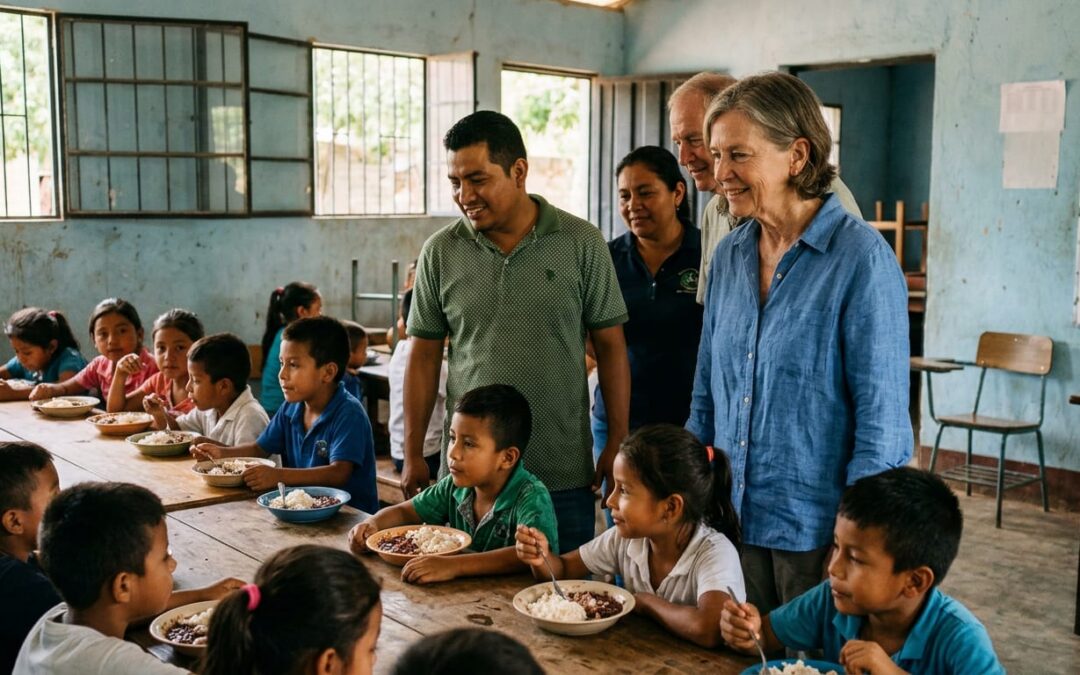
What that looks like in practice is captured well by a group that traveled with Impact Others Inc. to Brazil. The group visited children and seniors in the communities where local partners operate. One participant wrote afterward: "Thank you for giving us an experience we will never forget. The smiles and joy of the children, and the opportunity to bring a little comfort and kindness to the seniors, touched our hearts deeply! We came to Brazil hoping to make a difference, but we feel like we received so much more than we gave. This experience has reminded us how powerful kindness, compassion and simply showing up for others can be. Thank you for allowing us to be part of something so meaningful. We're leaving with beautiful memories and a desire to continue making a difference. We hope this is just the beginning of many more journeys together." – Darlene Healy
When a local partner runs a feeding center, drills a water well, or manages an orphanage, they carry relationships and cultural context that no international headquarters can replicate. They know which families have been displaced, which children have stopped coming to meals, and which community leaders need to be involved for a project to last beyond the funding cycle.
This is why verify international nonprofit legitimacy before you give – the question is not just "is this organization real?" but "does the work actually reach the community, and who is doing it?"
What Does It Cost to Give Through a Smaller Nonprofit vs. a Large One?
The cost to you as a donor is the same – a dollar is a dollar. What differs is how much of that dollar reaches the project versus how much is absorbed by organizational infrastructure.
Large international organizations carry real costs: global offices, international staff salaries, compliance and auditing requirements across multiple countries, and communications infrastructure. These are not wasteful expenses – they are the price of operating at scale. But they do mean a meaningful portion of each donation funds the organization's operating structure before it funds the work.
Smaller nonprofits with local partners can run leaner because the local partner already has the infrastructure, the community relationships, and the staff. The funding organization's role is stewardship: raising funds, vetting partners, maintaining independent bookkeeping, and communicating project progress to donors – not building parallel infrastructure in every country.
Impact Others Inc. currently sends 100 percent of project-related donations directly to the project. Administrative expenses are kept deliberately low, which means donors who give to clean water, food, orphanages, education, or new business opportunities are not subsidizing a large international operating structure. That is a structural difference worth understanding before you give.
The real cost differences between organizations come down to how many layers of staff exist between the donor and the community, whether the implementing partner is local or international, and whether the funding organization has built its own field operations or works through established local trust.
How Do You Know the Work Is Actually Happening?
This is where the size question becomes a trust question – and it is the right question to ask. For donors who give because they want their generosity to change real lives, "trust me, the work is happening" is not enough.
One of the most direct accountability mechanisms a smaller nonprofit can offer is something large organizations rarely do: take donors to the field. A donor who traveled to a feeding center with Impact Others Inc. described it plainly: "Impact Others has done the hard job. They find the places with the right infrastructure with the right means and we just come and give a little part of us and make a bigger impact in every place." – Vivian Hernandez
That kind of first-hand witness – donors walking into an orphanage, standing at a water well, sitting with children at a feeding center – is accountability that no aggregate impact metric can replicate. Partners with Impact Others Inc. made the same point after visiting project sites: "After meeting Eddie and seeing the integrity, the sustainability, and the boots-on-the-ground work – drilling wells, supporting feeding centers, and creating sewing centers – we decided to become partners." – Rob and Bernice
Large organizations publish annual reports. Smaller nonprofits with strong local partnerships can put you on a plane.
Knowing how to find effective charity matters here – look for organizations that can show you the work, not just describe it.
Which Type of Nonprofit Is Right for Your Giving?
Choose a large international aid organization when your priority is crisis response, geographic breadth, or supporting work in active conflict zones where local infrastructure has collapsed. Their scale and coordination capacity are genuinely hard to match in those situations.
Choose a smaller nonprofit with trusted local partners when your priority is sustained community work – clean water systems, feeding centers, orphanages, education, and small business development – where local knowledge, community trust, and cost-efficiency determine whether the work lasts. If you want to see the work yourself, travel to the project, or know that your donation goes directly to the project without being absorbed by layers of international overhead, a smaller organization built on local partnerships is the stronger fit.
Impact Others Inc. funds clean water, food, orphanages, education, and new business opportunities through trusted local partners, so donors find real purpose in their giving. The model is built on the conviction that the people closest to the need are best positioned to meet it – and that donors deserve to see that for themselves.
If you are ready to give with that kind of purpose and confidence, you can reach Impact Others Inc. at info@impactothers.com, call 2196780669, or write to 5885 Cumming Hwy Ste 108347, Sugar Hill, GA 30518. The Impact Others Partner Guide is a good place to start if you want to understand how the model works before you give.
FAQ
Which type of nonprofit actually gets more of my donation to the people in need?
Smaller nonprofits with local partners typically carry lower overhead because the local partner already has the community infrastructure in place. Impact Others Inc., for example, sends 100 percent of project-related donations directly to the project, with deliberately low administrative expenses. Large international organizations carry real operating costs – global offices, international staff, multi-country compliance – that absorb a portion of each donation before it reaches the project.
Who runs the actual work on the ground – the nonprofit I give to, or someone else?
In most smaller nonprofits that use a local-partner model, the work on the ground is managed by a trusted local organization, not by the funding nonprofit's own staff. The funding organization raises and stewards the funds, vets the partners, maintains independent bookkeeping, and communicates project progress to donors. The local partner manages the project and their own expenses. This structure is why local delivery tends to be more cost-efficient – the people doing the work are already embedded in the community.
Which model is better for long-term projects like orphanages or water wells, vs. emergency relief?
For long-term, community-based projects – orphanages, water systems, feeding centers, small business development – the local-partner model tends to be more effective because it builds on existing community trust and knowledge. For large-scale emergency response, especially in active conflict zones or sudden disasters, large international organizations have coordination and logistics capacity that smaller nonprofits cannot match quickly. Match the model to the type of work you want to fund.
Where can I actually see the projects my donation supports?
Some smaller nonprofits, including Impact Others Inc., take donors on trips to project sites in countries like Honduras, Brazil, Ghana, and others where local partners operate. This kind of site visit is one of the most direct forms of accountability available to a donor – you see the feeding center, the orphanage, the water well, and the community firsthand. Large international organizations rarely offer this level of donor access to field operations.
How do I tell if a small nonprofit's local partners are doing real, verified work?
Look for organizations that maintain independent bookkeeping, receive regular project progress documentation from local partners, and can show you the work – either through documented photos and updates or through donor site visits. Ask whether the local partner co-designed the project or was simply subcontracted to implement someone else's plan. Action Against Hunger's Local Partnership Policy notes that subcontracting a local actor to implement activities not aligned with their own mission should be an exception, not the norm – a useful standard to apply when evaluating any organization's partner relationships.