
Several clear warning signs indicate a humanitarian nonprofit may not be using donations responsibly: vague program descriptions, no evidence of work on the ground, refusal to disclose how funds are allocated, and pressure tactics designed to bypass your judgment. Donors who know what to look for protect both their giving and the people they intend to help.
Impact Others Inc. has tracked these patterns across years of taking donors into the field and reviewing how organizations document their work. The donors who partner with the organization have usually been burned before, or watched a friend give to something that turned out to be hollow. The patterns that separate trustworthy organizations from problematic ones are consistent, and they are worth knowing before you commit.
What are the most common warning signs that donations are being misused?
The clearest red flags appear in how an organization talks about its work – and how much it refuses to say.
-
Vague impact language with no specifics. Phrases like "we're changing lives globally" with no named countries, no partner organizations, no project descriptions, and no documentation of outcomes are a warning. Legitimate organizations can point to specific places and specific work.
-
No publicly available tax documents. The Internal Revenue Service requires tax-exempt organizations to make their three most recent annual returns available for public inspection upon request. If an organization refuses or delays, that is a problem.
-
Overhead ratios that don't add up. An organization claiming near-zero overhead while also funding salaries, offices, travel, and marketing deserves scrutiny. Conversely, an organization spending the majority of donations on administration rather than programs is equally concerning.
-
No named local partners or field contacts. Organizations doing real humanitarian work – whether drilling wells, running feeding centers, or supporting orphanages – work through people on the ground. If no one is named and no partner relationships are disclosed, ask why.
-
Resistance to donor site visits. A trustworthy organization welcomes donors to see the work in person. Reluctance to allow that access is worth noting.
-
Pressure to give immediately. As the Federal Trade Commission notes, a charity fundraiser cannot lie about how a donation will be used or how much actually reaches the charity's programs. High-pressure tactics designed to prevent you from asking questions are a manipulation tactic, not a fundraising strategy.
-
Emotional manipulation without substance. There is a difference between communicating genuine need with honesty and using pressure-based fundraising tactics to override your judgment. The former informs; the latter pressures.
How do you tell if an organization is actually doing work in the field?
Documentation and access are the two most reliable tests. An organization doing real work produces real evidence: photographs from the field, named project locations, partner organizations who can be contacted independently, and donors who have visited and can speak to what they saw.
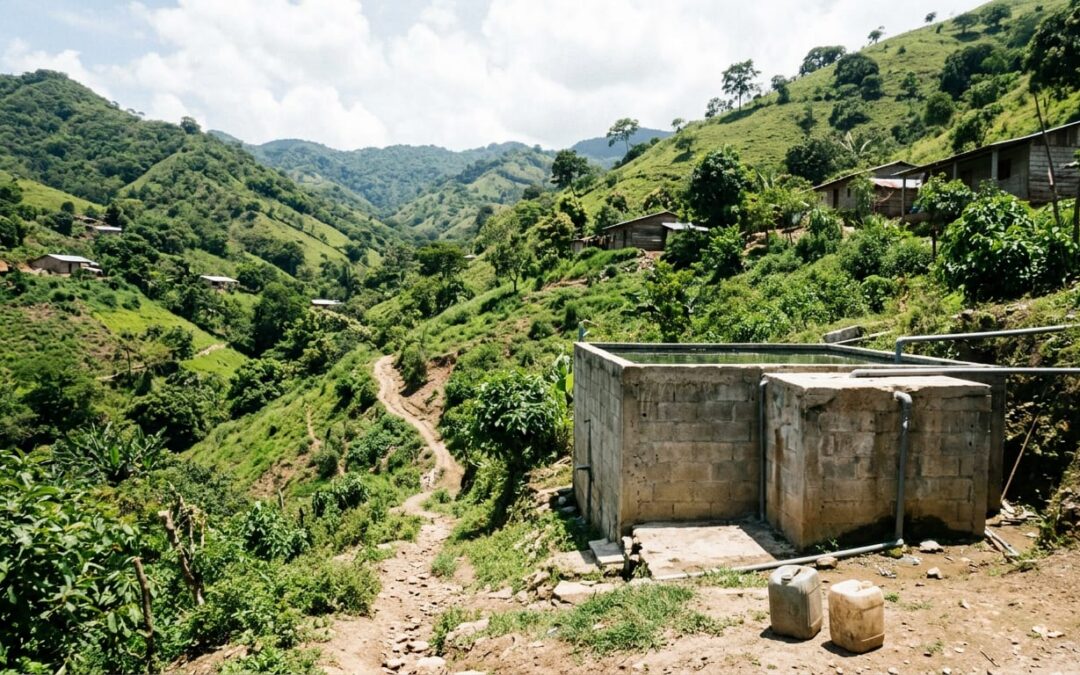
The donor site visit is one of the most underused accountability tools available. When Impact Others Inc. takes donors into the mountains of Honduras or to communities in Nigeria, the experience closes the gap between a donation receipt and a real outcome. One donor who traveled to Honduras described crossing four rivers to reach a remote mountain community and seeing water cisterns and feeding centers operating in person: "I feel like it's very difficult to have a complete understanding until you physically put your hands on it… Anything and everything you can give will go to the utmost use here."
That kind of direct access is not incidental – it is how responsible organizations demonstrate accountability without asking donors to simply take their word for it. If an organization has never taken a donor to see its work, or has no mechanism for doing so, that absence is worth weighing.
To verify international nonprofit legitimacy, look specifically for named local partners, project-level documentation, and evidence that the organization has been present in the communities it claims to serve – not just a polished website.
What does responsible fund stewardship actually look like?
Responsible stewardship means the path from donation to outcome is traceable – not through marketing copy, but through structure.
A well-run humanitarian funding organization maintains independent bookkeeping, receives regular project and financial documentation from its local partners, and presents that information to its board on a defined schedule. It does not commingle designated funds. It does not redirect project donations to cover administrative expenses. And it does not make promises it cannot verify.
Impact Others Inc. sends every dollar donated to a project directly to that project. That policy is structural, not aspirational – it means the organization's operating costs are covered separately, so project donations are not quietly absorbed into overhead. Rob and Bernice, who became partners after evaluating the organization directly, described what moved them to commit: "After meeting Eddie and seeing the integrity, the sustainability, and the boots-on-the-ground work – drilling wells, supporting feeding centers, and creating sewing centers – we decided to become partners."
Integrity in this context is not a brand value statement. It is a description of what they observed when they looked closely.
Which types of organizations are most likely to misuse donations?
The risk is not limited to any one type. Small organizations can be deeply effective; large ones can be wasteful. The variables that matter more than size are governance, transparency, and whether the organization has genuine accountability to anyone other than itself.
| Characteristic | Lower Risk | Higher Risk |
|---|---|---|
| Local partner relationships | Named, contactable | Anonymous or absent |
| Tax documents | Available on request | Withheld or delayed |
| Donor access | Site visits offered | No access mechanism |
| Fund allocation | Project-designated, separated | Pooled with overhead |
| Impact claims | Specific, documented | Vague, unverifiable |
The key takeaway: the higher-risk column is not always obvious from a homepage – it shows up when you ask direct questions and watch how the organization responds.
What should you do right now if you're unsure about an organization?
The IRS provides a practical starting point for donors. For any monetary gift, the IRS requires donors to retain a bank record or written communication from the qualified organization showing the organization's name, the amount, and the date of the contribution – regardless of amount. Keeping that record also gives you a paper trail if questions arise later.
Beyond recordkeeping, ask the organization three questions: Who are your local partners and how do you select them? How are project funds separated from operating costs? Can I visit a project? The answers – and the willingness to answer – tell you most of what you need to know.
Giving with purpose means giving with your eyes open. The people this work is meant to reach – children in orphanages, communities without clean water or food, families trying to build small businesses – are best served when donors hold organizations to a real standard. That standard is not cynicism. It is the kind of compassion that takes its responsibility seriously.
If you want to see how Impact Others Inc. structures its work and what accountability looks like in practice, reach out directly: call 2196780669, email info@impactothers.com, or write to 5885 Cumming Hwy Ste 108347, Sugar Hill, GA 30518. The questions you have are the right ones to ask.
FAQ
Who is responsible for making sure a nonprofit uses donations correctly?
Governance responsibility sits with the organization's board, which should receive regular documentation from field partners and review how funds are allocated. Donors play a role too – by asking direct questions about fund separation, partner relationships, and project documentation before committing. The IRS requires tax-exempt organizations to make their three most recent annual returns available for public inspection, which gives donors a formal starting point.
Which documents should I ask a humanitarian nonprofit to provide?
Ask for the organization's most recent IRS Form 990, which shows revenue, expenses, and compensation. Ask for project-level documentation showing how designated funds were used – photos, partner correspondence, or progress updates. And ask whether the organization separates project donations from operating expenses in its bookkeeping. An organization that handles funds responsibly will produce these without hesitation.
How do I know if a nonprofit's overhead claims are honest?
Look at the IRS Form 990 alongside the organization's own statements. If an organization claims near-zero overhead but its 990 shows significant administrative expenses, the discrepancy deserves a direct question. Responsible organizations explain their cost structure clearly – including how they cover operating expenses so that project donations reach the field intact.
Where can I find independent information about a nonprofit's track record?
The IRS maintains public records on tax-exempt organizations, and Form 990 filings are publicly accessible through the IRS website. Beyond documents, donor testimonials from people who have visited the field carry weight that a website alone cannot. Ask whether the organization can connect you with existing donors who have seen the work in person – that kind of peer reference is one of the most reliable signals of a trustworthy operation.