
Humanitarian-funded small businesses can survive long term, but survival depends on factors that have nothing to do with the initial grant – the quality of the business idea, the owner's commitment, and the quality of ongoing support from a local partner who understands the community. Funding alone does not determine whether a business lasts.
Impact Others Inc. has built its model around exactly that insight. In its work with local partners across countries including Honduras, Ghana, Nigeria, Colombia, and India, the pattern is consistent: the businesses that take root are the ones where a trusted community-based partner stays involved after the funds arrive – troubleshooting, mentoring, and adapting support as conditions change.
What Does the Research Actually Show About Survival Rates?
Survival rates for humanitarian-funded businesses vary widely, and the range is worth understanding honestly before drawing conclusions.
A 2025 evaluation published in the Journal of International Humanitarian Action found an 80% early survival rate for small businesses funded through a grant program in Syria – but that figure dropped to 47% over the longer term. That gap is the real story. Early survival is achievable. Long-term survival requires something more sustained than a one-time grant.
A 2025 Rescue.org learning brief found that among 6,647 cash-grant recipients, 61.95% had an operational business at verification – meaning roughly 4 in 10 did not. That is not a failure of the idea of humanitarian business funding. It is evidence that the conditions surrounding the grant matter as much as the grant itself.
What drives the gap? Grant size, business type, local economic conditions, and the presence or absence of mentorship after funding all shape outcomes. The research does not tell a single story – it tells a conditional one.
Why Does Local Partnership Make the Difference?
Local partners who live and work in the community are better positioned than distant organizations to provide mentorship, troubleshoot problems, and adapt support as the business grows.
One Impact Others partner, a real estate developer, described how this kind of firsthand involvement changed their giving. After joining a trip to Guadalajara, they said: "One of the things we love about Impact Others is that you get to participate firsthand. You can be as involved as you want, but the great thing is you actually get to see the incredible work being done around the world. For us, it was a natural fit to become an Impact Others partner." That direct connection – traveling to a project, meeting the people involved, seeing the work in operation – is what distinguishes embedded local partnership from distant grant-making.
This is not a theoretical point. A partner based in the community understands which business types are viable in that market, which suppliers are reliable, and what cultural or logistical factors will affect daily operations. A distant organization sending funds without that embedded knowledge is funding a business into a vacuum.
The CALP Network found that targeted business grants of $500 and $1,000 sustained investment in non-farm businesses into the long term – while the effects of unconditional cash transfers did not persist after 3.5 years. The structure of the support, and the relationship around it, shapes whether a business builds lasting capacity or simply consumes a windfall.
Impact Others Inc. does not manage projects or supervise field teams directly. Funds raised go to trusted local partners who manage the work, understand the community, and are accountable for how those funds are used. Those partners share progress updates so donors know the work is moving forward.
What Factors Determine Whether a Specific Business Will Last?
No outcome can be assured, but the factors that shape long-term survival are identifiable.
| Factor | What Drives Better Outcomes |
|---|---|
| Business idea quality | Locally viable, fills a real need, owner has relevant skills |
| Owner commitment | Sustained effort through early-stage difficulty |
| Grant size | Medium and larger grants show stronger long-term effects than micro-grants alone |
| Local partner involvement | Ongoing mentorship, not just initial funding |
| Market conditions | Local demand, supply chain access, community stability |
A CEPR research paper found that while the short-term impact of small business grants did not always persist over three years, medium and large grants still increased the likelihood of owning a non-farm business by 14 and 16 percentage points respectively. Grant size is not the only variable, but it is a meaningful one.
The takeaway: a humanitarian-funded business is not inherently fragile. It is as durable as the combination of the owner's drive, the partner's ongoing involvement, and the fit between the business and its community.
How Does Impact Others Inc. Approach Business Sustainability?
The businesses Impact Others Inc. funds through local partners are not charity cases handed a check and left alone. They are people with ideas, skills, and motivation who need a real starting point – access to capital they could not otherwise reach – and a partner who stays engaged.
Mindy Tibbs, an Impact Others partner for about four years, described the way she thinks about this work: "When I think about Impact Others, I picture my own children in a third-world country. If a business owner had the answer to what my child needed – whether it was clean water from a well, a sewing center, food, an orphanage, housing, or any of the other life-changing resources – would they give? That's why I partner with Impact Others. It's making a real difference."
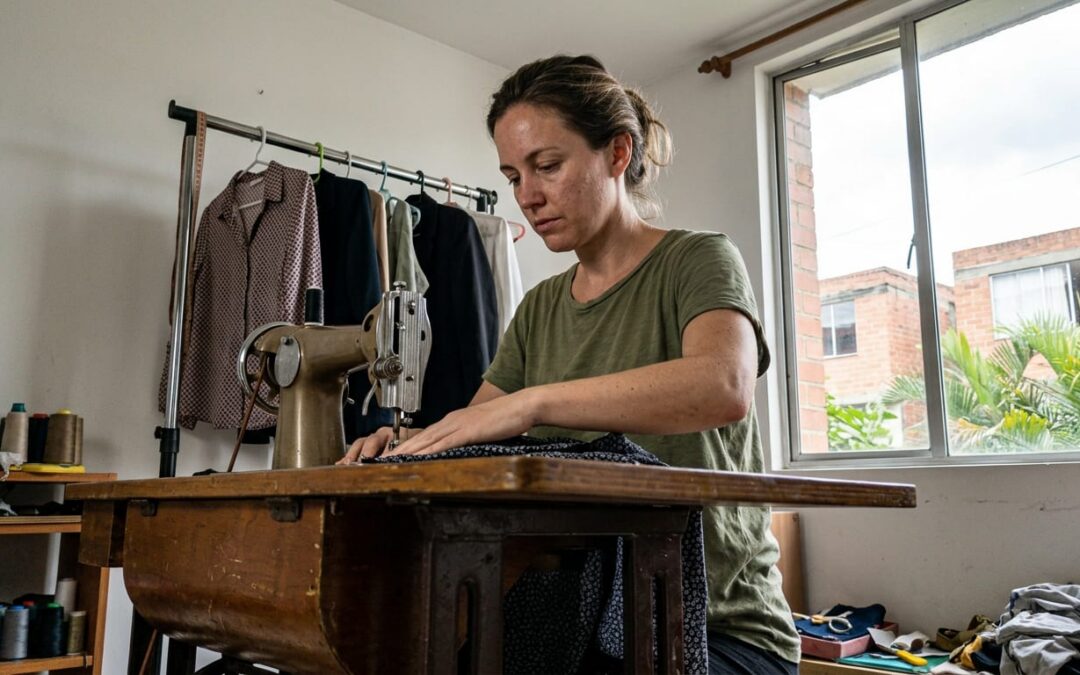
That framing matters. The goal of funding a small business is not to create dependency – it is to create a foundation for independence. A sewing cooperative, a small food business, or a trade skill enterprise built with the right support can generate income that outlasts the initial grant.
Impact Others Inc. takes donors to visit the projects their giving funds, so they see the work in person. That firsthand connection – seeing a business operating, meeting the person running it – is one of the clearest ways to understand what sustainability actually looks like on the ground.
For donors who want to understand how business funding fits alongside other humanitarian priorities, the Impact Others Inc. resource on Business Start-Up Funding vs. Food and Water Aid offers a useful framework for thinking through where a contribution has the most meaning.
Reach the team at info@impactothers.com, by phone at 2196780669, or by mail at 5885 Cumming Hwy Ste 108347, Sugar Hill, GA 30518.
FAQ
Can a small business really become self-sustaining after a one-time humanitarian grant?
It can, but one-time funding is rarely sufficient on its own. Research consistently shows that business survival improves when grants are paired with ongoing mentorship and community-based support. The initial grant opens a door; what happens in the months after determines whether the business walks through it.
Which types of businesses tend to survive longer when funded through humanitarian programs?
Non-farm businesses – trades, services, small retail, and production like sewing or food processing – show stronger long-term survival when funded at adequate grant sizes. Businesses that fill a genuine local need and are run by owners with relevant skills tend to outperform those that do not. Local partners who understand the market are better placed than distant funders to identify which ideas are viable.
Who is responsible for mentoring a business owner after the initial funding arrives?
In Impact Others Inc.'s model, trusted local partners carry that responsibility. They live and work in the community, understand local conditions, and stay involved after funds are deployed. Impact Others raises and stewards the funds, while local partners manage the on-the-ground relationship with business owners.
How do donors know a funded business is actually operating and not just a paper transaction?
Progress updates come from local partners who are accountable for how funds are used. Beyond that, donors who want direct confirmation can join Impact Others Inc. on trips to project locations – seeing a business in operation, meeting the owner, and understanding the conditions firsthand is the clearest form of accountability available.