Donor trust is earned, not claimed, and if you've given to a nonprofit before only to wonder where your money actually went, that skepticism is reasonable. Impact Others Inc. is a funding and stewardship organization: it raises funds, sends them directly to vetted local partners who manage the projects, maintains independent bookkeeping, reports monthly financials to its board, and communicates project progress back to donors. That structure exists precisely so you don't have to take anyone's word for it.
Trusting an organization with your generosity is not a small thing. This article walks through exactly what accountability looks like at Impact Others Inc., and what questions you should be asking any organization before you give.
What Does "Accountable" Actually Mean for a Humanitarian Funding Organization?
Accountability in the nonprofit world gets talked about loosely. For a funding and stewardship organization like Impact Others Inc., it means something specific: the money you give to a named project goes to that project, the financials are reviewed by an independent board, and you receive regular updates on how those funds were used.
Impact Others Inc. does not directly build wells, manage construction, or supervise field teams. That work is done by trusted local partners who live and work in the communities being served. What Impact Others Inc. controls is the financial flow, raising the funds, sending them to the right partners, tracking how they're spent, and reporting back. That separation of roles matters because it removes the temptation to blur program costs with administrative costs, a practice that erodes donor trust across the sector.
If you're evaluating any humanitarian organization, the first question isn't "do they do good work?" It's "can I see where the money goes?" Impact Others Inc. is built to answer that question with documentation, not just a mission statement.
How Does Impact Others Inc. Handle the Money You Give?
When you designate a donation to a specific project, a clean water well, a feeding center, an orphanage, education support, 100 percent of that project donation goes to the project. Administrative expenses are kept deliberately low and are funded separately, not taken from project funds.
That's not a marketing claim. It's a structural decision that Impact Others Inc. has built its model around. As one partner described it after reviewing how the organization operates: "After meeting Eddie and seeing the integrity, the sustainability, and the boots-on-the-ground work, drilling wells, supporting feeding centers, and creating sewing centers, we decided to become partners."
Impact Others Inc. also maintains independent bookkeeping and reports monthly financials to its board. If you want to understand project-specific donations and administrative costs in more detail, that breakdown matters before you commit to giving regularly.
The model is transparent by design: local partners manage the projects and their own field expenses, and they submit regular financial and project reports back to Impact Others Inc. Those reports inform the updates that go out to donors.
What Proof Exists That Donations Are Used as Described?
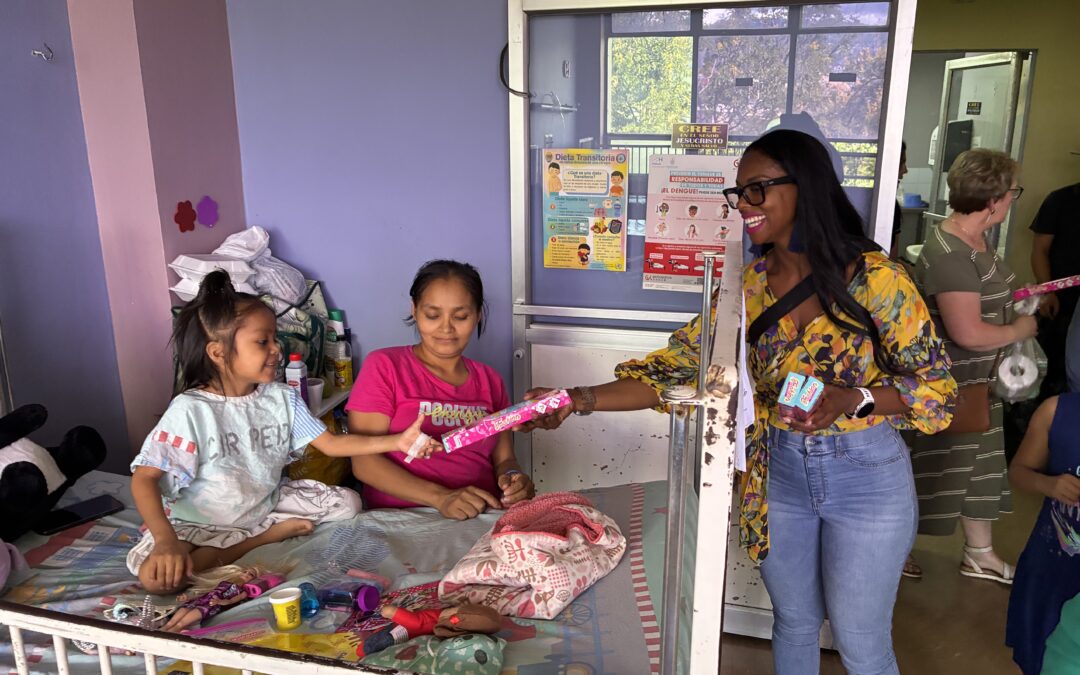
Proof takes different forms, and the strongest kind is direct observation. Impact Others Inc. takes donors on trips to project locations so they can see the work firsthand, the wells, the feeding centers, the orphanages, the sewing centers that generate sustainable income for families. This is not a promotional tour. It's a transparency mechanism. Orphanage project funding with site visits is one of the clearest ways a donor can verify that funds are reaching real people in real communities.
Beyond site visits, the proof includes:
- Monthly financial reporting to an independent board
- Regular project reports submitted by local partners
- Donor communications that describe project progress, not just project intentions
- A 100% project donation policy that keeps program funds separate from administrative costs
One long-term partner, Mindy Tibbs, put it this way: "When I think about Impact Others, I picture my own children in a third-world country. If a business owner had the answer to what my child needed, whether it was clean water from a well, a sewing center, food, an orphanage, housing, or any of the other life-changing resources, would they give? That's why I partner with Impact Others. It's making a real difference."
That's the kind of trust that comes from watching an organization operate over time, not from reading a brochure.
What Red Flags Should I Watch For in Any Nonprofit?
Knowing what trustworthy looks like also means knowing what it doesn't look like. Here are the questions worth asking before you give to any humanitarian organization:
| Question | What a trustworthy answer looks like |
|---|---|
| Where do my project donations go? | Directly to the project, with administrative costs funded separately |
| Who reviews the financials? | An independent board, not just internal staff |
| Can I see project updates? | Regular reports with specific details, not general impact statements |
| Can I visit the project? | Yes, or at minimum, documented site visits by leadership |
| Who manages the work on the ground? | Named local partners with established track records |
The absence of clear answers to these questions is itself an answer. Organizations that obscure financial structure, use vague impact language, or make it difficult to trace where funds go are asking you to trust a feeling rather than a process.
Impact Others Inc. operates differently. The 100 percent of project donations policy, the independent board oversight, and the donor trip program all exist because accountability has to be demonstrable, not just declared.
How Do Recurring Donors Experience This Accountability Over Time?
A one-time donation is a test of trust. A recurring monthly donation is what trust looks like after it's been earned. The donors who give to Impact Others Inc. month after month do so because they've seen the pattern hold: money goes where it's supposed to go, reports come back, and the work continues.
Recurring donations making a real difference depends on exactly this kind of sustained accountability. When a donor knows that their monthly contribution is funding a feeding center or a water project, and that they'll receive an update on how those funds were used, giving becomes purposeful rather than anxious.
Mindy Tibbs, who has partnered with Impact Others Inc. for about four years, described the shift this way: "When you commit to giving to others and impacting others, it's incredible how that decision ends up impacting you." That kind of reflection doesn't come from a transaction. It comes from a relationship built on transparency and follow-through.
How Do I Know Trust Is Built on Structure and Not Just Promises?
The question "can I trust this organization?" deserves a structural answer, not a motivational one. Impact Others Inc. is built around a model where project funds go directly to local partners who manage the work, financials are independently reviewed and reported monthly, and donors have the option to see the projects firsthand. That structure is what makes trust possible, and what makes it sustainable for donors who want to give generously for years, not just once.
If you want to understand how Impact Others Inc. handles your donation before you give, reach out directly. The team is available to walk you through how the model works, which projects are currently active, and what reporting you'll receive as a donor.
Checklist
- Before giving to any humanitarian organization, ask for their financial reporting structure, specifically whether project donations are kept separate from administrative costs.
- Request documentation of local partner relationships, including how partners are selected and how their work is monitored.
- Ask whether donor site visits are available, the ability to visit a project location is one of the strongest accountability signals any nonprofit can offer.
- Look for independent board oversight, not just internal financial review.
- If you're considering recurring monthly donations, ask what reporting you'll receive and how often, you should know what your giving is doing, not just that it's doing something.
- Evaluate how the organization describes the people it serves, dignity in communication reflects integrity in operations.
FAQ
How do I know Impact Others Inc. won't use my donation for overhead?
When you designate a donation to a specific project at Impact Others Inc., 100 percent of that project donation goes to the project. Administrative expenses are funded separately and kept deliberately low. The organization maintains independent bookkeeping and reports monthly financials to its board, so the separation between program funds and administrative costs is documented, not just stated.
Does Impact Others Inc. actually manage the projects it funds?
Impact Others Inc. is a funding and stewardship organization, not a construction or field management organization. It raises funds and sends them directly to trusted local partners who manage the projects and their own field expenses. Those partners submit regular financial and project reports back to Impact Others Inc., which then communicates progress to donors. This model keeps roles clear and financial accountability intact.
Can I visit the projects my donations support?
Yes. Impact Others Inc. takes donors on trips to project locations, including clean water projects, feeding centers, orphanages, and sewing centers, so they can see the work firsthand. This isn't a promotional event; it's a transparency mechanism that allows donors to verify that funds are reaching real communities.
What kind of updates will I receive after donating?
Donors receive project progress communications based on the reports submitted by local partners. These updates describe what is happening in the field, not just what the organization intends to do. Monthly financials are reported to the board, and that reporting cycle informs what gets communicated to donors.
How is Impact Others Inc. different from nonprofits that take a percentage of every donation for overhead?
Many nonprofits deduct a percentage of every donation, including project-designated donations, to cover administrative costs. Impact Others Inc. keeps project funds entirely separate, sending 100 percent of project-designated donations to the named project. Administrative expenses are covered through a different funding stream, which is why the organization's overhead remains low relative to most nonprofits.
What should I ask a nonprofit before I trust them with my donations?
Ask where project donations go and whether administrative costs are taken from them. Ask who reviews the financials and how often. Ask whether you can visit the projects or receive regular field reports. Ask how local partners are selected and monitored. The quality and specificity of those answers will tell you more than any mission statement.
Is Impact Others Inc. transparent about how local partners are selected?
Impact Others Inc. works with trusted local partners who have established track records in their communities. Partners manage the projects and submit regular financial and project reports. The organization's leadership, including donor trip programs, allows supporters to build direct familiarity with the work being done on the ground.
If you're ready to give with confidence, or you simply want to understand how Impact Others Inc. operates before you commit, the team welcomes that conversation. Reach out by phone at 2196780669, by email at info@impactothers.com, or by mail at 5885 Cumming Hwy Ste 108347, Sugar Hill, GA 30518. Transparency isn't a policy at Impact Others Inc., it's the foundation the whole model is built on.