Some do – and the difference is structural, not just a policy statement. Impact Others Inc. is built so that every dollar donated to a project goes to that project, because operating costs are covered through a separate funding stream entirely. That separation is not a marketing claim; it is how the organization's finances are set up.
If you have ever hesitated before giving because you wondered how much of your donation would quietly disappear into salaries, software subscriptions, or credit card processing fees, that hesitation is reasonable. This article explains how the 100% model actually works, who pays for overhead when donors do not, and how you can verify any of it for yourself.
What Does "100% to the Cause" Actually Mean for a Charity?
A 100% model means that the money a donor designates for a project reaches that project in full – not a percentage of it, not what is left after administrative expenses are deducted. For this to be real rather than aspirational, the organization must have a separate, funded source that covers everything else: staff time, technology, compliance, payment processing, and any other cost of running the organization.
Without that separate source, "100% to the cause" is often just an accounting choice – moving expenses into a different category rather than genuinely protecting donor funds. The question worth asking any charity that makes this claim is not whether they say it, but how they pay for the lights.
According to World Care Foundation, their 100% donation policy means every penny donated for a cause is used strictly for that cause, including project delivery costs – which illustrates that a credible policy names what is included, not just what is excluded.
At Impact Others Inc., every dollar donated to a project goes directly to that project, so your generosity reaches the people who need it most.
How Are Operating Costs Covered If Donors Don't Pay Them?
This is the structural question that separates a genuine 100% model from a slogan. Impact Others Inc. covers its operating costs through private and institutional supporters – individuals and business partners who specifically fund the organization's ability to operate, separate from any public project donation.
These supporters understand that running an honest, well-governed organization costs something. They choose to fund that layer so that when an everyday donor gives toward clean water in Nigeria, food assistance in Honduras, or an orphanage in India, none of that gift is redirected to pay a phone bill or a processing fee.
Business partners who give at this level often describe it as an investment in the infrastructure that makes their project giving trustworthy. As one four-year Impact Others Inc. partner put it: "When you commit to giving to others and impacting others, it's incredible how that decision ends up impacting you." That partner, Mindy Tibbs, grew her business from $500,000 to more than $11 million in annual revenue over the same period – and credits the commitment to purposeful giving as part of that trajectory.
The practical result: the operating layer is funded, the project layer is protected, and the two never mix.
Are Donor Funds Kept Separate From Operating Money?
Yes. Donor funds designated to specific projects are kept separate from the funds used to run Impact Others Inc. day-to-day. This is not just a bookkeeping preference – it is the mechanism that makes the 100% model verifiable rather than theoretical.
Impact Others Inc. maintains independent bookkeeping, and financials are reviewed and approved by the board on a monthly basis. That internal governance structure exists precisely so that the separation between project funds and operating funds can be confirmed by people with oversight responsibility, not just stated by the organization itself.
What About Credit Card Processing Fees?
Processing fees are a real cost that many donors never think about. When a charity does not cover those fees separately, a portion of each donation can be trimmed by the processor before it reaches the cause. Impact Others Inc. addresses this through its operational funding structure, so the full donated amount reaches the project rather than being trimmed at the payment step. If you want to confirm how a specific donation is handled, contact the team directly – the answer should be clear and immediate, not evasive.
How Can a Donor Verify That Their Gift Reached the Field?
Verification is where many charities fall short. They make the claim, but the donor has no practical way to confirm it. Impact Others Inc. approaches this differently through documentation and direct access.
Project photos and progress updates are shared with donors so they can see the work their giving funded. The most powerful form of verification is a site visit. Impact Others Inc. takes donors directly to project locations – to feeding centers in Honduras, water projects in Nigeria, orphanages in India, and communities across Ghana, Colombia, Egypt, and Thailand – so they can see the work with their own eyes.
One donor who made that trip described it this way: "I feel like it's very difficult to have a complete understanding until you physically put your hands on it… the water cisterns project that we visited and got to see… if you have an opportunity to contribute, contribute. Anything and everything you can give will go to the utmost use here."
Another donor who visited a feeding center said: "Impact Others has done the hard job. They find the places with the right infrastructure, with the right means, and we just come and give a little part of us and make a bigger impact in every place."
For donors who want to visit humanitarian project sites in person, that option is genuinely available – not as a rare exception, but as a regular part of how Impact Others Inc. connects supporters to the work their giving makes possible.
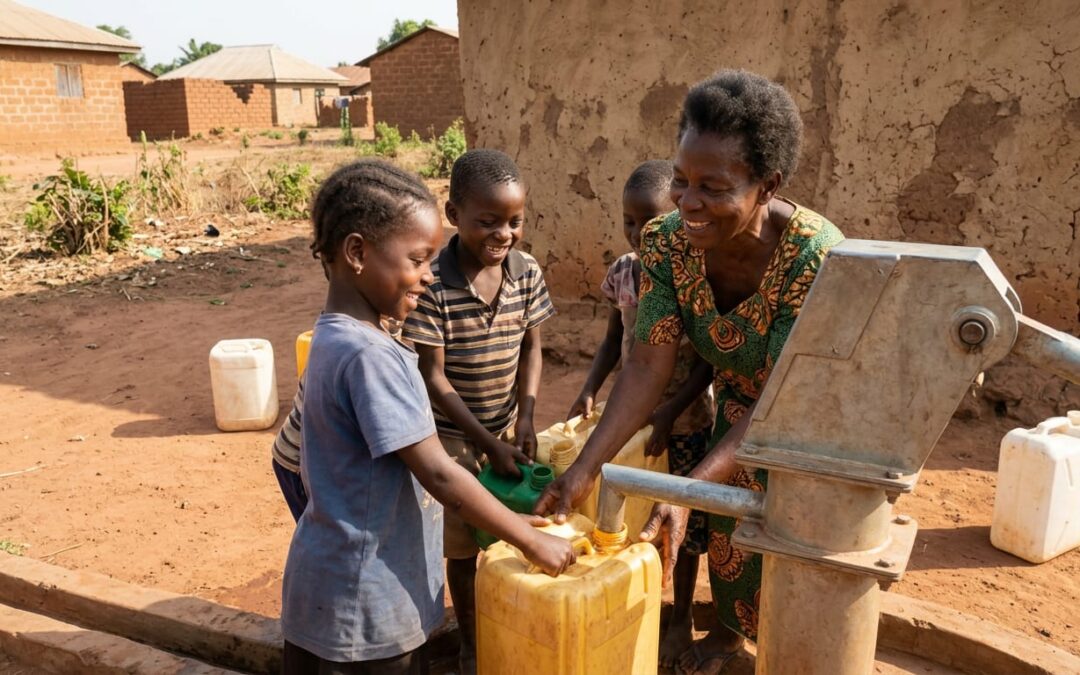
A young community member in Nigeria, whose village received a clean water project funded through Impact Others Inc., put it plainly: "We used to fetch water from this stream. It is polluted water with cattle and other animals. Now since we have this clean water we don't have to travel far to get the water."
That is what 100% to the cause looks like on the ground.
Is the 100% Model the Right Fit for Every Donor?
The 100% model matters most to donors whose primary concern is knowing their gift did not evaporate before it reached a person in need. If you are someone who wants to designate donation to specific project – clean water, food, an orphanage, education, or a new business opportunity – and you want confidence that the full amount arrives, then the structural separation Impact Others Inc. uses is directly relevant to you.
If you are weighing whether to give internationally or locally, the same question applies: does the organization you are considering have a funded operational layer, or are your project donations quietly subsidizing their overhead? That is the comparison that matters, not the country on the map. For a broader look at how to evaluate effective humanitarian charities, the criteria around fund separation and operational transparency are among the most telling.
The 100% model is not the only measure of a good charity, but for donors who have been burned by vague overhead ratios or felt their giving disappear into an administrative black hole, it is the most direct answer to the trust problem.
How Does the Structure Answer the Question?
Most donors do not need a more complex explanation. They need to know: is there a wall between my donation and the organization's operating expenses? For Impact Others Inc., the answer is yes – built structurally, governed by a board, and open to direct verification through site visits and project documentation.
The passion behind this work is real. The communities receiving clean water, food, and safety are real. And the commitment that their gifts reach those communities in full is the foundation on which every donor relationship at Impact Others Inc. is built.
If you want to give with that kind of confidence – toward water, food, orphanages, education, or new business opportunities for communities around the world – reach out directly. Call 219-678-0669, email info@impactothers.com, or write to Impact Others Inc. at 5885 Cumming Hwy, Suite 108347, Sugar Hill, GA 30518.
Checklist
- Ask any charity you consider: "How are your operating costs funded – and is that money separate from project donations?" A clear, immediate answer is a good sign. Hesitation or a redirect is not.
- Look for structural separation, not just a policy statement. A 100% model is only credible when the organization has a named, funded source for overhead that is independent of public donations.
- Confirm processing fees are covered. If a charity cannot tell you whether credit card fees are absorbed by operational funding or deducted from your gift, assume the latter until proven otherwise.
- Consider a site visit as your verification. Charities that fund specific water or orphanage projects and invite donors to see the work in person are offering the most direct form of accountability available.
- Check for board-level financial oversight. Monthly board review of financials is a governance signal that fund separation is monitored, not just claimed.
- Designate your donation to a specific project. When your gift is tied to a named project, it is far easier to confirm the outcome – and far harder for overhead to quietly absorb it.
FAQ
Who actually pays for Impact Others Inc.'s operating costs if donors don't?
Private supporters and business partners who specifically fund the organization's operational layer cover those costs. This keeps public project donations protected – when an everyday donor gives toward food assistance or a clean water project, none of that gift is redirected to pay for administration, compliance, or technology.
Which types of projects can a donor designate their gift toward at Impact Others Inc.?
Donors can direct their giving toward specific projects including clean water, food and feeding centers, orphanages, education, new business opportunities, and toy drives. Impact Others Inc. funds these projects through trusted local partners in countries including Nigeria, Honduras, India, Ghana, Colombia, Egypt, Thailand, and the United States.
How do I know my donation actually reached the project I chose?
Impact Others Inc. shares project photos and progress updates with donors, and offers site visits to project locations so donors can see the work firsthand. That direct access – standing at a water project or a feeding center – is the most concrete form of verification available and is a regular part of how the organization connects supporters to the communities they fund.
Does the IRS allow a full deduction on charitable contributions?
According to the IRS, individuals may deduct qualified contributions of up to 100 percent of their adjusted gross income. Consult a qualified tax professional to confirm how this applies to your specific situation – this article does not constitute tax advice.
What should I look for when comparing charities that claim 100% goes to the cause?
The key question is how the organization funds its operations. A credible 100% model requires a separately funded operational layer – private supporters, institutional partners, or another designated source – so that public project donations are never used for overhead. Ask for that explanation directly; if the charity cannot provide it clearly, the claim may be an accounting presentation rather than a structural reality.