
If a nonprofit project closes, your donated funds should stay tied to the purpose you gave them for – and any legitimate organization has a clear process for honoring that intent. At Impact Others Inc., donor intent is a guiding principle, not a footnote. When project circumstances change, the funds designated for that project remain separate, tracked independently, and directed toward the closest aligned purpose rather than absorbed into general operating costs.
That answer matters because the concern behind this question is real. Donors who give to a specific project – a water cistern in Honduras, a feeding center in Guadalajara, an orphanage in Colombia – aren't giving to a general fund. They're giving to something they can picture. When that project changes or closes, they deserve a straight answer about what happens next.
What Does a Nonprofit Legally Have to Do With Restricted Funds?
A nonprofit is legally bound to honor donor-restricted gifts for their designated purpose. When a specific project closes and that purpose can no longer be fulfilled, the nonprofit project funding gap impact becomes a governance question, not just an operational one. The organization must either redirect the funds to a substantially similar purpose or, in some states, return them to the donor.
Washington State's guidance on dissolving nonprofits notes that restricted donations for a specific purpose may need to be returned to the donor if the restriction cannot be honored – a standard that reflects broader legal expectations across the sector. And according to the Council of Nonprofits, a charitable nonprofit that is dissolving must distribute its remaining assets only to another tax-exempt organization or to a government body for a public purpose – not to staff, leadership, or general overhead.
This is why the legal structure of a nonprofit matters to you as a donor. The rules exist. What varies is whether an organization actually follows them – and whether they communicate clearly when something changes.
How Does Impact Others Inc. Protect Funds When a Project Changes?
Impact Others Inc. sends 100 percent of project-related donations directly to the designated project. That is not a rounding statement – administrative expenses are covered separately, so the dollar you give to a specific project reaches that project in full.
What that commitment looks like in practice became clear on a Christmas delivery run to the hills of Honduras. Children began running toward the delivery truck before they even saw the gifts. What had started as a simple delivery became, in the words of those who were there, "a celebration of hope." That moment is a reminder of what donor intent actually means when it is honored all the way to the ground: the funds designated for those children reached those children, and the people delivering the gifts could see it with their own eyes.
The accountability structure behind that commitment involves independent bookkeeping maintained separately from local partners. Impact Others Inc. receives regular project updates from those partners and reports monthly financials to its board. That separation matters: it means project funds are tracked at the organizational level, not just held by the partner managing the work on the ground. If a project ends or a partner's situation changes, the stewardship record stays with Impact Others Inc.
Donor intent is the lens through which those decisions get made. When a project closes, the question isn't "what do we do with this money now?" – it's "what did the donor intend, and what is the most faithful way to honor that?" That distinction shapes how funds get reallocated, and it's the reason Impact Others Inc. maintains independent bookkeeping rather than routing everything through a single operational account.
Donors who want to understand donor transparency in nonprofit governance should ask specifically how a nonprofit separates restricted funds from general operations – and whether that separation is verified independently. Those are the structural questions that reveal whether an organization's accountability claims are real.
Can You Actually See Where Your Donation Went?
This is where Impact Others Inc. differs from most organizations. When you give through Impact Others Inc., you can see exactly where your support goes – because we take donors to the places your giving changes.
Donors have traveled to project sites in Honduras, Guadalajara, Ghana, and beyond – not on promotional tours, but as genuine participants in the work. What they find there is not a polished presentation. It is the actual place, the actual people, and the actual conditions their giving helped address.
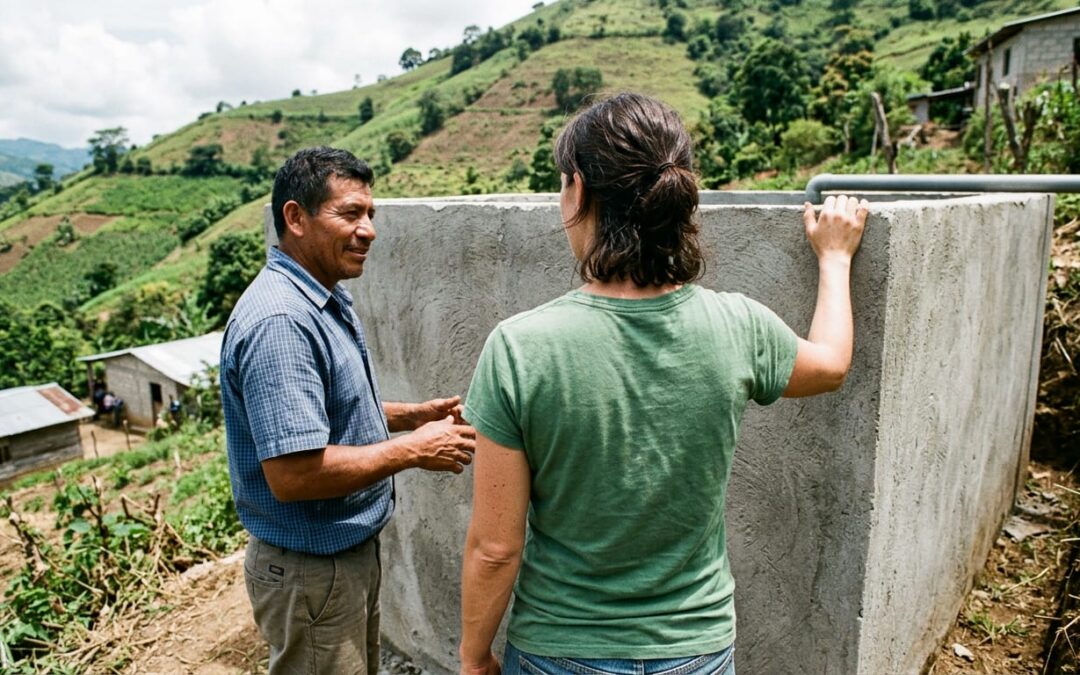
One donor who visited a project site in the mountains of Honduras described the experience directly: "The impact that's been made here is just outstanding… from the water cisterns project that we visited and got to see to the amount of people that have been fed and continue to be fed on a daily basis." That kind of firsthand accountability – standing in the place your donation reached – is something no document alone can replicate.
A real estate development couple who visited a project in Guadalajara put it this way: "One of the things we love about Impact Others is that you get to participate firsthand. You can be as involved as you want, but the great thing is you actually get to see the incredible work being done around the world."
That visibility is the accountability anchor. When you've stood at a feeding center or beside a water cistern, you are not wondering whether your donation was used well. You know.
What Should You Ask Any Nonprofit Before Giving to a Specific Project?
Not every organization handles restricted funds with the same rigor. Before you give to a project-specific campaign at any nonprofit, these are the questions worth asking directly:
- How are project-specific donations tracked? Ask whether funds are held in a dedicated account or pooled with general operating funds. Separation is the structural protection.
- What happens if this project closes or changes? A clear, specific answer – not a vague reassurance – is what you're looking for. Organizations with strong stewardship practices have thought through this scenario.
- Who manages the funds, and who manages the work on the ground? When the same entity controls both, there is less independent oversight. Impact Others Inc. maintains its own bookkeeping separately from the local partners who manage projects.
- Can I visit the project site? Organizations confident in their stewardship welcome this. Those who discourage it rarely explain why.
- Does the organization's board receive regular financial oversight? Monthly board-level review of financials is a governance standard that protects donors when circumstances change.
These questions apply whether you're giving to Impact Others Inc. or evaluating any other organization. Asking them is not skepticism – it is the kind of engaged giving that leads to the most meaningful partnerships.
What This Means for Your Giving
Giving to a specific project is an act of purpose. It means you saw something that mattered – a child without clean water, a family without food, a young person in an orphanage who needed a chance – and you decided to do something about it. That decision deserves an organization with the structure to honor it, even when circumstances change.
Impact Others Inc. is built around that commitment. The 100-percent-to-the-project model, independent bookkeeping, board-level financial oversight, and the open invitation for donors to visit project sites in person are not marketing features. They are the operational answer to the question this article is asking.
If you want to see the current work underway across Impact Others projects – and understand exactly what your giving would be directed toward – the Impact Others Projects page gives a clear picture of where funds are going right now.
To learn more or ask questions directly, reach out to the team at info@impactothers.com, call 2196780669, or write to Impact Others Inc. at 5885 Cumming Hwy Ste 108347, Sugar Hill, GA 30518. The people on the other end of that contact have been to these project sites. They can tell you what your giving would reach – and what happens to it if anything changes.