Before sending a DAF grant, confirm the nonprofit holds active 501(c)(3) status, review how it communicates financial and program results, and ask directly how it handles administrative expenses. Those three questions alone will separate organizations worth trusting from ones that leave you guessing.
DAF holders often reach this decision point with real money on the line and no clear framework for vetting. The checklist below gives you one.
Does the Nonprofit Have Verified 501(c)(3) Status?
Active 501(c)(3) status is the baseline requirement before any DAF grant can be processed. Your DAF sponsor – Fidelity Charitable, Schwab Charitable, Vanguard Charitable, or another sponsoring organization – will verify this before releasing funds, but confirming it yourself first saves time and avoids a rejected grant recommendation.
The IRS Tax Exempt Organization Search tool lets you check any organization's status, EIN, and filing history at no cost. Look for "PC" (public charity) designation, not a private foundation, since most DAF sponsors restrict grants to public charities.
Beyond status, check whether the organization has filed its Form 990 consistently. Gaps in filing history, or a history of late submissions, are worth asking about directly. A nonprofit that handles its own compliance well is more likely to handle your grant funds well.
If you're still working through the mechanics of how the grant process itself works, the article on grant money from Donor-Advised Fund covers the step-by-step process from recommendation to disbursement.
How Does the Nonprofit Handle Administrative Expenses?
This question matters more than most donors realize, and the answer varies widely. Some organizations fund administrative costs through a separate operating budget or fundraising stream, keeping project-related donations entirely intact. Others draw administrative costs directly from every donation, including yours.
Ask specifically: what percentage of a project-related donation reaches the project itself?
Impact Others Inc. sends 100 percent of project-related donations to the project itself. Administrative expenses are funded separately, which means a DAF grant directed toward a clean water project, a feeding center, or an orphanage goes entirely toward that work – not toward overhead. That structure is worth asking about with any nonprofit you're considering, because the answer tells you exactly what your grant is actually funding.
For a closer look at how Impact Others Inc. structures this, the article on 100 percent of project donations to the project explains the model in detail.
What Financial Oversight Does the Organization Maintain?
Transparent stewardship means more than publishing an annual report. Ask whether the organization maintains independent bookkeeping, how often it reviews financials internally, and whether those financials are shared with a governing board on a regular schedule.
Impact Others Inc. maintains independent bookkeeping and provides monthly financial updates to its board. Funds raised for specific projects are sent directly to trusted local partners, who manage the work on the ground and submit both financial and project status updates back to Impact Others Inc. That structure creates a documented accountability chain from donor to project.
"Hi, we're Rob and Bernice. We've learned that it's important who you choose as a partner. We've chosen Impact Others. After meeting Eddie and seeing the integrity, the sustainability, and the boots-on-the-ground work – drilling wells, supporting feeding centers, and creating sewing centers – we decided to become partners. We love partnering with Impact Others. Their integrity and their desire to help people around the world who are living in unfortunate circumstances really connect with us."
That kind of trust is built through consistent communication, not one-time disclosure. Ask any nonprofit you're evaluating how often donors receive financial updates and what those updates actually contain.
The article on financial reporting accountability nonprofit covers what that board-level oversight looks like in practice.
How Does the Nonprofit Communicate Impact Back to Donors?
A grant recommendation is easy to make. Knowing what happened afterward is where most organizations fall short.
Before sending a DAF grant, ask the nonprofit: how will I know the project moved forward? What will you send me, and when? Some organizations send a single acknowledgment letter and nothing more. Others provide structured project updates tied to milestones, along with financial documentation from the field.
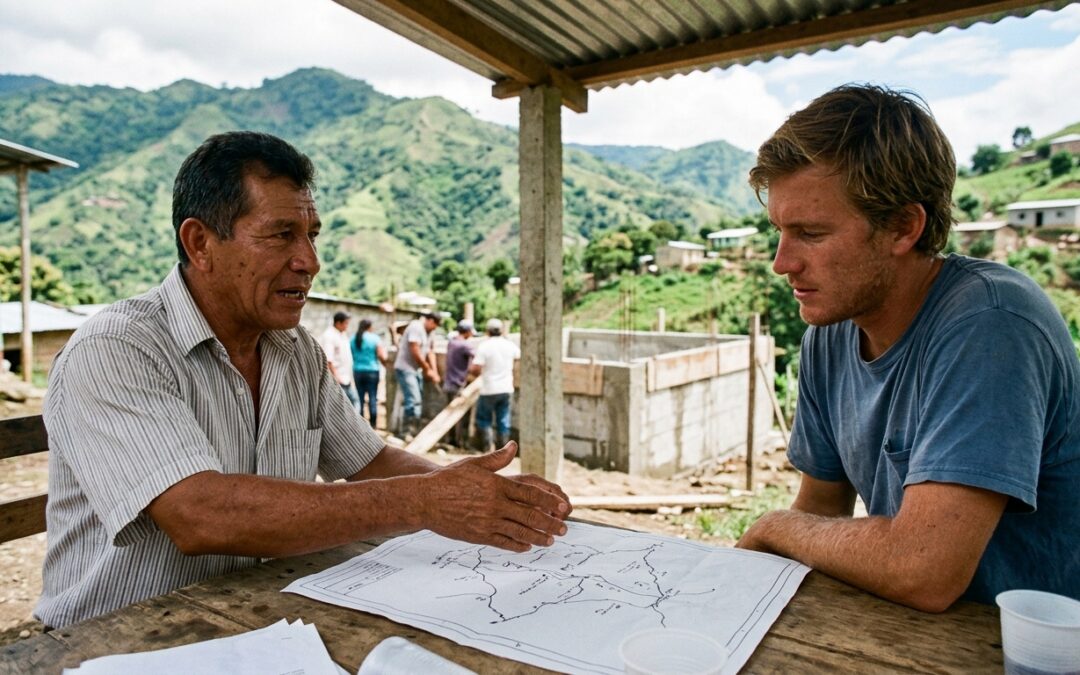
Impact Others Inc. receives regular financial and project updates from its local partners and passes that information to donors. For DAF holders who want to go further, Impact Others Inc. also offers the opportunity to travel to project sites and see the work firsthand – not through a summary document, but in person.
One donor who traveled to Honduras described the experience this way: "I feel like it's very difficult to have a complete understanding until you physically put your hands on it. The impact that's been made here is just outstanding."
That option – to visit and verify – is uncommon among nonprofits. It matters most to DAF holders who want confidence that their grant produced a real result, not just a receipt.
Impact Others Inc. funds clean water, food, education, and orphanages through trusted local partners – and invites supporters to visit the work in person.
How to Compare Nonprofits Side by Side Before Committing a Grant
Not every nonprofit will answer these questions directly, and that itself is useful information. Use the table below as a quick comparison framework when evaluating two or more organizations.
| Evaluation Factor | What to Ask | Strong Signal |
|---|---|---|
| Legal status | Is the 501(c)(3) active and verifiable? | IRS database confirms active PC status |
| Administrative costs | Are project donations kept 100% intact? | Separate funding for overhead |
| Financial oversight | Is there independent bookkeeping and board review? | Monthly board financials |
| Donor communication | What updates will I receive, and how often? | Scheduled project and financial updates |
| Verification options | Can I see the work directly? | Site visits available to donors |
The strongest indicator of a trustworthy nonprofit partner is not what it claims – it's what it can show you and how consistently it does so.
Checklist
- Verify 501(c)(3) status using the IRS Tax Exempt Organization Search before your DAF sponsor processes the grant recommendation.
- Ask directly what percentage of your project-related donation reaches the project itself – and how administrative costs are covered separately.
- Review Form 990 filings for consistency and timeliness; gaps or late submissions are worth a direct conversation.
- Confirm the oversight structure: ask whether the nonprofit maintains independent bookkeeping and how often financials go to its board.
- Request the communication schedule: find out what updates you'll receive, in what format, and tied to what milestones.
- Ask whether site visits are available – for DAF holders who want to verify impact beyond written summaries, in-person access is a meaningful differentiator.
FAQ
What's the first thing to check before recommending a DAF grant to a nonprofit?
Confirm that the organization holds active 501(c)(3) public charity status through the IRS Tax Exempt Organization Search. Most DAF sponsors will verify this before processing a grant, but checking first avoids a rejected recommendation and gives you a chance to review the organization's filing history at the same time.
Who should I contact at a nonprofit to ask about administrative expenses and financial oversight?
Contact the organization's executive director or development team directly and ask two specific questions: how administrative expenses are funded, and what percentage of a project-related donation reaches the project itself. A nonprofit with nothing to hide will answer both questions clearly and promptly.
Which financial documents should a nonprofit be willing to share with a prospective DAF donor?
At minimum, ask for recent Form 990 filings and any board-level financial summaries. A well-governed nonprofit should also be able to describe how project funds are tracked from receipt through disbursement to the field, and whether that tracking is documented independently of the program team.
How often should I expect to hear from a nonprofit after a DAF grant is sent?
There is no universal standard, but a trustworthy organization will set expectations upfront – telling you what you'll receive, in what format, and on what schedule. Impact Others Inc. provides donors with project and financial updates sourced from its local partners, so the information comes from the field rather than only from the fundraising team.
Is it reasonable to ask a nonprofit if I can visit the projects my grant supports?
Yes, and the answer tells you something meaningful. Organizations confident in their field work welcome donor visits; those with less to show tend to discourage them. Impact Others Inc. actively invites donors to travel to project locations in countries including Honduras, Mexico, Nigeria, and Ghana to see the work directly.
What does "independent bookkeeping" mean, and why does it matter for a DAF grant?
Independent bookkeeping means that financial records are maintained and reviewed separately from the program team that spends the funds – reducing the risk of errors or misallocations going unnoticed. For DAF holders, it means there is a documented audit trail from the grant receipt to the project expenditure, which is the foundation of verifiable stewardship.
What red flags should make me pause before sending a DAF grant to a nonprofit?
Pause if the organization cannot clearly explain how administrative costs are funded, if Form 990 filings are missing or consistently late, if it cannot describe a regular financial review process, or if it is unwilling to provide scheduled project updates after a grant is made. Any of those gaps warrants a direct conversation before you proceed.
Reaching a nonprofit before committing a grant is straightforward when you know what to ask. If you'd like to ask those questions directly to Impact Others Inc., the team is available to walk through the organization's financial structure, local partner model, and donor communication process in plain terms. Reach out by phone at 2196780669, by email at info@impactothers.com, or by mail at 5885 Cumming Hwy Ste 108347, Sugar Hill, GA 30518.