
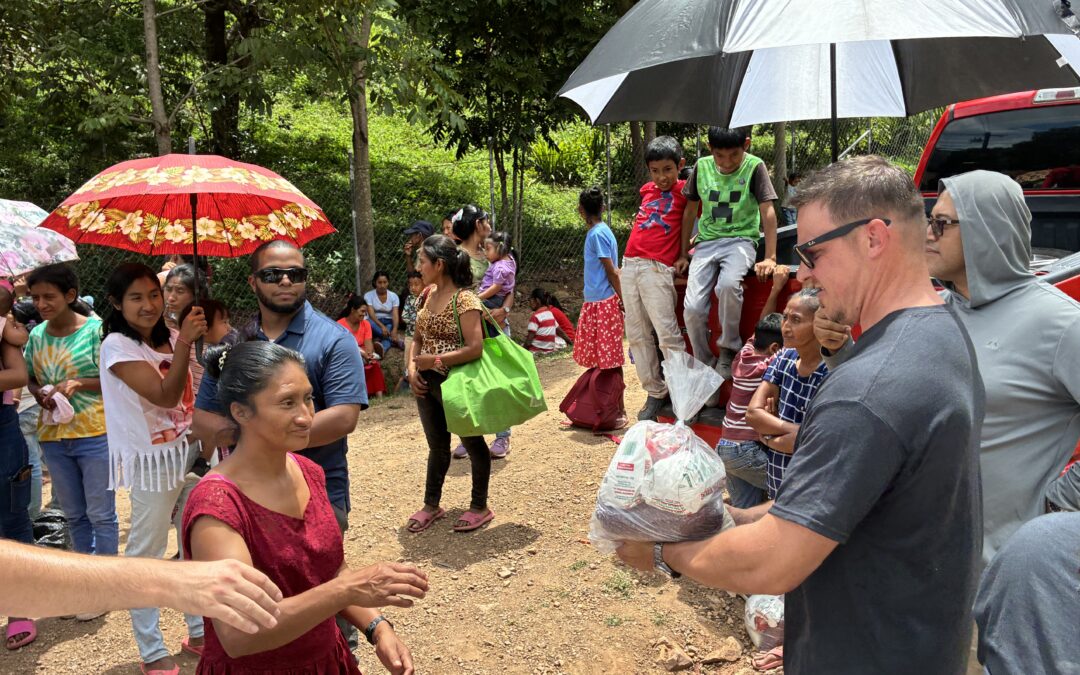
When you send a donation to Impact Others Inc., the funds are directed to the specific project you designated, not absorbed into general overhead. Impact Others operates as a funding and stewardship organization, which means the organization raises funds, transfers them to trusted local partners who manage the work on the ground, and then monitors financial and project reports to confirm the funds were used as intended. That structure is what separates stewardship from simply collecting money and hoping for the best.
This question matters more than most donors realize. Plenty of organizations publish impact reports. Fewer can tell you, step by step, what happened between the moment your payment processed and the moment a well was drilled or a child received a meal. The sections below walk through exactly how Impact Others handles that gap.
What Happens to a Donation After It's Received?
Impact Others maintains independent bookkeeping and reports monthly financials to its board. When a donation comes in, it is recorded against the specific project it was designated for. The funds are then transferred to the local partner organization responsible for managing that project, whether that's a feeding center, a water well, an orphanage, or a small business startup program.
Those local partners manage their own field teams, expenses, and day-to-day operations. Impact Others does not claim to supervise construction crews or manage field logistics directly. What Impact Others does is receive regular financial and project reports from those partners, reconcile the numbers against what was sent, and communicate progress back to donors. Local partners understand their communities far better than any outside organization can, which is why this separation is intentional.
How Does Impact Others Verify That Local Partners Use Funds Correctly?
Impact Others works only with local partners who have an established track record and are willing to submit regular financial and project reports. That reporting requirement is part of the relationship from the start, not something requested after a problem surfaces.
When reports come in, Impact Others reviews them against the funds transferred and communicates findings to donors. If a discrepancy arises, it gets addressed before additional funds are released. This is a meaningful distinction from organizations that simply wire money abroad and report back in general terms. Knowing how to verify DAF grants reach beneficiaries is one of the most common concerns among serious donors, and the answer almost always comes down to whether the organization has a real reporting structure, not just a compelling story.
Partners Rob and Bernice described what drew them to this approach: "After meeting Eddie and seeing the integrity, the sustainability, and the boots-on-the-ground work, drilling wells, supporting feeding centers, and creating sewing centers, we decided to become partners. Their integrity and their desire to help people around the world who are living in unfortunate circumstances really connect with us."
That kind of trust is built by showing the system, not just describing it.
Where Does the Money Go, Program Costs vs. Overhead?
Impact Others sends 100 percent of project-related donations to the project itself. Administrative expenses are kept separate and are reported independently to the board. This means that when you designate a donation to a specific project, a water well in a particular region, a feeding center, a Christmas toy drive, those funds go to that project.
This structure matters especially for Donor-Advised Fund holders, who often want to direct DAF donations to programs rather than watch grants disappear into organizational overhead. The ability to point to a specific project and confirm that designated funds reached it is what makes intentional giving feel real rather than theoretical.
| Fund Type | Where It Goes |
|---|---|
| Project-designated donations | 100% to the named project via local partner |
| Administrative expenses | Reported separately; covered independently |
| Monthly financials | Reviewed by the Impact Others board |
The key takeaway: project funds and administrative costs are tracked separately, so a donor designating funds to a specific program can follow the money without it blending into general operations.
Can Donors Actually See the Work in Person?
Yes. Impact Others takes donors on trips to project locations so they can observe the work directly. This is not a marketing exercise, it's an accountability mechanism. When a donor stands next to a well that was drilled with funds they contributed, or walks through an orphanage that their giving helped support, the question of whether the money reached the project answers itself.
For donors who want to verify nonprofit impact through site visits, this option is genuinely available through Impact Others, not as a rare exception, but as a regular part of how the organization builds trust with long-term partners.
Mindy Tibbs, an Impact Others partner for about four years, put it plainly: "When I think about Impact Others, I picture my own children in a third-world country. If a business owner had the answer to what my child needed, whether it was clean water from a well, a sewing center, food, an orphanage, housing, or any of the other life-changing resources, would they give? That's why I partner with Impact Others. It's making a real difference."
That perspective captures what stewardship looks like when it's working: a donor who trusts the organization enough to connect their own family to the mission.
What Does Transparent Stewardship Actually Look Like Day to Day?
Most donors never see the internal side of a nonprofit. Impact Others maintains a structure that keeps that side visible to the people who need to see it. Monthly financial reports go to the board. Project reports come in from local partners. Donors receive updates on the projects they've supported.
This is what humanitarian organizations with transparent spending reports look like in practice, not a single annual report, but an ongoing rhythm of financial accountability that runs whether or not a donor asks for it. The system exists because Impact Others believes donors deserve to know what happened to their money, not just that something good probably occurred somewhere.
For DAF holders and their financial advisors, this structure translates directly into confidence. A grant that can be traced, from the DAF account, through Impact Others, to the local partner, to the field report, is a grant that satisfies both the donor's intent and the advisor's due diligence obligation.
So How Does Impact Others Actually Make Sure My Donation Reaches the Project?
Impact Others makes sure your donation reaches the project through designated-fund tracking, independent bookkeeping, board-level financial reporting, regular partner reporting, and optional in-person site visits. No single mechanism does all the work, it's the combination that creates accountability. If you're evaluating where to direct a DAF grant and stewardship transparency is a priority, the structure described here is what that looks like in practice at Impact Others Inc.
Checklist
-
Ask any nonprofit you're considering to describe their fund-flow process from receipt to field, not just their mission.
-
Confirm that project-designated donations are tracked separately from administrative expenses before you give.
-
Request a sample financial or project report from the organization to see what donor communication actually looks like.
-
Ask whether site visits are available, being able to see the work in person is one of the strongest forms of accountability a nonprofit can offer.
-
For DAF holders, confirm the organization can receive grants from your sponsoring institution and designate funds to a specific program, not just to general operations.
-
Review the organization's board reporting cadence, monthly financials reviewed by an independent board is a meaningful standard; annual-only reporting is not.
FAQ
How does Impact Others track where my donation goes after I give?
Impact Others records every donation against the specific project it was designated for and maintains independent bookkeeping reviewed by its board monthly. Funds are then transferred to the local partner managing that project, and Impact Others monitors the financial and project reports those partners submit to confirm the money was used as designated.
Does Impact Others manage the projects directly, or do local partners handle the work?
Local partners manage all field operations, including staffing, construction, and day-to-day program delivery. Impact Others raises and stewards the funds, transfers them to those partners, and holds them accountable through regular financial and project reporting. This division is intentional, local partners know their communities best.
What percentage of my donation actually goes to the project?
Impact Others sends 100 percent of project-related donations to the project itself. Administrative expenses are tracked and reported separately to the board and are not drawn from project-designated funds.
Can I visit a project to see the work myself?
Yes. Impact Others takes donors on trips to project locations as part of how it builds long-term trust with its partners. Seeing the work in person is one of the most direct ways to confirm that funds reached their destination.
How do I know the local partner is legitimate and accountable?
Impact Others works only with local partners who have an established track record and agree to submit regular financial and project reports as a condition of the relationship. Reports are reviewed against the funds transferred, and discrepancies are addressed before additional funds are released.
Is this structure suitable for Donor-Advised Fund grants?
Yes. Impact Others is set up to receive DAF grants and can designate funds to specific projects. The monthly board reporting and partner accountability structure gives DAF holders and their financial advisors the documentation trail needed to confirm that a grant reached its intended program.
What happens if a project report shows the funds weren't used correctly?
Impact Others reviews all financial and project reports against funds transferred. If a discrepancy surfaces, it is addressed with the local partner before additional funds move. This ongoing review process is part of what stewardship means in practice, not a one-time check, but a continuous accountability loop.
If you'd like to understand more about how Impact Others Inc. structures its stewardship before directing a grant, reach out directly. The team is glad to walk through the fund-flow process, share sample project reports, or discuss what a site visit looks like. You can reach Impact Others Inc. at 2196780669, by email at info@impactothers.com, or by mail at 5885 Cumming Hwy Ste 108347, Sugar Hill, GA 30518.