When you give to Impact Others Inc., your project-related donation goes directly to the project, not to overhead, not to administrative costs, and not to a general fund that gets redistributed without your knowledge. Impact Others operates as a funding and stewardship organization, meaning the organization raises funds, sends them to trusted local partners who manage the work on the ground, and then reports back to donors on what happened. That structure is the foundation of how your generosity reaches the people who need it.
What Actually Happens to Your Donation After You Give?
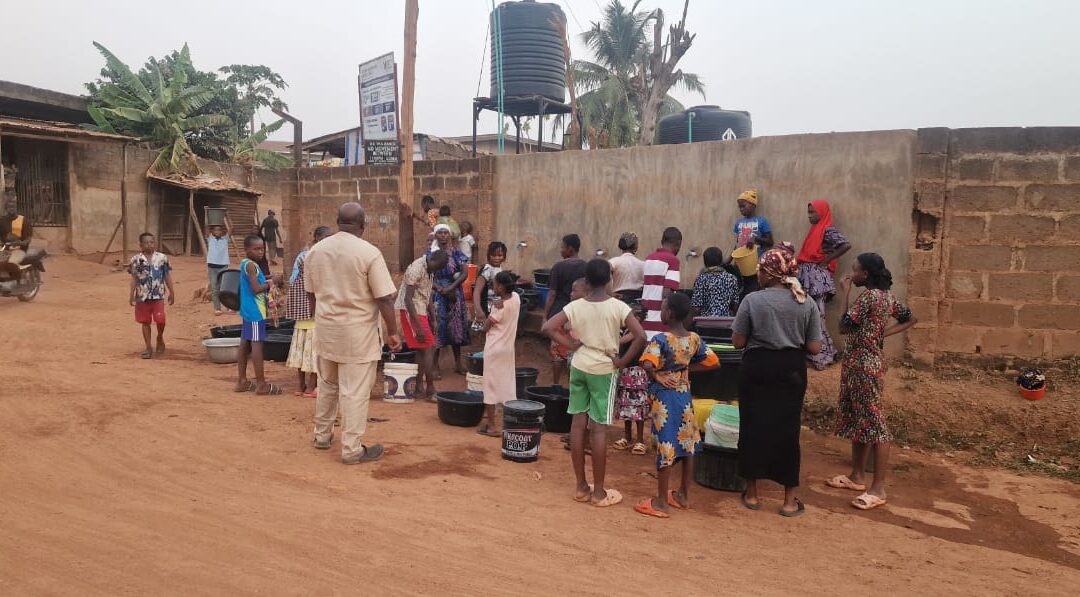
The moment a project-related donation comes in, Impact Others routes it to the designated project. The organization does not pool project funds with administrative expenses or redirect them to other programs. Local partners, organizations and teams already embedded in the communities being served, receive those funds and manage the work: drilling wells, running feeding centers, supporting orphanages, creating sewing centers, and building other sustainable programs.
Impact Others maintains independent bookkeeping, reports monthly financials to its board, and receives regular financial and project updates from those local partners. That reporting chain is how the organization stays accountable, not just to donors, but to the communities depending on the work.
Trust is built not from a single transaction, but from repeated, transparent communication over time. Donors who stay engaged year after year do so because they keep receiving honest updates, not polished marketing, but real reports on what is happening in the field.
How Does Impact Others Vet the Local Partners Who Manage the Work?
Impact Others does not parachute into a country and manage construction or field operations directly. Instead, the organization builds long-term relationships with local partners who already have roots in their communities. These are people and organizations with existing infrastructure, local knowledge, and accountability to the people they serve.
Before funds move, Impact Others evaluates those partners for integrity, sustainability, and the ability to deliver results. Local partners are the ones drilling wells, running food programs, and caring for children in orphanages. Impact Others' role is to fund that work responsibly and verify that it is happening.
Two long-term donors described their decision this way: "After meeting Eddie and seeing the integrity, the sustainability, and the boots-on-the-ground work, drilling wells, supporting feeding centers, and creating sewing centers, we decided to become partners. Their integrity and their desire to help people around the world who are living in unfortunate circumstances really resonate with us."
That kind of trust takes time to build. It also requires transparency about how the partnership model works, which is why Impact Others is direct about what it does and does not do.
What Proof Do Donors Actually Receive That Their Money Reached the Project?
Accountability at Impact Others is not a one-time disclosure, it is an ongoing practice. Local partners send regular financial and project reports back to Impact Others. Those updates are reviewed, reconciled against independent bookkeeping, and communicated to donors so they can see what their giving is producing.
For donors who want to go further, Impact Others takes supporters on trips to project locations. These are not curated press tours. They are direct visits where donors can see water wells, feeding centers, orphanages, and sewing centers in person, and meet the local partners managing the work. For many donors, a site visit is the moment that moves giving from a financial transaction to a genuine partnership.
If you want to understand what percentage of donation goes to people in need at Impact Others versus other organizations, the answer is direct: 100 percent of project-related donations reach the project. Administrative expenses are kept deliberately low and are funded separately, they do not come out of what you designate for a specific program.
Why Does the Funding Model Matter, Not Just the Mission?
A compelling mission statement does not protect your donation. The structure behind it does. Many donors have experienced the frustration of giving to an organization with an inspiring vision, only to discover that a large portion of their money went to salaries, marketing, or overhead they never agreed to fund.
Impact Others was built around a different model. The organization's administrative costs are kept low by design, and the funding structure keeps project donations separate from operational expenses. That reflects a deliberate commitment to stewardship.
A long-term donor who has partnered with Impact Others for four years put it plainly: "I picture my own children in a third-world country. If a business owner had the answer to what my child needed, whether it was clean water from a well, a sewing center, food, an orphanage, housing, or any of the other life-changing resources, would they give? That's why I partner with Impact Others. It's making a real difference."
That kind of clarity about the model, what happens to the money, who manages it, and how it is verified, is what separates a funding organization that earns long-term trust from one that simply asks for it.
Donors who want to understand project-specific donations administrative costs in more detail will find that Impact Others is transparent about the separation between project funds and operational expenses. And for those considering whether recurring donations making a real difference over time is worth the commitment, the consistent reporting and partner accountability structure is what makes that difference visible.
What Makes This Accountability Model Worth Trusting?
The accountability model at Impact Others rests on three things working together: a clear funding structure, verified local partnerships, and ongoing communication back to donors.
No single element is enough on its own. A clear funding structure without verified partners is just a policy on paper. Verified partners without ongoing reporting leaves donors in the dark. Reporting without a clear funding structure creates confusion about where money actually went.
When all three are in place, and when donors have the option to visit project sites and see the work firsthand, giving stops feeling like a leap of faith and starts feeling like a genuine partnership. That is the word Impact Others uses deliberately: partner. Not donor, not benefactor. Partner. Because the relationship is ongoing, the accountability is mutual, and the impact belongs to everyone involved.
For donors who want to go deeper on how Impact Others structures major project funding, the question of how to ask major donors which project they want to fund is covered in detail, including how project selection and donor alignment work in practice.
Checklist
-
Ask directly how project donations are separated from administrative expenses, any trustworthy humanitarian funding organization should be able to answer this without hesitation.
-
Look for independent bookkeeping and board-level financial oversight as baseline indicators that an organization manages donor funds responsibly.
-
Consider a site visit if you want firsthand confirmation that the work is real, Impact Others takes donors to project locations specifically for this reason.
-
Verify that the organization operates as a funding and stewardship model, not a direct implementation model, so you understand who manages the work and who is accountable for results.
-
Ask what percentage of your donation reaches the project, for Impact Others Inc., 100 percent of project-related donations go directly to the designated project.
FAQ
How does Impact Others make sure donations reach the right project and not overhead?
Impact Others maintains a strict separation between project-related donations and administrative expenses. Project donations go directly to the designated project, and the organization keeps independent bookkeeping that is reported monthly to its board. Administrative costs are funded separately and kept deliberately low.
Who actually manages the projects on the ground?
Impact Others is a funding and stewardship organization, not a direct implementation organization. Trusted local partners, teams already embedded in the communities being served, manage the field work, including water wells, feeding centers, orphanages, and sewing centers. Impact Others funds those partners and receives regular financial and project reports from them.
Can I see proof that my money reached the project?
Yes. Impact Others communicates project progress to donors through regular updates drawn from local partner reports. Donors who want direct verification can also join Impact Others on trips to project locations, where they can see the work in person and meet the local teams managing it.
Does Impact Others take a percentage of my donation for its own operations?
No. One hundred percent of project-related donations go to the designated project. Impact Others keeps its administrative expenses low and funds them separately, they do not come out of what donors designate for a specific program like clean water, food, an orphanage, or a new business opportunity.
Why does Impact Others use local partners instead of managing projects directly?
Local partners have existing infrastructure, community relationships, and on-the-ground knowledge that a distant organization cannot replicate. This model also means the communities being served have ongoing ownership of the work, which makes programs more sustainable over time.
How is Impact Others different from nonprofits that pool donations into a general fund?
Impact Others designates project donations to specific projects, not a general fund. Donors can direct their giving to a particular program, clean water, food, an orphanage, education, or a new business opportunity, and that designation is honored. The organization's funding structure and independent bookkeeping exist specifically to protect that designation.
If you want to know more about how Impact Others structures its funding, vets its local partners, or communicates impact back to donors, the team is available to walk you through it directly. Reach out by phone at 2196780669, by email at info@impactothers.com, or by mail at 5885 Cumming Hwy Ste 108347, Sugar Hill, GA 30518. Giving with confidence starts with asking the right questions, and Impact Others is built to answer them.