
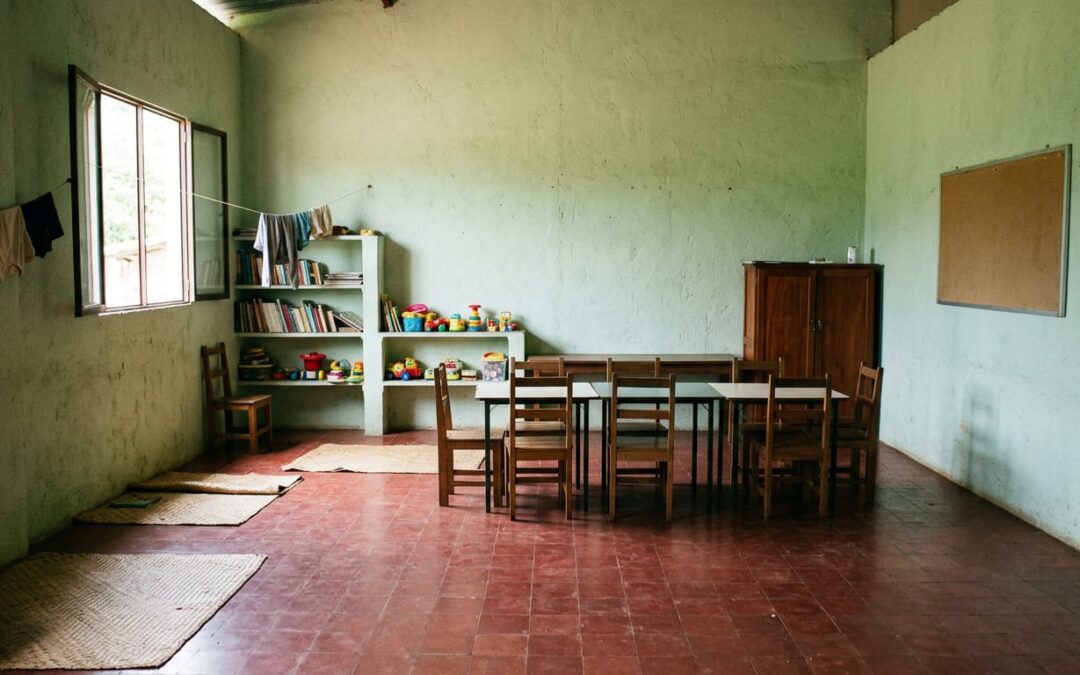
A local partner organization runs an orphanage by handling every practical dimension of daily life – hiring and managing staff, overseeing meals and health care, coordinating schooling, managing the facility, and dealing with the legal and administrative requirements of the country where the home operates. Impact Others Inc. works with trusted local partners in several countries, and what becomes clear from that work is that the people closest to the children are the ones best positioned to make the decisions that shape their lives.
What Does a Local Partner Actually Do Each Day?
The daily operations of a partner-run orphanage cover far more than shelter. Local partners are responsible for the full rhythm of life inside the home – and that rhythm is demanding.
-
Staffing and supervision. Local partners hire caregivers, house parents, cooks, and administrators. They manage schedules, handle payroll, and make sure the right adults are present at the right times. The ratio of adults to children matters enormously to the quality of care each child receives.
-
Meals and nutrition. Partners plan, source, and prepare food daily. Nutritional needs vary by age and health status, and local partners understand what is available, affordable, and culturally appropriate in their community. This is distinct from large-scale feeding programs – within an orphanage, local partner meal distribution is organized around the specific children in residence.
-
Health care coordination. Partners arrange routine check-ups, respond to illness, and maintain relationships with local clinics or hospitals. They keep health records and ensure children receive vaccinations and treatment when needed.
-
Education access. Partners coordinate school enrollment, transportation, uniforms, and supplies. For children with learning challenges or disabilities, they may arrange additional tutoring or specialized support. The question of orphanage children education access is one that local partners actively manage, not one that resolves itself.
-
Administrative and legal compliance. Every country has its own laws governing residential care for children. Local partners manage government registrations, inspections, and documentation. An outside organization operating from thousands of miles away could not manage this effectively.
-
Emotional and relational care. Beyond logistics, local partners create an environment where children feel known and safe. Caregivers build consistent relationships with the children – the kind of stability that institutional care, by definition, must work hard to provide.
Why Does the Local Partner Model Work Better Than Outside Management?
Because they are embedded in the community, local partners understand the cultural context, legal requirements, and practical realities that an outside organization could not manage as effectively. This is not a secondary benefit – it is the core reason the model exists.
The difference that local presence makes shows up clearly in the work Impact Others has done on water access. A young community member in Nigeria described what changed when a clean water project reached his community: "My name is Richmond. We used to fetch water from this stream. It is polluted water with cattle and other animals. Now since we have this clean water we don't have to travel far to get the water. Thank you Impact Others for getting us this clean water."
The same principle applies inside a partner-run orphanage. Language is one obvious factor. A caregiver who speaks the children's language, shares their cultural background, and understands local customs is not interchangeable with a well-meaning outsider. The same applies to sourcing food, navigating government agencies, building trust with families, and making judgment calls about a child's wellbeing.
UNICEF describes institutional care as a group living arrangement for more than ten children, without parents or surrogate parents, cared for by a much smaller number of paid adult carers – and UNICEF's guidance on alternative care is clear that residential facilities should be organized around the rights and needs of the child, with the objective of temporary care and, where possible, family reintegration. Local partners who are genuinely embedded in their communities are better positioned to pursue that goal than any outside manager could be.
This model also keeps overhead low. When local partners manage their own operations, there is no duplicated management layer, no expensive expatriate staff, and no logistical cost of remote oversight. That efficiency matters for donors who want their giving to reach children, not administration.
How Does Impact Others Inc. Fit Into This Model?
Impact Others Inc. raises and stewards the funds and sends them directly to these trusted local partners, who are responsible for how the money is used within the project. Impact Others is not the operator – the local partner is. That distinction is intentional, and it reflects a clear-eyed understanding of where expertise actually lives.
Impact Others Inc. sends every dollar donated to a project directly to that project.
What Impact Others does provide is accountability from a distance. The organization maintains independent bookkeeping, receives regular project updates from partners, and communicates progress to donors. Donors who want to go further can join a site visit and see the work firsthand. One donor who traveled to Honduras described the experience this way: "I feel like it's very difficult to have a complete understanding until you physically put your hands on it. The impact that's been made here is just outstanding… The work that they've done here is incredible from the water cisterns project that we visited and got to see to the amount of people that have been fed and continue to be fed on a daily basis." That option – to go, to see, to meet the children and the staff – is part of how trust is built and sustained.
Two partners who joined after meeting Impact Others' leadership directly put it plainly: "After meeting Eddie and seeing the integrity, the sustainability, and the boots-on-the-ground work – drilling wells, supporting feeding centers, and creating sewing centers – we decided to become partners. Their integrity and their desire to help people around the world who are living in unfortunate circumstances really connect with us."
A business owner who has partnered with Impact Others for about four years described what the commitment has meant: "When you commit to giving to others and impacting others, it's incredible how that decision ends up impacting you. When I think about Impact Others, I picture my own children in a third-world country. If a business owner had the answer to what my child needed – whether it was clean water from a well, a sewing center, food, an orphanage, housing, or any of the other life-changing resources – would they give? That's why I partner with Impact Others. It's making a real difference."
A pair of real estate developers who joined after traveling to Guadalajara with the Impact Others team described what drew them in: "One of the things we love about Impact Others is that you get to participate firsthand. You can be as involved as you want, but the great thing is you actually get to see the incredible work being done around the world."
What Standards Should a Well-Run Partner Orphanage Follow?
The standard that matters most is whether the children's rights and needs are at the center of every decision. UNICEF's framework for residential care states that children under the age of six should not be placed in any form of residential care – a benchmark that reflects how much the quality and type of care matters at different developmental stages.
A well-run partner orphanage, in practice, looks like this:
- Small enough that caregivers can know each child individually
- Staffed by people from the local community who speak the children's language
- Connected to local schools, clinics, and government systems
- Oriented toward family reintegration or stable alternative care when possible
- Transparent in its operations and open to external review
These are not abstract ideals. They are the operating conditions that local partners work within every day – and the conditions that Impact Others Inc. looks for when choosing which partners to fund.
What Does This Mean for Donors Who Care About Orphanage Work?
For donors who give to orphanage projects, understanding the local partner model answers the question that matters most: who is actually making decisions about these children's lives, and are they the right people to do it?
The answer, in the model Impact Others uses, is yes. Local partners hire the staff, manage the home, coordinate schooling and health care, and navigate the legal and cultural realities of their country. Impact Others raises the funds, stewards them carefully, and sends them directly to those partners. The people closest to the children are the ones making the calls.
If you want to learn more about how Impact Others Inc. partners with local organizations to fund orphanage work and other humanitarian projects, reach out directly. The team is available at info@impactothers.com, by phone at 2196780669, or by mail at 5885 Cumming Hwy Ste 108347, Sugar Hill, GA 30518. For donors who want to go beyond writing a check, site visits are available – because some things you have to see to fully understand.
FAQ
Who is responsible for the children's daily care inside a partner orphanage?
The local partner organization is responsible for all daily care – staffing, meals, health, education, and the emotional wellbeing of the children. Impact Others Inc. funds the work but does not manage the facility or supervise staff directly. The local partner makes every operational decision.
Which children are typically placed in residential care through partner orphanages?
Residential care is generally intended for children who cannot be cared for by their families and for whom no suitable family-based alternative is immediately available. UNICEF's guidance emphasizes that residential care should be temporary when possible, with the goal of family reintegration or a stable alternative family arrangement. Local partners work within these principles as they navigate individual cases.
How does Impact Others make sure donated funds actually reach the children?
Impact Others Inc. sends every dollar donated to a project directly to that project. The organization maintains independent bookkeeping and receives regular updates from local partners on project progress. Donors who want to see the work firsthand can join an organized site visit to partner locations.
Where do Impact Others' partner orphanages operate?
Impact Others Inc. funds humanitarian work through trusted local partners in multiple countries, including Ghana, Nigeria, Honduras, India, Egypt, Colombia, and Thailand, as well as foster care support in the United States. Each partner organization is embedded in its own community and manages operations according to local laws and cultural context.
What makes a local partner more effective than an outside organization managing an orphanage remotely?
Local partners speak the children's language, understand the cultural context, and have established relationships with local government agencies, schools, and clinics. They can make real-time decisions without waiting for approval from a distant headquarters. This proximity and cultural fluency is what makes the local partner model more effective – and it is the reason Impact Others Inc. funds partners rather than operating facilities directly.