
Donors who give through Impact Others receive documented project outcomes – not just an acknowledgment. After funds reach the field and the local partner completes work, Impact Others communicates what happened: which communities were served, what was built or delivered, and what the human result looked like on the ground. That communication takes different forms depending on the project and the donor relationship, but the through-line is consistent: your grant produces a record of real outcomes, not a receipt and silence.
Impact Others Inc. exists specifically to close the gap between a donor's intent and their ability to verify it. Through trusted local partners, Impact Others Inc. delivers clean water, food, education, and hope to communities around the world on behalf of supporters who want to make an impact.
What kinds of updates do donors actually receive after a project?
Impact Others communicates outcomes across its core humanitarian programs – clean water, food security, orphan care, small business support, and medical aid. The updates donors receive are grounded in what the local partner on the ground actually documents and shares back.
Project completion documentation covers what was delivered: a water cistern finished in the mountains of Honduras, a feeding center that continues serving children daily, a sewing center launched to help women start small businesses. These are specific, named outcomes tied to the funds that moved.
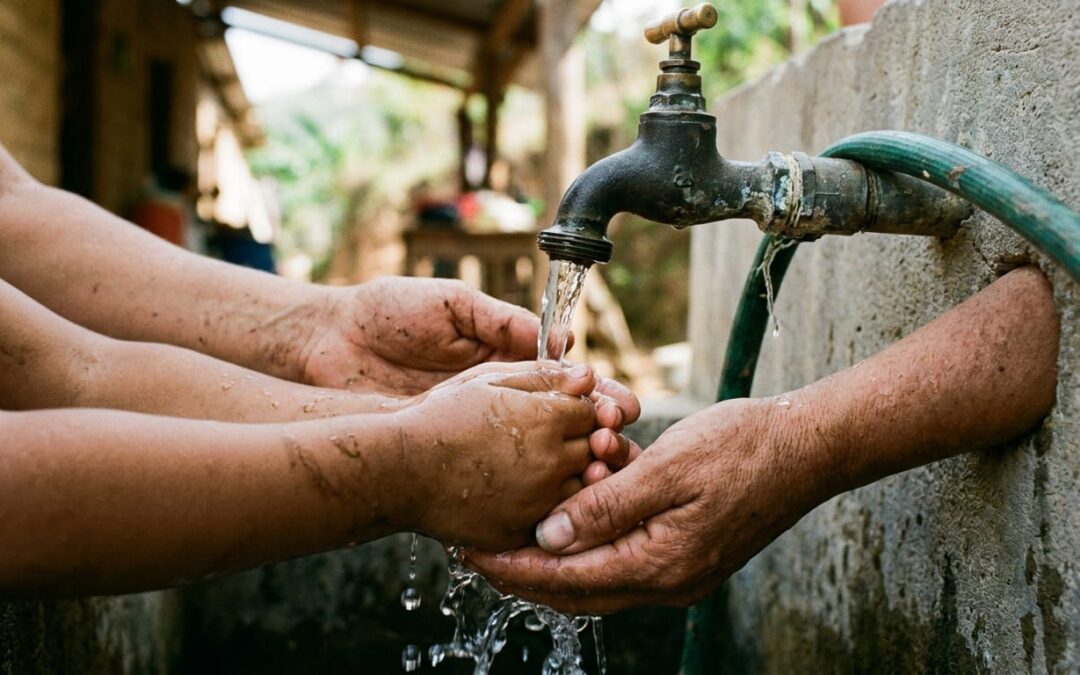
Photography and visual evidence from the field is a primary accountability tool. When a project wraps, the local partner captures what exists now that did not exist before. A girl in Nigeria who once walked miles to fetch water from a stream shared with animals – that reality, and its change, is the kind of outcome that gets documented and communicated back.
Donor site visits are the deepest form of accountability Impact Others offers. Donors can travel to the field and see projects with their own eyes – water cisterns, feeding centers, orphanages, and small business programs. One donor who visited Honduras described crossing four rivers into the mountains to reach a community, seeing the water cisterns built there, and witnessing the scale of daily feeding operations firsthand. "The impact that's been made here is just outstanding," he said. "Anything and everything you can give will go to the utmost use here." That kind of direct verification is something no written summary fully replaces.
How does Impact Others document outcomes differently than a standard thank-you email?
Most donors have received the standard nonprofit response: a tax acknowledgment letter, maybe a quarterly newsletter with broad statistics. Impact Others takes a different approach because the organization's model is built around stewardship, not just fundraising.
The distinction starts with how funds flow. Impact Others sends 100 percent of project-related donations directly to the project. Administrative expenses are covered separately, which means the dollars a donor grants are not diluted before they reach the field. That structure makes specific, project-level documentation possible – because the money went to one place, the outcomes can be traced to one place.
For donors who want documented humanitarian impact as evidence for a DAF grant decision, that traceability matters. A DAF holder recommending a grant to a sponsoring organization needs to point to something real – a community served, a program running, a measurable result. Impact Others builds its communication around exactly that kind of evidence.
Rob and Bernice, who became Impact Others partners after meeting the organization's leadership directly, described what moved them: "After meeting Eddie and seeing the integrity, the sustainability, and the boots-on-the-ground work – drilling wells, supporting feeding centers, and creating sewing centers – we decided to become partners." What they are describing is not a brochure. It is the kind of direct exposure to real work that gives a donor confidence their giving matters.
How does communication differ for individual donors versus organizational or corporate supporters?
The core accountability tools are the same – project documentation, photography, and field access – but the depth and format of engagement naturally scales with the relationship.
Individual donors typically receive project updates tied to the specific programs they supported, along with invitations to donor site visits and events like the annual gala. Mindy Tibbs, an Impact Others partner of four years, described the gala experience as the moment she committed to giving a percentage of every dollar her business earned. "When I think about Impact Others, I picture my own children in a third-world country," she said. "It's making a real difference. It's creating an impact beyond myself, beyond my business, and investing in what truly matters: impacting others." That kind of personal connection – built over time through events, trips, and direct communication – is how individual donors build a lasting record of their giving story.
Organizational and corporate supporters, including those directing grants through donor-advised funds, often engage at a higher level of involvement. They may travel to field locations, participate in project planning conversations, or bring team members on site visits. Barbara, a partner who visited the orphanage program in Guadalajara, Mexico, described how her family's involvement deepened after her 17-year-old completed a mission trip: "We looked at each other and said, 'Oh my God, we really need to get heavily involved in being a partner and being part of this greater thing.'" That escalation from donor to active partner is a pattern Impact Others actively supports.
What does ongoing accountability look like between grant cycles?
A grant does not end the relationship. Impact Others maintains communication between project cycles through several channels.
Events – including the annual gala – bring donors together to hear directly from leadership about where projects stand, what has been completed, and where new needs exist. These are not fundraising pitches; they are accountability forums where donors meet the people stewarding their grants.
Photography and field documentation continue as projects progress, particularly for programs like feeding centers that operate on an ongoing basis rather than completing in a single phase. A feeding center that serves children daily is not a one-time outcome – it is a sustained result that continues to be documented over time.
For donors building a personal narrative around their giving – whether for family conversations, a board presentation, or their own sense of purpose – this ongoing communication is what makes the story tellable. The record is not a single document. It accumulates across visits, photos, updates, and conversations into something a donor can actually point to.
Does the documentation hold up for a DAF grant record?
DAF holders have a specific accountability need: their sponsoring organization may require evidence that a recommended grant went to a legitimate nonprofit and produced a verifiable outcome. Impact Others is structured to support that.
The organization maintains independent bookkeeping, reports monthly financials to its board, and receives regular project documentation from its local partners. That internal discipline is what makes external communication credible – the documentation exists because the stewardship process requires it, not because it was assembled for a specific donor request.
For advisors helping clients build a philanthropic record, that structure matters. A client who has visited a feeding center in Honduras, seen photographs of a water cistern their grant helped fund, and attended an annual event where outcomes were discussed has a giving story with real evidence behind it – not just a line item on a DAF statement.
How do I build a giving record that means something?
The fear that a grant disappears without a trace is real, and it is reasonable. Most nonprofit communication does not resolve it. Impact Others builds its accountability model around the premise that donors deserve to know what happened – specifically, visually, and in a form they can share.
What a donor receives after a grant is not a single document. It is access: to field visits, to photographs, to events, to a team that can answer direct questions about the programs their giving supports. That access, over time, becomes the record.
If you want to know more about how Impact Others structures donor communication or which programs your grant could support, reach out directly. The team is reachable at info@impactothers.com, by phone at 2196780669, or by mail at 5885 Cumming Hwy Ste 108347, Sugar Hill GA 30518.
FAQ
What specific outcomes does Impact Others document after a water or food project?
Impact Others communicates project-level results tied to the specific program funded – for water projects, that includes documentation of cisterns or wells completed and the communities they now serve; for food programs, it includes the feeding centers operating and the number of people receiving meals. Local partners provide photography and progress updates, which Impact Others uses to communicate outcomes back to donors.
Who at Impact Others communicates with donors after a grant reaches the field?
Impact Others leadership maintains direct relationships with donors and partners. Communication comes from the organization's team, not an automated system – donors who attend the annual gala, travel on site visits, or reach out directly are engaging with the same people who steward the funds and maintain relationships with local partners in the field.
Which programs are most likely to produce visual documentation a donor can share?
All of Impact Others' core programs – clean water, food security, orphan care, small business support, and medical aid – generate field photography and project documentation. Water and feeding programs tend to produce the most visible before-and-after evidence, since the physical infrastructure (a cistern, a feeding center) is tangible and photographable. Orphanage and small business programs often produce the most personal documentation, including stories and images of individuals whose circumstances changed.
How is Impact Others' accountability approach different from a large national food charity?
Large national organizations typically publish aggregate statistics across thousands of programs, which makes individual grant traceability difficult. Impact Others operates with a smaller, project-specific model – funds go directly to named local partners running defined projects, which means a donor's grant can be connected to a specific outcome rather than absorbed into a broad program total. Donors can also visit the field themselves, something aggregate-scale organizations rarely offer.
Where can a donor go to see Impact Others projects in person?
Impact Others takes donors on site visits to active project locations, including programs in Honduras, Nigeria, Brazil, Mexico, and other countries where local partners operate. These trips are organized by the Impact Others team and are open to donors who want to verify their giving firsthand. Donors interested in a site visit can contact the team directly at info@impactothers.com or 2196780669.