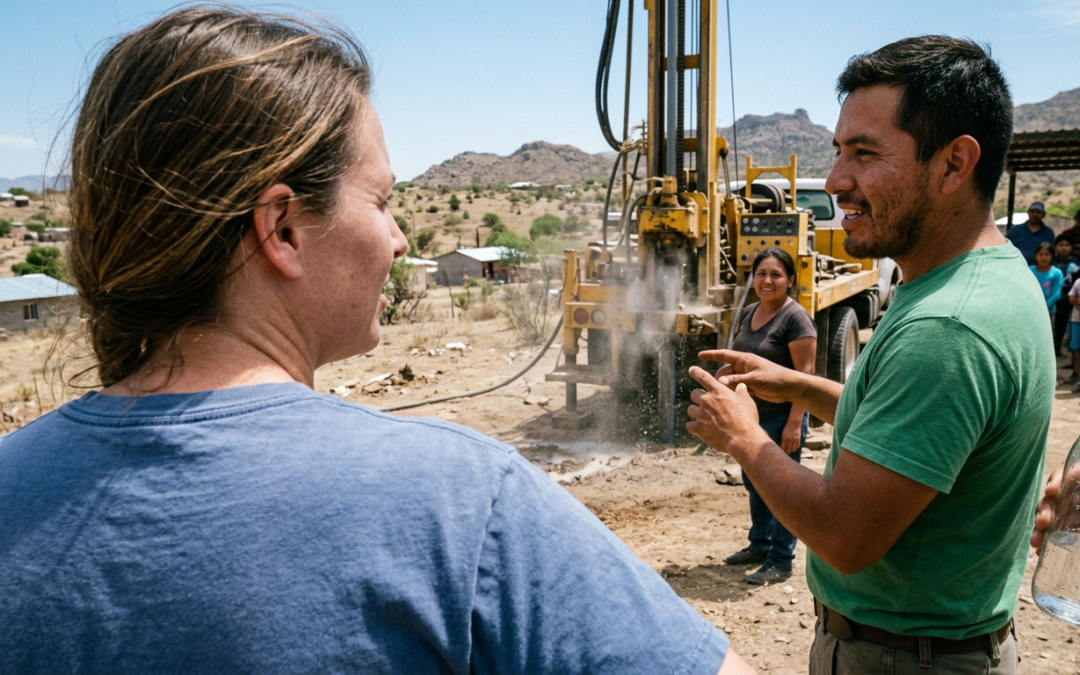
Impact Others Inc. works with trusted local partners, established organizations and leaders already operating in the communities we fund, who manage projects on the ground while Impact Others raises and stewards the funds. These partners are not randomly selected. They are vetted through direct relationship-building, site visits, and ongoing financial reporting before a single dollar is sent their way.
That vetting process is what separates a donation that reaches people from one that disappears into an administrative black hole.
What Does "Local Partner" Actually Mean in This Context?
A local partner is an organization or community leader who is already embedded in the region where a project will take place. They understand the culture, the need, the logistics, and the people. Impact Others Inc. does not build wells, manage feeding centers, or run orphanages directly. Instead, Impact Others funds those efforts through partners who have the relationships, the knowledge, and the infrastructure to do that work well.
This model matters because local partners are not outsiders arriving with a plan. They are part of the communities they serve, people who understand what clean water access actually requires in a specific village, or what an orphanage needs to remain sustainable rather than dependent on a single grant cycle.
When donors contribute to a project through Impact Others, their funds go directly to the local partner managing that project. Impact Others maintains independent bookkeeping, receives regular financial and project reports, and communicates progress back to donors, so the accountability runs in both directions.
How Does Impact Others Vet Local Partners Before Sending Funds?
Vetting begins with direct, in-person relationship-building, not a form and a background check. Before Impact Others Inc. formalizes a partnership, the organization's leadership visits the field, meets the people managing the work, and observes the project firsthand.
That on-the-ground evaluation looks at several factors:
| Vetting Factor | What Impact Others Looks For |
|---|---|
| Leadership integrity | Is the local leader transparent, accountable, and mission-driven? |
| Existing operations | Is work already happening, or is this a proposal without proof? |
| Community relationships | Does the partner have genuine trust in the community they serve? |
| Financial accountability | Can the partner provide reporting on how funds are used? |
| Sustainability | Is the project designed to continue beyond a single donation cycle? |
The key point: Impact Others does not fund ideas, it funds partners who are already doing the work and can demonstrate both need and accountability.
Once a partnership begins, the relationship does not go quiet. Impact Others receives regular project and financial reports, maintains its own independent bookkeeping, and reports monthly financials to its board. That ongoing oversight is what allows Impact Others to stand behind every project it presents to donors.
What Kinds of Projects Do Local Partners Manage?
Local partners working with Impact Others Inc. manage projects across several humanitarian categories: clean water access, food and feeding programs, orphanage support, education, new business opportunities like sewing centers, and toy drives. The specific projects vary by country and community need, but the structure is consistent, a vetted local partner manages the work, and Impact Others funds and reports on it.
One approved supporter described the moment this model clicked for them: after meeting Impact Others' leadership and seeing the work in person, drilling wells, supporting feeding centers, and creating sewing centers, they decided to become partners. Their words capture what many donors experience: "After meeting Eddie and seeing the integrity, the sustainability, and the boots-on-the-ground work, drilling wells, supporting feeding centers, and creating sewing centers, we decided to become partners."
That phrase "boots-on-the-ground work" is not a marketing line. It describes the actual structure: local partners doing the physical work, Impact Others providing the funding and the accountability bridge back to donors.
For donors who want to see this firsthand, orphanage project funding with site visits is one of the ways Impact Others makes the partner relationship visible and verifiable, not just described.
Why Does the Local Partner Model Matter to Donors?
Donors who give through Impact Others are not funding a headquarters. They are funding a specific project managed by a specific local partner in a specific community. That clarity is intentional.
The local partner model works because it respects the expertise of people who live and work in the communities being served. It avoids the overhead and inefficiency of a large central operation trying to manage field work from thousands of miles away. And it creates a natural accountability loop: local partners report to Impact Others, Impact Others reports to its board and to donors.
One long-term supporter put it plainly: "When I think about Impact Others, I picture my own children in a third-world country. If a business owner had the answer to what my child needed, whether it was clean water from a well, a sewing center, food, an orphanage, housing, or any of the other life-changing resources, would they give? That's why I partner with Impact Others."
That is the purpose behind the model. Not a structure for its own sake, but a way to make sure generosity reaches the people who need it, with integrity intact at every step.
For donors who want to understand how funds flow through this structure, 100 percent of project donations reaching the project is a question Impact Others has answered in detail, because it matters.
What Makes a Partner Relationship Sustainable Over Time?
Sustainability is one of the explicit criteria Impact Others uses when evaluating and maintaining partner relationships. A project that requires perpetual external funding without building any local capacity is not a model Impact Others pursues.
Sustainable local partnerships typically share a few characteristics: the project addresses a root need (water access, food security, income generation) rather than a symptom; the local partner has standing relationships with community leaders; and the work is designed to continue even as funding sources change.
Sewing centers are a clear example. Rather than delivering goods, a sewing center creates an income opportunity, a new business opportunity, for people in the community. That kind of project builds capacity rather than dependency, and it reflects the values Impact Others looks for in a local partner.
What Should Donors Know Before Trusting Any Organization's Partner Claims?
Donors who are asking questions about a nonprofit before donating regularly are right to probe how partner relationships actually work. The right questions are: Has leadership visited the partner in person? Is there independent financial reporting? Can donors access project updates? Can donors visit the project themselves?
Impact Others answers yes to each of those. The organization takes donors on trips to project locations so they can see the work directly, not a curated tour, but real access to the communities and partners Impact Others funds.
That transparency is not incidental. It is the foundation of the trust that makes long-term giving possible.
Checklist
- Ask any organization you're considering: Has leadership visited every local partner in person before sending funds?
- Look for independent bookkeeping: Verify that the organization maintains its own financial records separate from the local partner's reporting.
- Check for ongoing reporting: A one-time site visit is not enough, confirm that regular project and financial reports are received and reviewed.
- Ask if donors can visit: Organizations that fund humanitarian aid projects with site visits for donors are demonstrating a level of transparency that is worth noting.
- Evaluate sustainability: Ask whether the projects being funded are designed to build local capacity or to require indefinite external support.
- Review how funds are designated: Confirm that project-specific donations go to the project, not to general operations.
FAQ
How does Impact Others choose which local partners to work with?
Impact Others builds partner relationships through direct, in-person visits before any funds are committed. Leadership meets the people managing the work, observes the project firsthand, and evaluates integrity, existing operations, community trust, financial accountability, and sustainability. Partners are not selected through applications alone, the relationship is built on direct observation and ongoing communication.
Does Impact Others manage projects directly or through local partners?
Impact Others is a funding and stewardship organization, not a field operations team. Local partners manage the construction, staffing, and day-to-day work of each project. Impact Others raises funds, sends them directly to the partner, maintains independent bookkeeping, and reports progress to donors and to its board.
How do I know a local partner is actually using the funds correctly?
Impact Others receives regular financial and project reports from each local partner and maintains independent bookkeeping. Monthly financials are reported to the Impact Others board. Donors also have the opportunity to visit project locations in person, a level of access that makes the partner relationship verifiable, not just described.
What countries does Impact Others work in?
Impact Others works with local partners in multiple countries, funding projects that include clean water access, food and feeding programs, orphanage support, education, sewing centers and other new business opportunities, and toy drives. Specific country and project information is available through Impact Others directly.
Can I fund a specific project managed by a specific local partner?
Yes. Impact Others presents specific projects to donors, and project-specific donations go directly to that project. Donors are not contributing to a general fund, they are funding a defined project with a named local partner managing the work.
What happens if a local partner relationship is no longer working?
Impact Others maintains ongoing oversight of every partner relationship through regular reporting and periodic site visits. If a partner is not meeting the standards of accountability, transparency, and sustainability that Impact Others requires, the organization has the responsibility to its donors to address that directly, including ending the partnership if necessary.
Is the local partner model common in humanitarian work?
Working through local partners is widely recognized as an effective approach in international humanitarian work because it respects local expertise, reduces overhead, and builds community trust. What varies significantly between organizations is how rigorously those partners are vetted and how consistently they are monitored, which is where the specific practices of any organization, including Impact Others, matter most.
If you want to understand exactly how Impact Others builds and maintains these partner relationships, or if you're ready to direct your giving toward a specific project, reach out directly. The team is available at info@impactothers.com, by phone at 2196780669, or by mail at 5885 Cumming Hwy Ste 108347, Sugar Hill, GA 30518. Every question you ask before giving is a sign that your generosity is heading somewhere it can make a real difference.