
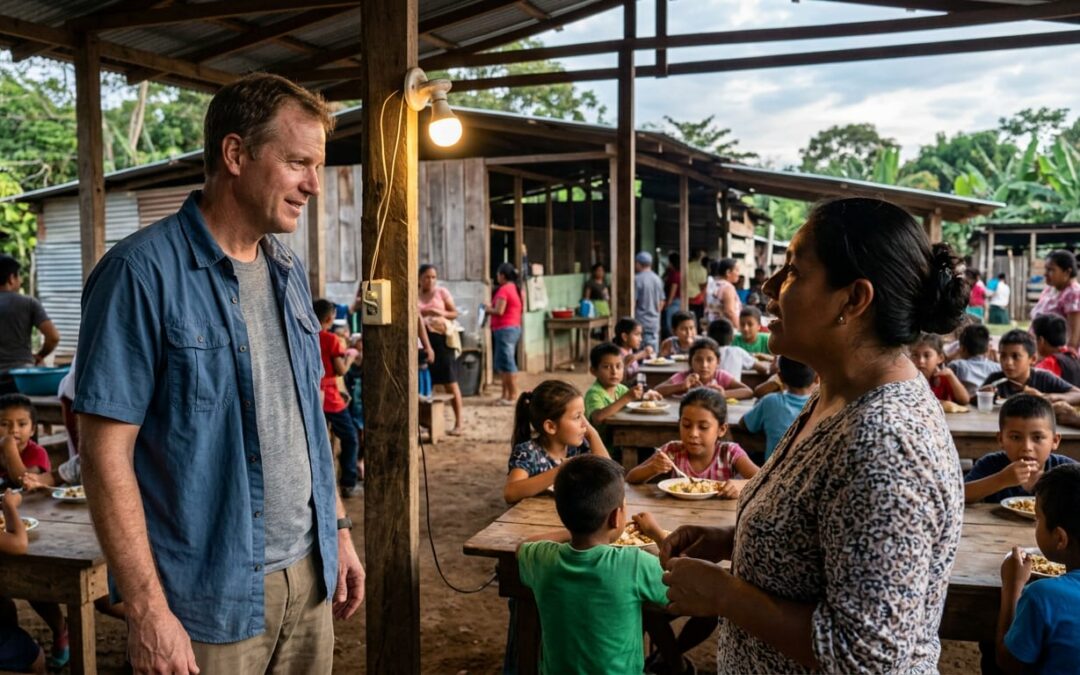
Finding a monthly giving nonprofit that feels meaningful comes down to one question: does the organization treat you as a partner, or just a payment? The best monthly giving relationships are built on transparency, direct project funding, and real access to the work – not just donation receipts. Impact Others Inc. was built around exactly that model, connecting everyday supporters to humanitarian work in communities around the world through trusted local partners.
Most donors who give monthly aren't looking for recognition. They want to know that their consistent generosity is part of something larger – that it's building something, feeding someone, or giving a child a safer future. The difference between a donation that feels meaningful and one that doesn't usually isn't the amount. It's the connection.
What Should You Look for in a Monthly Giving Nonprofit?
The right monthly giving partner offers more than a cause you believe in. It offers a relationship you can trust. Here are the factors that separate a meaningful monthly commitment from a forgettable one:
- Look for direct project funding. Find organizations where your donation goes to the work itself, not absorbed by layers of overhead. Administrative expenses should be kept exceptionally low compared to most nonprofits, with project-related donations going directly to projects.
- Ask about specific, verifiable projects. Vague mission statements aren't enough. Ask whether your monthly gift funds clean water access, food programs, orphanage support, education, or economic opportunity – and whether the organization can show you which project your giving supports.
- Seek donor access to the work. The most trustworthy organizations invite you to see the work firsthand – to stand next to a water cistern, meet children at a feeding center, or see the small business a widow launched.
- Expect consistent communication about progress. You should hear what's happening in the field throughout the year, not just at year-end. Look for organizations that share photos, project milestones, and stories from local partners regularly.
- Choose trusted local partners, not distant managers. Organizations that work through established local partners tend to deliver more effectively and more sustainably than those parachuting in from abroad. Local partners understand the community, manage their own operations, and are accountable to the people they serve.
- Match the mission to your values. Whether your passion is food security, clean water, orphan care, education, or helping people launch small businesses, your monthly giving should feel like an extension of who you are – not a compromise.
Why Does Monthly Giving Create More Purpose Than a One-Time Gift?
Monthly giving creates a fundamentally different relationship between a donor and a cause. A one-time gift is a transaction. A monthly commitment is a partnership.
Research cited by Philanthropy shows that nonprofits typically retain close to 90 percent of monthly sustainers, compared with about 45 percent of all donors. That retention rate isn't just good for nonprofits – it reflects something real about the donor experience. People who give monthly stay because it feels different. It feels like belonging.
That sustained commitment also changes what's possible in the field. When local partners know that funding is consistent month over month, they can plan ahead – expanding a feeding program, preparing for a medical outreach, or training women to launch small businesses rather than reacting to whatever funds arrived last week. In Nigeria in 2025, seven widows received financial assistance to launch small businesses, creating real pathways to long-term independence. That kind of sustained investment in people doesn't happen from a single donation cycle.
The core case for monthly giving often comes down to this: predictable funding enables planning, and planning is what turns a short-term intervention into a lasting change in someone's life.
What Does Meaningful Monthly Giving Actually Look Like in Practice?
The most honest answer comes from someone who went to see it for themselves. A donor who traveled to the mountains of Honduras with Impact Others Inc. described crossing four rivers to reach a remote community – and what he found when he got there:
"I feel like it's very difficult to have a complete understanding until you physically put your hands on it. The impact that's been made here is just outstanding. I think I spent my first night crying. I woke up the next morning and cried after hearing John's stories, getting to meet kids at the first feeding center, experiencing things firsthand. I think Impact Others is very empowering. The work that they've done here is incredible from the water cisterns project that we visited and got to see to the amount of people that have been fed and continue to be fed on a daily basis."
That is what meaningful giving looks like. Not a polished annual report. A person standing next to the work, changed by it.
That same accountability extends across every program. A one-week medical outreach clinic in Ghana provided medical and vision care to more than 2,100 people, with donated eyeglasses helping restore vision for many patients. Through Project Dakota's Christmas Initiative, 23,136 children were reached globally – exceeding the original goal of serving 18,000 children across more than 13 countries and the United States. These aren't projections. They're what happened when consistent donor support met committed local partners.
For donors who want to go deeper on what ongoing humanitarian project donor updates look like over time, the difference between short-term and long-term funding is visible in the scale of what becomes possible.
How Do You Know If a Nonprofit Is Transparent Enough to Trust?
Transparency in a nonprofit isn't just about overhead ratios – though those matter. It's about whether the organization behaves like it has nothing to hide.
A few concrete tests: Does the organization invite donors to visit project sites? Does it share specific outcomes – numbers of people served, projects completed, communities reached – rather than general language about "making a difference"? Does it explain clearly how funds move from your account to the field? Does it work through local partners with established track records, or does it operate through its own staff in countries it may not fully understand?
Charity Navigator defines donor retention as the percentage of donors who continue to support an organization beyond their first gift – and it's one of the clearest signals of whether donors feel their trust was justified. Organizations with high retention rates have usually earned them.
Impact Others Inc. funds clean water, food, orphanages, education, and new business opportunities through trusted local partners, so donors find real purpose in their giving. The administrative structure is lean by design, because the goal has always been to move as much generosity as possible to the people who need it most.
If you're ready to move from passive giving to genuine partnership, the Become a Monthly Supporter page is the place to start.
To learn more or ask a question before you commit, reach out directly: call 2196780669, email info@impactothers.com, or write to Impact Others Inc. at 5885 Cumming Hwy Ste 108347, Sugar Hill, GA 30518. The people who answer are the same people who make the trips, steward the funds, and stay accountable to the communities being served.
FAQ
Who is monthly giving actually best suited for?
Monthly giving is best suited for donors who want a sustained connection to a cause rather than a single moment of generosity. It works especially well for people who want to fund ongoing needs – clean water access, consistent food programs, orphanage support, or small business development – where a predictable stream of funding enables local partners to plan and expand rather than simply react.
Which types of projects benefit most from consistent monthly funding?
Projects with recurring operational needs benefit most: feeding programs that serve children daily, orphanages that require consistent staffing and supplies, and economic development programs where participants need sustained support to launch and grow a small business. One-time gifts can launch a project; monthly giving is what keeps it running and growing.
Where can I actually see the humanitarian work my monthly donation supports?
Impact Others Inc. takes donors on trips to project locations in countries including Honduras, Ghana, Nigeria, and others, so supporters can visit feeding centers, water projects, and community programs firsthand. This direct access is one of the clearest ways to verify that your giving is reaching real people – and it's one of the things that sets experiential giving programs apart from standard donation models.
How does a low-overhead nonprofit model affect what my monthly gift actually does?
When administrative expenses are kept very low, a significantly higher share of every dollar moves directly to the project. Impact Others Inc. sends 100 percent of project-related donations to projects, which means your monthly gift funds the work itself – not the infrastructure around it. That structure matters most for donors who want their generosity to translate directly into outcomes rather than organizational costs.
What changed in 2026 for monthly nonprofit giving – is it still worth it?
Monthly giving remains one of the highest-impact ways to support humanitarian work in 2026. The need for clean water, food security, orphan care, and economic opportunity in underserved communities hasn't diminished – and the case for consistent, predictable funding from monthly supporters has only grown stronger as local partners take on more complex, longer-term projects. The fundamentals of what makes it meaningful – transparency, direct funding, and access to the work – haven't changed.