Yes, a nonprofit can receive recurring DAF grants automatically – but whether that happens depends on the donor's sponsoring organization, not the nonprofit itself. Many DAF sponsors allow donors to schedule grants on a repeating basis, so funds flow to the same recipient monthly, quarterly, or annually without requiring a new recommendation each time. Impact Others Inc. works with DAF donors who want to direct consistent, purposeful support toward humanitarian projects, and setting up a recurring grant is one of the most practical ways to do that.
How Does a Recurring DAF Grant Actually Work?
A recurring DAF grant is a scheduled grant recommendation that a donor sets up once, and the sponsoring organization processes automatically at the chosen interval. The donor is not writing a new check each cycle – they are pre-authorizing a series of grants from their DAF account balance.
Here is how the process typically works across major DAF sponsors:
- Set the grant amount and frequency. Vanguard Charitable allows donors to schedule recurring grants in their online account, choosing the amount, frequency, number of payments, start date, and an optional end date. Monthly, quarterly, and annual schedules are all common options.
- Confirm the nonprofit is eligible. The recipient organization must be an IRS-recognized 501(c)(3) or, in some cases, a qualifying international organization. The sponsoring organization verifies eligibility before processing any grant.
- Set a minimum amount. DAFgiving360 allows unlimited recurring grants as long as the account balance supports them, with a minimum recommendation of $50 per grant.
- Choose a frequency at the time of the first recommendation. The American Gift Fund lets donors select the frequency – monthly, quarterly, annually, or continuously – when submitting the first grant recommendation, without needing to re-enter the information later.
- Maintain a sufficient account balance. If the DAF account does not hold enough to cover a scheduled grant, the sponsoring organization may pause or cancel the recurring series. Donors should keep this in mind when planning long-term giving schedules.
- Update or cancel at any time. Most sponsors allow donors to modify or stop a recurring grant through their online account dashboard.
The nonprofit receives the grant just as it would a one-time recommendation – the recurring setup lives entirely on the donor's side.
What consistent support can build is visible in Impact Others Inc.'s own work. Project Dakota's Christmas Initiative reached 23,136 children globally, exceeding its original goal of serving 18,000 children across more than 13 countries and the United States. More than 5,000 of those children were in the United States, receiving Christmas gifts and participating in community celebrations. In one outreach, 360 children – many of them living with sickness, disability, abandonment, or multiple hardships – experienced joy, dignity, and celebration. In the hills of Honduras, children began running toward the delivery truck before they even saw the gifts inside. What started as a simple delivery became, in the words of those who were there, "a celebration of hope." These are the kinds of moments that recurring grants make possible, because the work behind them does not pause between giving cycles.
Does the Nonprofit Control Whether Grants Recur?
No. The nonprofit has no role in setting up, managing, or guaranteeing a recurring grant. That decision belongs entirely to the donor and their DAF sponsor. A nonprofit cannot enroll itself in a recurring grant program or automatically pull funds from a donor's account.
What a nonprofit can do is make it easy for donors to want to give consistently. That means being transparent about how funds are used, communicating project progress, and giving donors a reason to keep the recurring grant active. For DAF holders who care about measurable impact, trust in the organization is what sustains recurring giving – not any technical mechanism.
Through trusted local partners, Impact Others Inc. delivers clean water, food, education, and hope to communities around the world on behalf of supporters who want to make an impact. When a donor sets up a recurring DAF grant to support that work, each scheduled transfer reaches a real project – a medical outreach clinic in Ghana, small business support for widows in Nigeria, or a Christmas initiative serving children across more than 13 countries.
What Sustains Recurring Giving Over Time?
Recurring grants continue as long as the donor chooses to keep them active and the account balance supports them. But in practice, what keeps a donor renewing or maintaining a recurring grant is confidence that the giving is producing something real.
That confidence is built through direct evidence, not assurances. Impact Others Inc. takes donors on site visits so they can see the work firsthand – not a presentation about the work, but the actual communities, partners, and projects. A donor who has stood in a village in Honduras or visited a feeding program in Ghana does not need to be convinced to keep giving. They have already seen what their support makes possible.
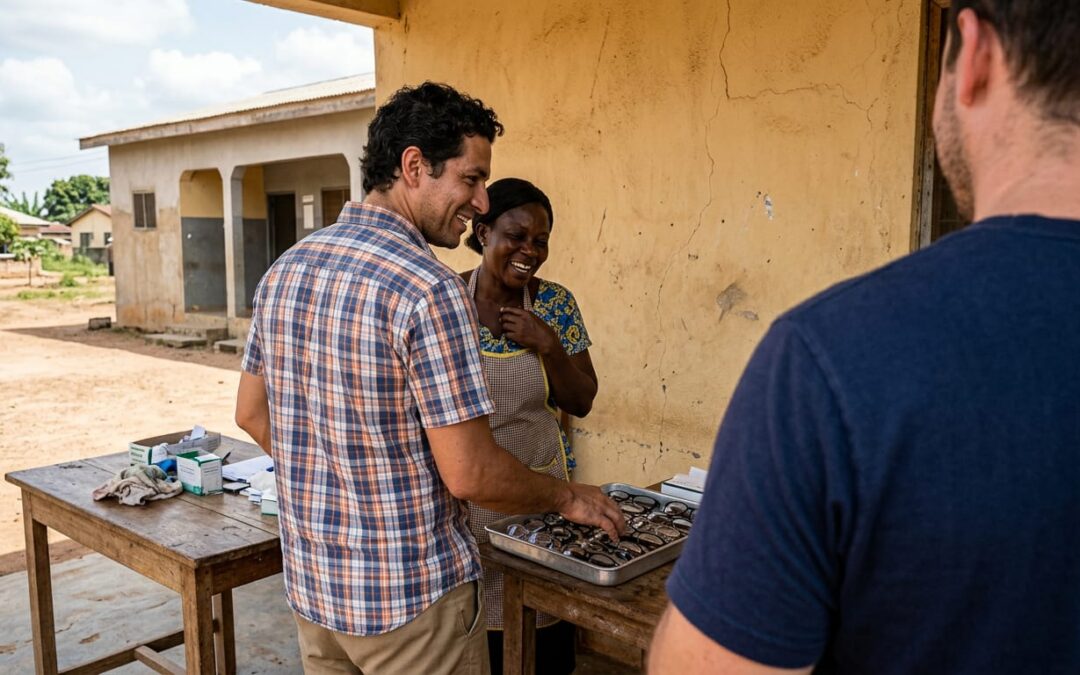
A one-week medical outreach clinic in Ghana provided medical and vision care to more than 2,100 people, with donated eyeglasses helping restore vision for many patients. In Nigeria in 2025, seven widows received financial assistance to launch small businesses, creating opportunities for long-term independence and economic sustainability.
For donors setting up a recurring DAF grant, the question worth asking is not only whether the technical mechanism exists – it does, at most major sponsors – but whether the organization receiving those grants is worth sustaining year after year.
Is a Recurring DAF Grant the Right Structure for Every Donor?
A recurring grant works well for donors who have identified an organization they trust and want to support over a longer horizon. It removes the friction of re-recommending a grant each year, keeps giving consistent even during busy periods, and helps the receiving organization plan its work with greater stability.
It is less suited to donors who are still exploring where to give, who want to evaluate new organizations each year, or whose DAF balance fluctuates significantly. In those cases, annual one-time recommendations give more flexibility.
For donors working with a financial advisor who incorporates philanthropy into their overall plan, a recurring DAF grant can be a clean, low-maintenance way to fulfill a charitable giving commitment without revisiting the decision annually. The advisor-friendly resources on the Impact Others Inc. Donor-Advised Fund giving page walk through how to recommend a grant, what eligibility looks like, and how to structure consistent giving across multiple project areas.
FAQ
Who actually sets up a recurring DAF grant – the donor or the nonprofit?
The donor sets it up entirely through their DAF sponsoring organization's online platform. The nonprofit has no access to the donor's account and cannot initiate, schedule, or manage recurring grants on the donor's behalf. Once the donor submits the recurring grant recommendation, the sponsor processes each payment automatically.
Which DAF sponsors currently allow recurring grant schedules?
Several major sponsors support recurring grants, including Vanguard Charitable, DAFgiving360, and The American Gift Fund. Each has its own interface and minimum grant amounts – DAFgiving360, for example, allows unlimited recurring grants of $50 or more per cycle. Donors should check directly with their specific sponsor for current options, since features and minimums vary.
How does a nonprofit qualify to receive DAF grants in the first place?
A nonprofit must hold IRS recognition as a 501(c)(3) public charity, or in some cases qualify as an eligible international organization under the sponsor's criteria. The DAF sponsor verifies eligibility before processing any grant recommendation. Impact Others Inc. is a registered 501(c)(3) nonprofit and is eligible to receive grant recommendations from most major DAF sponsors.
What happens to a recurring grant if the donor's DAF account balance runs low?
Most DAF sponsors will pause or cancel a scheduled recurring grant if the account does not hold enough to cover the payment. The donor is typically notified so they can add funds or adjust the schedule. Donors who plan to give consistently over several years should keep their account balance in mind when setting the recurring amount and frequency.
Where do recurring DAF grants to Impact Others Inc. actually go?
Impact Others Inc. sends 100 percent of project-related donations directly to trusted local partners who manage the on-the-ground work. Administrative expenses are kept well below the nonprofit industry norm. Donors who want to verify that their recurring grants are reaching real projects can request a site visit – Impact Others Inc. takes donors directly to the communities their giving supports.
If you are ready to set up a recurring DAF grant or want to talk through which projects align with your giving goals, reach out directly. Impact Others Inc. can be reached by phone at 2196780669, by email at info@impactothers.com, or by mail at 5885 Cumming Hwy Ste 108347, Sugar Hill, GA 30518. Consistent giving is how lasting change gets built – and the door is always open.