
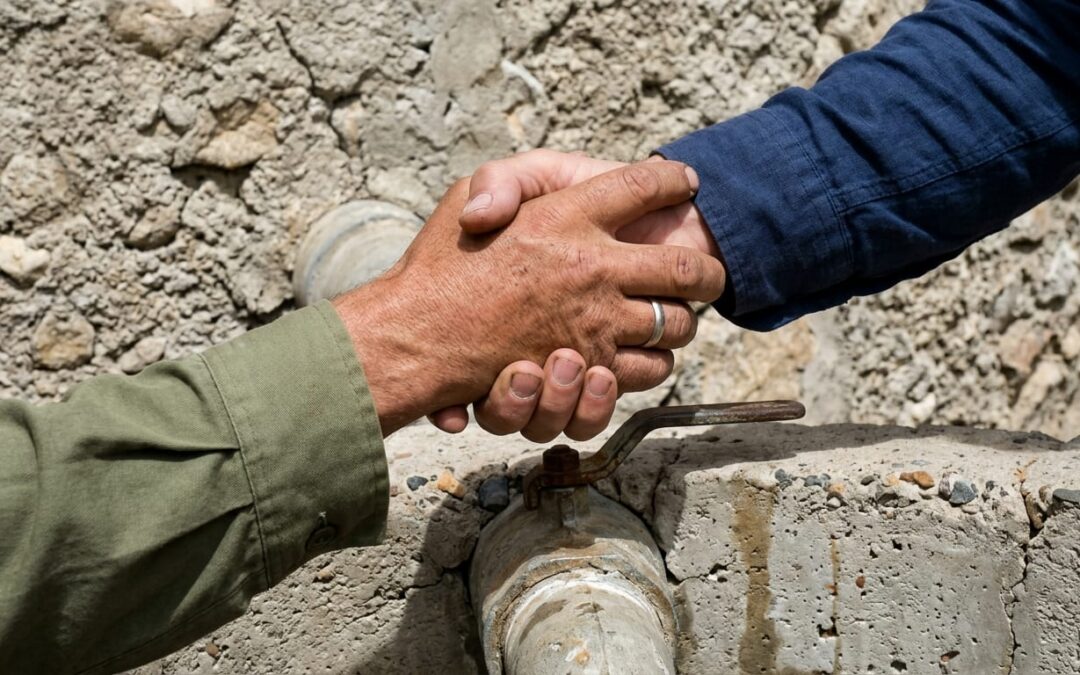
Vetting a charity before you travel with them comes down to three things: verified transparency, a real track record of bringing donors to project sites, and honest communication about how the organization actually works. A credible humanitarian organization will welcome your questions – and answer them with specifics, not slogans.
If you're considering a donor trip, that instinct to look deeper before you go is exactly right. Traveling with an organization means trusting them with your safety, your time, and the integrity of your giving. The vetting process is not a hurdle – it's how you find a partner worth traveling with.
What Does a Transparent Humanitarian Organization Actually Look Like?
Transparency is the first filter. According to InterAction, InterAction's NGO Standards state that a member organization shall be committed to openness, transparency, and honesty about its mission, structures, governance, policies, finances, strategies, and activities. That's a useful benchmark to hold any organization against before you book a flight.
In practical terms, transparency shows up in specific, observable ways:
- The organization can clearly explain who their local partners are and how those relationships were established
- They distinguish between what they do directly and what local partners manage on the ground
- Administrative costs are disclosed and low relative to program spending
- They welcome questions about how funds move from donor to project
A red flag is an organization that speaks in sweeping generalities – "we build wells," "we feed children" – without being able to tell you who does the work, where the project is, and how funds get there. Passion for the mission is not a substitute for operational clarity.
You can also verify a nonprofit's tax-exempt status through the IRS Tax-Exempt Organization Search, which allows you to confirm an organization's EIN and active status – a basic but important step before any financial commitment, including travel.
How Do You Know If a Charity's Donor Trips Are Legitimate?
The clearest signal is a documented track record. Organizations that regularly bring donors to project sites leave evidence: photos, testimonials from past travelers, and staff who can describe specific trips in detail. Ask directly – "How many donor trips have you run? Where did you go? Can I speak with someone who has traveled with you?"
That question alone separates organizations with real field experience from those that offer trips as a marketing concept without the infrastructure to support them.
What a legitimate donor trip looks like in practice: the organization coordinates logistics, connects you with local partners who know the community, and brings you to active project sites – not staged demonstrations. You should be able to see what your giving has actually supported, whether that's a water cistern, a feeding center, a small business launched by a community member, or an orphanage providing safety and care to children.
Zach Whitley, a donor who traveled with Impact Others Inc. into the mountains of Honduras, described it this way: "I feel like it's very difficult to have a complete understanding until you physically put your hands on it. The impact that's been made here is just outstanding… The work that they've done here is incredible from the water cisterns project that we visited and got to see to the amount of people that have been fed and continue to be fed on a daily basis."
That kind of firsthand account – specific, unscripted, grounded in a real location – is the kind of proof worth looking for. If an organization cannot point you to donors who have traveled with them and are willing to talk about it, that gap matters.
For a fuller picture of what the donor trips to visit communities experience actually involves, including logistics and what to expect on the ground, it's worth looking at how organizations structure those visits before you commit.
What Safety and Logistics Questions Should You Ask Before Traveling?
Credibility and safety are related but distinct. An organization can be financially transparent and still be poorly organized when it comes to field travel. Before you go, ask:
| Question | What a strong answer looks like |
|---|---|
| Who manages logistics in-country? | A named local partner with a track record |
| What is the emergency protocol if something goes wrong? | Specific steps, not a vague "we handle it" |
| What are the physical demands of the trip? | Honest description – terrain, travel time, conditions |
| Who has traveled on this trip before? | Real names or references available |
| What is included in trip costs, and what is separate? | Clear breakdown, no ambiguity |
The Honduras trip Zach described involved crossing four rivers and trekking into mountain terrain – conditions that required honest preparation from the organization beforehand. That kind of upfront disclosure is a credibility marker, not a deterrent. Organizations that tell you what the trip is actually like before you go are the ones you can trust when you're there.
What drives the cost of a donor trip varies significantly: destination, group size, duration, and whether the organization absorbs any trip expenses separately from project donations. Ask specifically whether your travel costs are kept separate from project funds – a well-structured organization will have a clear answer.
How Do Local Partner Relationships Reflect on an Organization's Credibility?
The quality of an organization's local partnerships is one of the strongest credibility indicators available to a prospective traveler. Local partners are the people who actually manage projects, know the community, and are accountable for outcomes on the ground. An organization that cannot describe those relationships in specific terms – how partners were vetted, how long they've worked together, what oversight exists – is one that may not have the infrastructure to support a safe, meaningful donor visit.
Impact Others Inc. connects donors with trusted local partners worldwide so every act of generosity reaches the people who need it most. That model – raising and stewarding funds, then channeling them through established local partners who manage projects directly – means that when donors travel, they're meeting the people who have been doing the work. Not a program officer flown in for the visit. The people who live there.
This structure also matters for nonprofit donor partnership in the broader sense: you're not just observing a project, you're meeting the community that your giving has been part of supporting. That relational dimension is what separates a genuine donor trip from a tour.
What Should You Do Before Committing to a Donor Trip in 2026?
The due diligence process for a donor trip in 2026 is not fundamentally different from any other year – but the bar for organizational transparency has risen. Donors are asking harder questions, and credible organizations are prepared to answer them. If an organization hesitates when you ask about local partner relationships, safety protocols, or how funds move from your gift to the project, that hesitation is information.
The practical steps before you commit:
- Verify the organization's tax-exempt status through the IRS Tax-Exempt Organization Search
- Ask for references from past donor travelers – and actually contact them
- Request a clear explanation of how project funds are separated from trip costs
- Ask who the local partner is in the country you'd visit, and how that relationship was established
- Review any available project documentation – photos, progress updates, community outcomes
If you want to understand more about how to visit nonprofit project sites as a donor and what to expect from the process, that research belongs in your vetting, not after you've already committed.
The Donor trips page or Contact Us page at Impact Others Inc. is the right place to ask these questions directly – before you travel, not after.
Checklist
- Verify tax-exempt status using the IRS Tax-Exempt Organization Search before donating or traveling with any humanitarian nonprofit
- Ask for references from past donor travelers and speak to at least one person who has traveled with the organization before committing
- Request a clear breakdown of trip costs vs. project funds – a credible humanitarian organization will answer this without hesitation
- Ask the organization to name their local partner in the destination country and describe how that relationship was established
- Review available project documentation – photos, progress updates, and community outcomes that predate your inquiry
- Ask about safety and emergency protocols specific to the destination, including terrain, travel conditions, and in-country support
FAQ
Who should I contact to ask about past donor trips before I commit to traveling?
Ask the organization directly for references from previous donor travelers – people who have made the trip and are willing to speak about their experience. A credible organization will have those names available. If they cannot provide a single past traveler willing to talk, that absence is worth weighing carefully before you go.
Which red flags suggest a charity's donor trip program isn't credible?
Watch for organizations that cannot name their local partners, describe trip logistics in specific terms, or separate project donations from travel costs. Vague language about "the impact we're making" without concrete project details, locations, or partner relationships is a consistent warning sign. Credible organizations welcome specificity because they have it.
How do I know if my donation money stays separate from what I pay for the trip?
Ask the organization directly how trip costs are structured and whether travel expenses come from project funds or a separate administrative budget. A well-run humanitarian nonprofit will have a clear answer. Impact Others Inc. maintains very low administrative expenses and keeps project-related donations directed to the project – a structure worth asking any organization to match or explain.
What makes a local partner relationship trustworthy rather than just claimed?
A trustworthy local partner relationship is one the organization can describe in specific terms: how long they've worked together, what the partner manages on the ground, and what oversight or communication exists between trips. When donors travel, they should be meeting the people who have been doing the work in that community – not a representative brought in for the visit.
Where have Impact Others Inc. donor trips actually taken supporters?
Impact Others Inc. has taken donors to project sites including Honduras, where supporters have visited water cistern projects and feeding centers in remote mountain communities. Those trips involve real field conditions – river crossings, mountain terrain – and connect donors directly with local partners and the communities the projects serve.
If you're ready to ask the hard questions before you travel, Impact Others Inc. welcomes them. Reach out directly at info@impactothers.com, call 2196780669, or write to 5885 Cumming Hwy Ste 108347, Sugar Hill GA 30518. The conversation about whether a donor trip is right for you starts with exactly the kind of due diligence this article describes.