
Vetting a humanitarian nonprofit for a DAF grant comes down to four core areas: legal eligibility, financial structure, on-the-ground accountability, and verifiable impact. A nonprofit that passes all four gives a financial advisor the confidence to recommend it without reputational exposure. The stakes are real – a poorly vetted recommendation can damage client trust and, in some cases, trigger compliance issues with the DAF sponsor itself.
Impact Others Inc. funds clean water, food, education, and orphanages through trusted local partners – and invites supporters to visit the work in person. That combination of low overhead, 100 percent project-directed donations, and open-door site access is exactly what advisors should be looking for when they build a short list.
What Are the Legal Eligibility Requirements for DAF Grants?
Before anything else, confirm the nonprofit holds active 501(c)(3) status with the IRS and qualifies as a public charity. According to the National Philanthropic Trust, any active charitable organization with a 501(c)(3) designation and IRS public charity status qualifies for donor-advised fund grant support. The IRS further requires that a 501(c)(3) organization be organized and operated exclusively for exempt purposes, and that none of its earnings inure to any private shareholder or individual.
For international humanitarian work specifically, the compliance bar rises. The Council on Foundations notes that international grants from donor-advised funds must comply with section 4945(h) of the private foundation rules – meaning the DAF sponsor needs confidence that funds are being used for charitable purposes abroad, not just domestically. Advisors recommending nonprofits with international programs should verify that the organization has a clear structure for sending funds to local partners and that the DAF sponsor has approved or can approve that type of grant.
A quick IRS Tax Exempt Organization Search confirms current status in minutes. Do not rely on the nonprofit's own website alone.
- Confirm 501(c)(3) status directly: Use the IRS Tax Exempt Organization Search to verify active status and public charity designation before any other step. A lapsed or revoked status disqualifies the organization immediately.
- Check public charity classification: Not all 501(c)(3) organizations are public charities. Private foundations face different DAF grantmaking rules, so confirm the classification explicitly.
- Review the DAF sponsor's international grantmaking policy: For nonprofits with overseas programs, ask the sponsor whether they have approved or can approve grants to organizations operating under section 4945(h) compliance structures.
- Verify the fund transfer structure for international work: Ask the nonprofit how donations reach local partners abroad. A clear, documented transfer mechanism is a compliance requirement, not just a best practice.
- Request the most recent IRS Form 990: Current filings confirm ongoing compliance and reveal governance structure, executive compensation, and program expense ratios in one document.
- Cross-reference with Candid (formerly GuideStar): Candid aggregates 990 filings and nonprofit profiles, giving advisors a second source to confirm what the organization reports about itself.
Impact Others Inc. handles this verification process with advisors directly, so the compliance groundwork is already laid before a recommendation reaches a client.
What Financial Accountability Markers Should Advisors Look For?
Once legal eligibility is confirmed, the financial structure of the nonprofit is where most due diligence gaps appear. Advisors should ask:
- What percentage of donations reaches the project directly? Organizations that bundle administrative costs into project budgets obscure the real cost of delivery. A nonprofit that routes 100 percent of project-related donations to the project itself – covering administrative expenses separately – gives a clearer picture. Impact Others Inc. operates on exactly this model.
- How are administrative expenses funded? Ask whether admin costs come from restricted project funds or from separate operational donors. The answer reveals how the organization prioritizes donor intent.
- Does the organization maintain independent bookkeeping? Monthly financials reviewed by a board are a baseline governance signal. Ask whether the board receives regular financial statements and whether those are independently reviewed.
- Are IRS Form 990s current and publicly available? A nonprofit that is behind on 990 filings or reluctant to share them warrants caution. GuideStar (now Candid) and the IRS database both provide access.
- How are funds transferred to local partners? For international humanitarian nonprofits, the transfer mechanism matters. Grants wired directly to vetted local organizations, with project-level tracking, carry less risk than pooled general funds.
What that financial model looks like in practice is worth understanding through a real example. A community in Nigeria had been walking long distances to fetch water from a stream shared with animals. Impact Others Inc. worked with local partners to bring clean water directly to that community. A young girl from the community described the change: the distance had been too far, the water unsafe, and now – because of the well – neither of those things is true anymore. She thanked Impact Others by name. That project was funded through the same 100 percent project-directed model described above: the donation went to the well, not to overhead. That is what financial accountability looks like when it reaches the ground.
Partners who have evaluated Impact Others Inc. directly describe the same pattern. Two partners who reviewed the organization before committing put it this way: "After meeting Eddie and seeing the integrity, the sustainability, and the boots-on-the-ground work – drilling wells, supporting feeding centers, and creating sewing centers – we decided to become partners. Their integrity and their desire to help people around the world who are living in unfortunate circumstances really connect with us." The connection between financial structure and field activity is exactly what advisors should be tracing when they evaluate any humanitarian nonprofit.
When you're working through how to evaluate nonprofits for DAF grants, financial structure is consistently where the clearest differentiation between organizations appears.
How Do You Verify That Impact Is Real, Not Just Claimed?
This is where most vetting processes fall short. Advisors often rely on self-reported metrics – meals served, wells drilled, children enrolled – without any independent way to verify them. For a DAF recommendation, that creates reputational exposure: if a client later discovers the numbers were inflated or the project stalled, the advisor who recommended it shares the fallout.
The strongest verification method available to any advisor is direct observation. Donors and advisors who have traveled to Impact Others Inc. project sites in Honduras, Nigeria, and Brazil have seen the work firsthand.
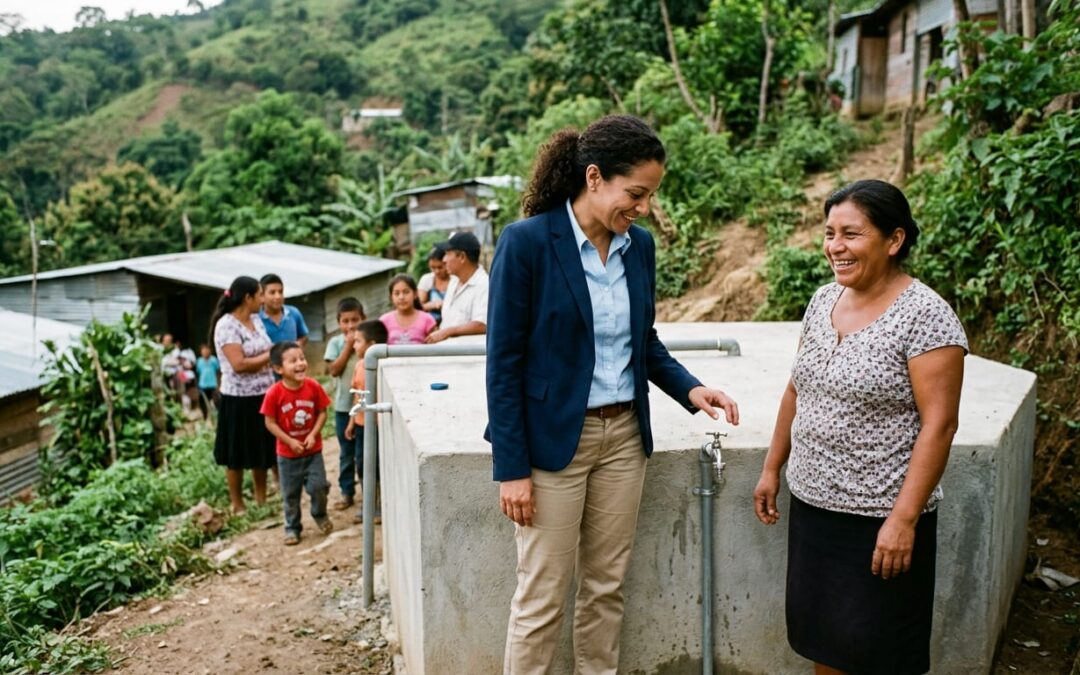
One donor who traveled to project sites in the mountains of Honduras described it this way: "I feel like it's very difficult to have a complete understanding until you physically put your hands on it… The work that they've done here is incredible from the water cisterns project that we visited and got to see to the amount of people that have been fed and continue to be fed on a daily basis." That kind of firsthand verification – standing at a completed water cistern, meeting the families it serves – is a different category of accountability than a PDF summary.
For advisors who cannot make a site visit themselves, look for nonprofits that document project progress through photography, local partner updates, and board-level oversight. Ask whether donors have visited, and whether the organization welcomes that. Reluctance to allow site visits is itself a signal.
Understanding nonprofit transparency for DAF grants means going beyond ratings and looking for organizations where verification is built into the model, not offered as an afterthought.
What Does a Trustworthy Organizational Structure Look Like in 2026?
The humanitarian nonprofit sector has grown more sophisticated about presenting credibility signals – which means advisors need to look past surface-level markers and examine the operating structure itself.
A well-structured humanitarian nonprofit in 2026 typically shows:
| Marker | What to Look For |
|---|---|
| Local partner model | Funds go to established in-country organizations, not managed by the sending org |
| Board oversight | Independent board receives financials and approves grants |
| Donor access | Site visits are offered and have actually happened |
| Program breadth | Multiple project types reduce single-program risk |
| Communication | Project updates are substantive, not just promotional |
The key takeaway: an organization that funds local partners rather than self-managing construction and field operations carries lower operational risk – and is typically more cost-efficient.
What Puts This Decision in the Right Frame?
Vetting a humanitarian nonprofit for a DAF grant is not primarily a compliance exercise – it is a judgment about whether an organization's structure, culture, and track record give a donor confidence that their giving will produce something real. Legal eligibility is the floor. Financial transparency narrows the field. Verifiable, on-the-ground impact is what separates a credible recommendation from a hopeful one.
For advisors building a philanthropic giving strategy for clients, the How It Works section of the Impact Others Inc. website walks through exactly how funds move from a DAF grant to a local partner and into a specific project – the kind of structural transparency that makes a recommendation defensible.
To learn more about how Impact Others Inc. works with financial advisors and DAF holders, contact the team at info@impactothers.com, call 2196780669, or write to 5885 Cumming Hwy Ste 108347, Sugar Hill, GA 30518.
FAQ
Who is responsible for verifying a nonprofit's eligibility before a DAF grant is approved?
The DAF sponsor – the financial institution or community foundation holding the fund – bears primary responsibility for confirming 501(c)(3) status and public charity designation before releasing a grant. However, financial advisors who recommend specific nonprofits to clients carry their own reputational stake in the vetting, which is why advisors benefit from doing independent due diligence beyond what the sponsor checks.
Which red flags should immediately disqualify a humanitarian nonprofit from a DAF recommendation?
Three patterns warrant disqualification without further review: a lapsed or revoked 501(c)(3) status (verifiable on the IRS Tax Exempt Organization Search), a refusal to share current IRS Form 990 filings, and an inability to explain how funds reach local project sites. A nonprofit that cannot answer "what percentage of my donation reaches the project?" clearly and specifically is not ready for a DAF recommendation.
How does the 100 percent project-directed model actually work in practice?
In organizations that route 100 percent of project-related donations directly to projects, administrative and operational costs are funded through a separate donor base or designated operational gifts – they are not deducted from restricted project funds. This means a donor who contributes toward a clean water project can be confident the full amount reaches that project, not a portion of it after overhead is deducted. Impact Others Inc. operates on this model.
Where can advisors find documentation on how international DAF grants are governed?
The Council on Foundations publishes guidance on international grantmaking from donor-advised funds, including the requirement to comply with section 4945(h) of the private foundation rules. The National Philanthropic Trust also maintains publicly available resources on DAF grantmaking eligibility. Both are useful reference points for advisors building a compliance-aware recommendation process.
What should advisors ask a nonprofit before recommending it to a client with a DAF?
Five questions cover the essential ground: (1) Can you confirm your current 501(c)(3) and public charity status? (2) What percentage of project-related donations reaches the project directly? (3) How are funds transferred to local partners, and who oversees that process? (4) Can donors or advisors visit active project sites? (5) Does your board receive and review independent financial statements? An organization that answers all five clearly and specifically is worth recommending.