When evaluating a nonprofit for a long-term partnership, the most important questions center on financial transparency, program accountability, and whether the organization's mission genuinely matches your own values. A recurring donation is a meaningful commitment, and you deserve clear, verifiable answers before you make it. Organizations that welcome these questions openly, rather than deflecting them, are typically the ones worth trusting with your ongoing generosity.
How Do I Know If a Nonprofit's Mission Truly Aligns With Mine?
Mission alignment starts with reading past the tagline. Ask the organization directly: What specific problems are you solving, and for whom? A nonprofit focused on providing clean water, food, education, orphanage care, and business opportunities in underserved communities has a defined scope, and that specificity matters. Vague answers about "helping people" are a signal worth noting.
Then ask yourself whether their programs reflect your own values in action. If you care about long-term hope rather than short-term relief, look for organizations that invest in business development and education alongside immediate needs like food and water. If you believe in human dignity, watch how they talk about the people they serve, are those individuals described as capable and resilient, or defined only by their circumstances?
Impact Others Inc. operates from the position that the people we serve are partners in building a better future, not passive recipients. That distinction shapes everything from how programs are designed to how donors are invited into the work.
What Financial Transparency Questions Should I Ask Before Committing to Monthly Giving?
Financial transparency is where many nonprofits either earn or lose donor trust. Before committing to a recurring monthly donation, ask these specific questions:
-
What percentage of project-related donations goes directly to the project? Some organizations spend a significant portion on overhead before a dollar reaches the field. Impact Others Inc. sends 100 percent of project-related donations directly to the projects, administrative expenses are kept intentionally low compared to most nonprofits.
-
How are administrative costs funded? Understanding this separation tells you whether your gift is actually funding the work you care about.
-
Can you show me a breakdown of how last year's donations were used? An organization with nothing to hide will share this readily.
-
Are your financials publicly available? Reputable nonprofits file Form 990s in the United States, which are publicly accessible. Ask if they can walk you through the key numbers.
The goal is not to audit the organization, it's to understand whether your generosity is being stewarded with the same care you bring to giving it.
How Can I Verify That the Work Is Actually Happening on the Ground?
Verification is one of the most overlooked aspects of donor due diligence, and it's one of the most important. Photographs and annual reports are useful, but they are not the same as firsthand evidence. Ask:
-
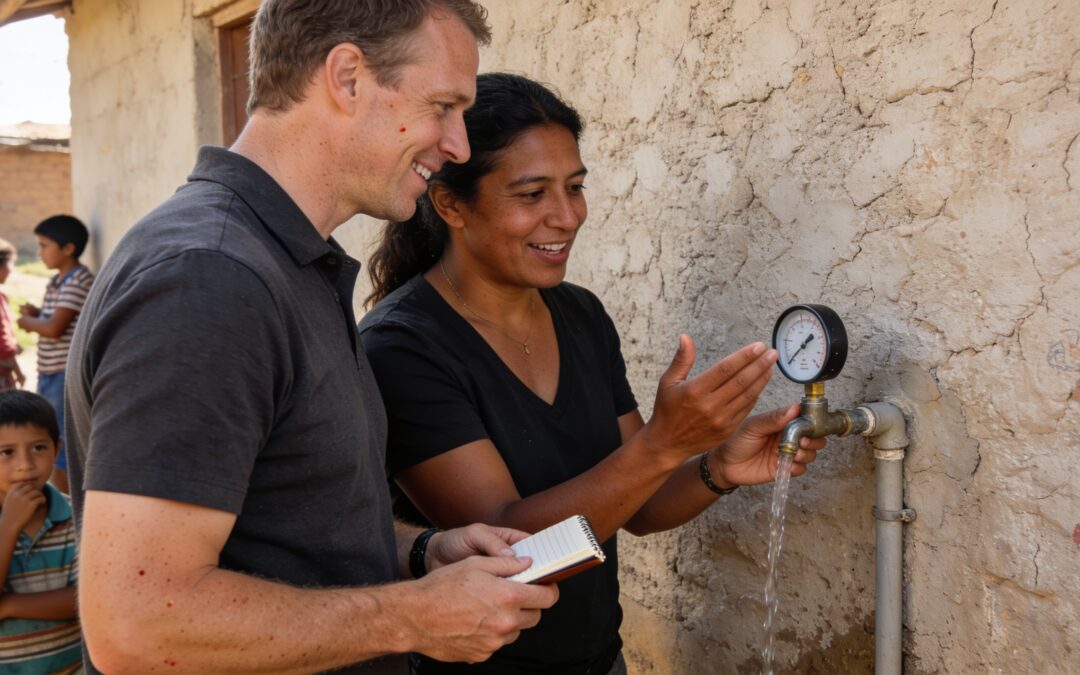
Do you offer donors the opportunity to visit project locations? This is a meaningful differentiator. Impact Others Inc. takes donors on trips to project sites so they can see the water systems, food programs, orphanages, and business development work with their own eyes. That kind of access builds trust that no brochure can replicate.
-
How do you communicate project updates to recurring donors? Look for organizations that provide regular, specific updates, not just fundraising appeals.
-
Can you connect me with a long-term donor who has been involved for several years? Peer perspectives carry weight that organizational messaging cannot.
Most donors who give consistently over time will tell you the same thing: what kept them giving was not the first story they heard, it was the moment they saw the work themselves, or heard from someone who had.
What Program-Specific Questions Should I Ask About the Work in the Field?
If you are drawn to a specific area of impact, clean water access, food security, orphanage care, education, business opportunities, or toy drives, go deeper than the surface description. Ask:
-
How are project locations selected? Understanding the criteria tells you whether the organization is reactive or strategic.
-
Who are your local partners, and how are they involved in program design? Sustainable impact is built with communities, not just for them.
-
How do you measure whether a program is working? An organization that cannot describe its own success metrics is worth questioning.
-
What happens when a project faces challenges? Honest answers to this question reveal more about an organization's integrity than any success story.
The right organization will answer these questions with specifics, not generalities. Specificity is the clearest sign that the work is real.
How Do I Evaluate Whether a Nonprofit Partnership Will Last?
A long-term partnership requires more than shared values at the start, it requires ongoing communication, mutual respect, and a sense that your role as a donor matters beyond your monthly contribution. Ask:
-
How do you involve recurring donors in your mission beyond financial giving? Organizations that value partners invite them into the story, through field trips, updates, and opportunities to share the work with others.
-
What is your vision for the next three to five years? A nonprofit with a clear, grounded direction is one worth growing alongside.
-
How do you handle donor questions or concerns? The response to this question, and how quickly it comes, is itself an answer.
Consistent, purposeful giving is one of the most meaningful expressions of who you are. The right nonprofit partnership will feel like an extension of your own compassion, not a transaction you make each month and forget.
When you find an organization that welcomes your questions, shows you the work, and sends your donation directly to the people who need it, that is the partnership worth committing to. Becoming a Monthly Supporter with Impact Others Inc. is designed for exactly that kind of donor, someone who wants their generosity to matter, month after month.
Checklist
-
Ask for the exact percentage of project-related donations that reach the field, not a range, not an estimate, a specific figure you can verify.
-
Request a breakdown of how last year's donations were allocated across programs like water, food, orphanages, education, and business development.
-
Ask whether the nonprofit offers donor site visits so you can witness the impact of your giving firsthand before committing to a recurring monthly donation.
-
Evaluate how the organization talks about the people it serves, language that centers dignity and resilience is a meaningful indicator of values alignment.
-
Ask a program-specific accountability question (see the table above) and assess whether the answer is specific or vague.
-
Speak with a long-term recurring donor if possible, their experience will tell you more than any marketing material about what mission alignment actually looks like in practice.
FAQ
What percentage of my donation should actually reach the project?
There is no universal standard, but the closer to 100 percent the better, and any organization worth trusting will tell you clearly. Impact Others Inc. sends 100 percent of project-related donations directly to the projects, with administrative expenses kept intentionally low compared to most nonprofits. Ask any organization you're considering to give you this number in writing.
How can I verify a nonprofit is doing what it says?
Start with publicly available financial records such as Form 990 filings, which U.S.-registered nonprofits are required to submit. Beyond documents, ask whether the organization offers donors the opportunity to visit project locations directly. Impact Others Inc. takes donors on field trips to project sites, clean water systems, food programs, orphanages, and business development work, so the impact is visible, not just reported.
What does mission alignment actually mean for a recurring donor?
Mission alignment means the organization's programs, values, and methods genuinely reflect your own reasons for giving. For a donor motivated by compassion, hope, and long-term change, alignment means finding a nonprofit that invests in both immediate needs, food, water, safety, and longer-term opportunities like education and business development, and that treats the people it serves with dignity rather than as charity cases.
Is it reasonable to ask a nonprofit hard financial questions before I start giving monthly?
Completely reasonable, and a trustworthy organization will welcome it. Questions about overhead ratios, how administrative expenses are funded, and how donations are tracked are standard due diligence for any serious recurring donor. An organization that becomes defensive or vague when asked these questions is telling you something important.
What programs should a well-rounded humanitarian nonprofit offer?
A comprehensive humanitarian nonprofit addresses both immediate survival needs and long-term opportunity. Look for programs spanning clean water access, food security, orphanage care, education, and economic development such as new business opportunities. Impact Others Inc. operates across all of these areas, as well as community-focused initiatives like toy drives, because hope takes many forms.
How do I know a nonprofit will stay accountable over time?
Long-term accountability shows up in how an organization communicates with recurring donors between campaigns, not just when it needs funds. Ask about update frequency, whether they report on both successes and challenges, and how they respond to donor questions. Organizations that invite donors to visit project locations and maintain transparent financial reporting are demonstrating accountability through action, not just policy.
What is the difference between a one-time donation and becoming a monthly supporter?
A one-time donation funds a specific moment; a recurring monthly donation funds sustained impact. Monthly supporters give nonprofits the financial stability to plan long-term projects, water systems that require ongoing maintenance, orphanage care that cannot be interrupted, business development programs that take time to produce results. For a donor who wants their giving to create lasting hope rather than a one-time contribution, a monthly commitment is the more meaningful choice.
If you are ready to ask these questions and want to start with an organization that will answer every one of them openly, reach out to Impact Others Inc. directly. The team welcomes conversations with donors who are serious about where their generosity goes.
Phone: 2196780669
Email: info@impactothers.com
Address: 5885 Cumming Hwy Ste 108347, Sugar Hill, GA 30518