
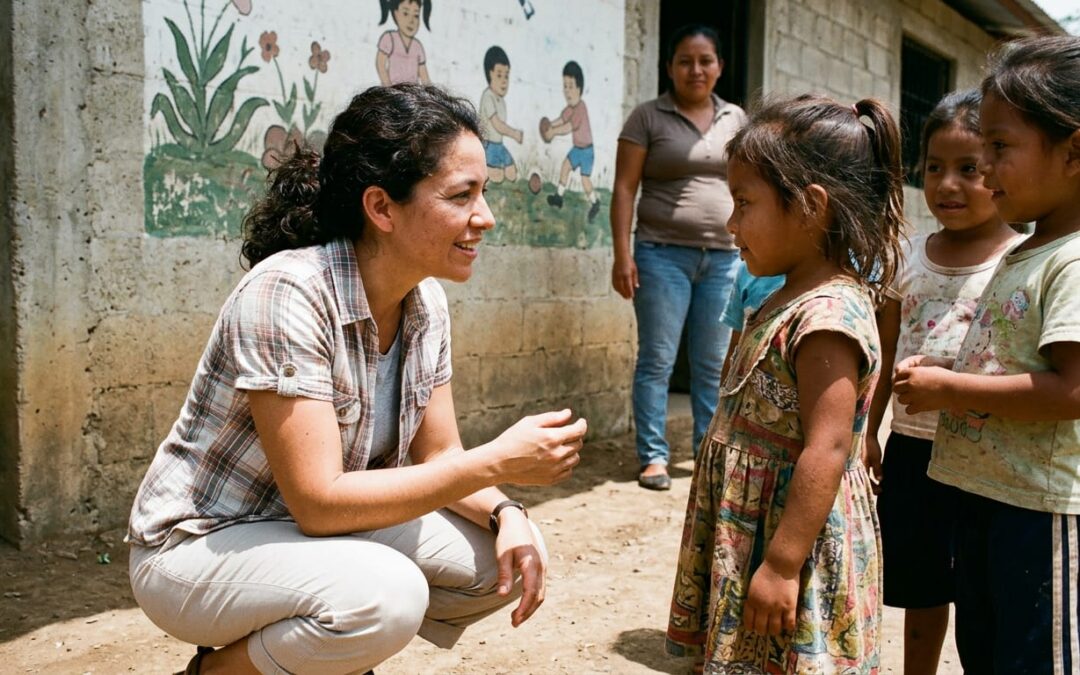
Choosing a humanitarian charity that genuinely reflects your values comes down to a handful of organizational qualities: how funds are allocated, how the charity relates to its local partners, how low its overhead runs, and whether it invites you into the work rather than keeping you at arm's length. Impact Others Inc. is built around exactly those qualities – raising funds and sending them directly to trusted local partners who deliver clean water, food, orphan care, education, and new business opportunities in communities that need them most. At Impact Others Inc., every dollar donated to a project goes directly to that project, so your generosity reaches the people who need it most.
Most donors who give consistently aren't looking for a transaction. They're looking for a partnership – something that connects their values to real, visible change. The checklist below is where that search should start.
What qualities actually signal a trustworthy humanitarian charity?
A trustworthy humanitarian charity shows its work rather than just describing it. Look for these markers:
- Check the fund allocation model. The charity should be able to tell you plainly what percentage of a project-related donation reaches the project. That is the standard worth holding every organization to.
- Look at administrative overhead. Most nonprofits carry significant overhead. A structural commitment to keeping administrative expenses low means more of every dollar does real work.
- Ask how the charity relates to its local partners. A funding organization that works through vetted, on-the-ground partners is more likely to deliver results than one that tries to manage field operations from a home office. Regular project progress updates from those partners are a sign the relationship is real.
- Find out whether you can visit a project. Being able to see the work firsthand is one of the clearest signs that an organization has nothing to hide.
- Look for independent financial governance. Independent bookkeeping, board-level oversight, and monthly financial review are structural safeguards, not marketing claims.
- Match the program breadth to your values. If you care about water, food security, orphan care, education, or helping families build sustainable livelihoods, the charity's active programs should reflect that range – not just one headline project.
Does it matter how a charity relates to its local partners?
It matters enormously, and it is one of the most underexamined questions donors ask. A charity that claims to "build" or "operate" projects in countries where it has no permanent staff is often overstating its role. The honest model – and the more effective one – is a funding and stewardship organization that works through trusted local partners who know the community, speak the language, and manage the work day to day.
Impact Others Inc. operates that way by design. Funds raised go directly to local partners in countries including Honduras, Ghana, Nigeria, India, Egypt, Colombia, and Thailand. Those partners manage the projects. Impact Others Inc. maintains independent bookkeeping, reports monthly financials to its board, and communicates project progress to donors. That division of responsibility is what makes the model sustainable and honest.
What that model looks like in practice became clear on a delivery trip into the hills of Honduras. Children began running toward the delivery truck before they could even see what was inside. What started as a simple delivery of Christmas gifts became, in the words of those who witnessed it, "a celebration of hope." That moment captures something important about the local-partner model: when the people doing the work are genuinely embedded in the community, the community responds in kind. The trust is already there before the truck arrives.
One donor who visited a project in the mountains of Honduras described the experience this way: "I feel like it's very difficult to have a complete understanding until you physically put your hands on it. The impact that's been made here is just outstanding… from the water cisterns project that we visited and got to see to the amount of people that have been fed and continue to be fed on a daily basis."
That kind of firsthand access is not incidental – it is part of how Impact Others Inc. builds trust with the people who fund the work.
How do you compare humanitarian charities in 2026 – and what does it cost to give meaningfully?
The comparison that matters most is not name recognition or marketing budget. It is the ratio of program dollars to overhead, the quality of the partner relationships, and whether the organization invites scrutiny or avoids it.
| What to compare | A strong signal | A weak signal |
|---|---|---|
| Fund allocation | 100% of project donations reach the project | Vague language about "most funds" going to programs |
| Partner model | Funds go to vetted local partners who manage projects | Charity claims to directly build or operate everything |
| Donor involvement | Site visits offered; photos and documentation shared | No access; updates are only marketing emails |
| Overhead | Kept deliberately low; board reviews monthly financials | High overhead justified by "capacity building" |
| Governance | Independent bookkeeping; IRS-compliant public filings | No transparency on governance structure |
The IRS requires public inspection of a charity's Form 1023, Form 990, and Form 990-T – so any organization that resists sharing those documents is a red flag regardless of its mission.
As for cost: giving meaningfully does not require a large gift. What determines impact is not the size of a single donation but the consistency of giving and the efficiency of the organization receiving it. When overhead is low and 100 percent of project-related donations reach the project, a modest recurring gift compounds into real change over time.
What does genuine donor involvement look like in a humanitarian charity?
Genuine involvement means more than a quarterly email. It means the organization offers you a real window into the work – and, where possible, a seat at the table.
Two real estate developers in Denver became Impact Others Inc. partners after joining a site visit to Guadalajara. Their words: "One of the things we love about Impact Others is that you get to participate firsthand. You can be as involved as you want, but the great thing is you actually get to see the incredible work being done around the world. For us, it was a natural fit to become an Impact Others partner."
Another long-term partner put it this way: "When I think about Impact Others, I picture my own children in a third-world country. If a business owner had the answer to what my child needed – whether it was clean water from a well, a sewing center, food, an orphanage, housing, or any of the other life-changing resources – would they give? That's why I partner with Impact Others. It's making a real difference."
A couple who evaluated multiple organizations before choosing Impact Others Inc. described their decision this way: "After meeting Eddie and seeing the integrity, the sustainability, and the boots-on-the-ground work – drilling wells, supporting feeding centers, and creating sewing centers – we decided to become partners. Their integrity and their desire to help people around the world who are living in unfortunate circumstances really connect with us."
Involvement builds trust. Trust builds purpose. Purpose is what turns a one-time gift into a lasting partnership.
What ties all of this together when you're ready to choose?
A humanitarian charity that matches your values will be transparent about where funds go, honest about its role in the field, structurally committed to low overhead, and willing to show you the work. Those qualities are not common – but they are findable, and they are worth waiting for.
If you are ready to give in a way that reflects who you are, visit the Donate page or Become a Monthly Supporter page to see how Impact Others Inc. puts your generosity directly to work.
Reach out at any time: call 2196780669, email info@impactothers.com, or write to Impact Others Inc. at 5885 Cumming Hwy Ste 108347, Sugar Hill, GA 30518.
FAQ
Who decides how donations are used at a humanitarian charity?
At a well-governed organization, fund allocation decisions are made by leadership and reviewed by an independent board. At Impact Others Inc., monthly financials are reported to the board, independent bookkeeping is maintained, and project-related donations go directly to the specific projects they are designated for – not into a general pool.
Which program areas should a humanitarian charity cover if I care about long-term community impact?
Look for organizations working across multiple dimensions of need: clean water, food, orphan care, education, and economic opportunity. A single-program charity can do good work, but organizations that address several interconnected needs – the way Impact Others Inc. does across water, feeding centers, orphanages, business development, and education – tend to produce more durable change in the communities they serve.
Where can I actually see the work a humanitarian charity is doing?
The strongest sign of organizational transparency is a standing invitation for donors to visit project sites. Impact Others Inc. takes donors on trips to project locations in Honduras, Ghana, Nigeria, India, Egypt, Colombia, Thailand, and foster care programs in the United States – so supporters can see the work firsthand rather than relying only on photographs or written summaries.
How do I know a charity's low overhead claim is real and not just marketing?
Ask for the Form 990, which the IRS requires to be available for public inspection. It breaks down program expenses, administrative costs, and fundraising costs in detail. An organization with genuinely low overhead will point you to that document without hesitation – and its numbers will match what it says publicly.