
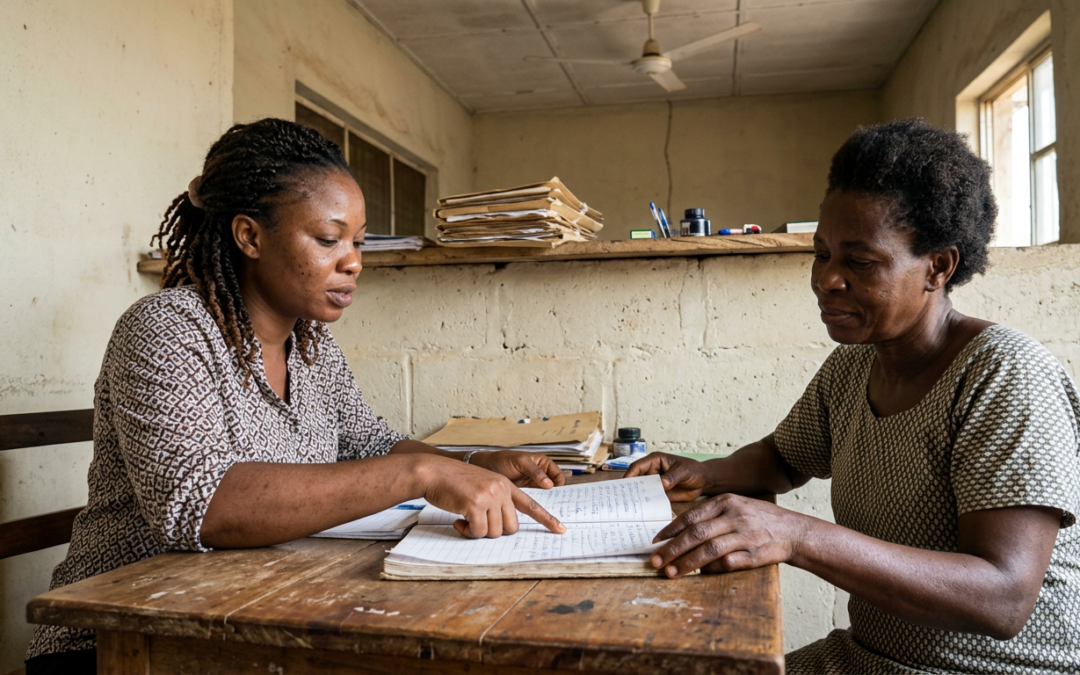
Impact Others maintains oversight of local partner spending through a structured stewardship process: local partners submit regular financial and project reports, Impact Others keeps independent bookkeeping of all project funds, and monthly financials are reviewed by the Impact Others board. The organization does not manage construction or supervise field teams directly, trusted local partners handle project execution, but the accountability structure is ongoing, not a one-time grant with no follow-up.
That distinction matters to DAF holders and financial advisors who ask the right question: not just "where does the money go?" but "who's watching after it gets there?"
How Does Impact Others Actually Monitor What Local Partners Spend?
Impact Others functions as a funding and stewardship organization. Local partners manage their own projects and expenses. What Impact Others does is monitor the paper trail that follows every dollar sent.
That monitoring happens in three concrete ways:
- Regular financial reports from local partners. Partners submit financial documentation that accounts for how project funds were used. Impact Others does not take their word for it, the reports are reviewed and reconciled against what was funded.
- Independent bookkeeping. Impact Others maintains its own records separately from what local partners report, creating a second layer of accountability rather than relying on a single source.
- Monthly board-level financial review. Financials are presented to the Impact Others board each month. That means oversight isn't occasional, it's built into the organizational calendar.
This structure is why donors who ask about financial reporting accountability nonprofit practices find that Impact Others operates with more formal accountability than many small nonprofits its size.
What Does "Trusted Local Partner" Actually Mean in Practice?
The phrase "trusted local partner" is not a marketing shorthand. It describes a specific type of relationship, one built on ongoing accountability, not a single handshake.
Impact Others does not work with any organization that submits a project proposal. Partners are vetted before funds are sent, and the relationship includes continued communication, project updates, and financial documentation throughout the project cycle. If a partner's reports raise questions, that relationship is examined. The question of nonprofit accountability when projects stall is one Impact Others addresses directly rather than avoiding.
What this means for a DAF holder or financial advisor: the oversight structure is not designed to look good on paper. It's designed to catch problems early and give Impact Others something real to communicate to donors, progress, complications, and honest updates rather than only highlight reels.
What Happens If Financial Reports Show a Discrepancy?
This is the question most donors don't ask but probably should.
Impact Others receives financial reports and maintains independent bookkeeping precisely because discrepancies can happen, and catching them requires more than trusting the partner's own accounting. When a report doesn't reconcile with what was funded, Impact Others follows up directly with the local partner.
Because monthly financials go to the board, there is no gap between a problem appearing and leadership being aware of it. The board-level review is not ceremonial, it is the mechanism that keeps financial oversight from becoming a passive process.
For donors who want to understand how this connects to their specific grant, Impact Others provides financial reporting to donors that communicates project progress and financial status in plain terms, not just internal accounting summaries.
Does This Oversight Structure Apply to Every Project?
Yes. The financial reporting and bookkeeping process is not selective by project size or geography. Whether funds are directed toward a water access project, a medical outreach clinic, orphanage support, or small business assistance for widows, the same stewardship structure applies.
That consistency matters because DAF holders often direct grants toward specific projects, and they need to know the accountability framework doesn't vary depending on which project they chose.
To give a concrete example: a one-week medical outreach clinic in Ghana provided medical and vision care to more than 2,100 people. A project at that scale, involving donated eyeglasses, medical staff, and on-the-ground logistics, requires financial documentation that goes well beyond a summary email. Impact Others receives, reviews, and retains that documentation.
The same applies to smaller-scale work. In Nigeria in 2025, seven widows received financial assistance to launch small businesses. Individual disbursements like those require tracking at the transaction level, not just a project-level summary, and that is what Impact Others monitors.
How Does the Oversight Model Compare to Direct Supervision?
Some donors assume that real accountability means the funding organization is physically present at every project site, approving every purchase. That model is not how most effective international humanitarian work operates, and it's worth being honest about why.
Local partners manage projects because they have the community relationships, local knowledge, and operational capacity to do so. Impact Others does not build wells, staff clinics, or run orphanages. What Impact Others does is ensure that the money sent to those partners is documented, reconciled, and reported, and that donors and the board receive honest communication about how it was used.
That is a different kind of oversight than direct supervision, but it is not a weaker kind. A funding organization that maintains independent bookkeeping, reviews monthly financials at the board level, and requires ongoing reporting from partners has more structural accountability than one that simply wires funds and waits for a thank-you letter.
For donors considering whether to verify DAF grants reach beneficiaries through a site visit, Impact Others also offers that option, donors can travel to project locations and see the work firsthand, which adds a layer of direct verification that no financial report can fully replace.
If you want a fuller picture of how Impact Others is structured as an organization, the Impact Others Donor Overview covers the governance, stewardship model, and how project funding flows from grant to field.
If you have questions about how a specific DAF grant would be tracked and reported, reach out directly. Impact Others is reachable at 2196780669, info@impactothers.com, or 5885 Cumming Hwy Ste 108347, Sugar Hill, GA 30518.
Checklist
- Ask any nonprofit you're considering: Do you maintain independent bookkeeping separate from what local partners self-report? If the answer is no, that's a meaningful gap.
- Confirm board-level financial review frequency. Monthly board review of financials is a stronger accountability signal than annual audits alone.
- For DAF holders directing grants to international projects: request documentation of how the nonprofit monitors partner spending after funds are disbursed, not just before.
- If you're a financial advisor recommending a nonprofit partner for DAF grants: verify that the organization has a formal reporting relationship with its local partners, not just a vetting process at the start.
- Consider whether the nonprofit separates project funds from administrative funds in its bookkeeping, so project-specific grants are tracked independently.
- When in doubt, ask to see a sample financial update from a completed or active project, a transparent organization should be able to provide one.
FAQ
How does Impact Others know local partners are spending funds correctly?
Impact Others receives regular financial reports from local partners and maintains its own independent bookkeeping to monitor how project funds are used. This dual-layer approach means the organization is not relying solely on partner self-reporting, it has its own records to reconcile against. Monthly financials are also reviewed by the Impact Others board, creating organizational accountability at the leadership level.
Does Impact Others supervise local partners on the ground?
No. Local partners manage their own projects and field operations. Impact Others is a funding and stewardship organization, not a field operations team. Its oversight role is financial and communicative, receiving reports, maintaining independent records, and following up when questions arise, rather than supervising construction or day-to-day project activities directly.
What happens if a local partner's financial report raises questions?
Impact Others follows up directly with the local partner when reports don't reconcile with what was funded. Because financials are reviewed at the board level monthly, there is no extended lag between a discrepancy appearing and leadership being aware of it. The relationship with local partners is ongoing, not a one-time grant, so accountability is continuous rather than limited to a single review.
Is the oversight process the same for every project Impact Others funds?
Yes. The financial reporting, independent bookkeeping, and board review process applies consistently across all projects, water access, medical outreach, orphanage support, small business assistance, and other programs, regardless of project size or country.
Can a donor see the financial documentation for a project their grant funded?
Impact Others communicates project progress and financial status to donors. Donors who want direct verification also have the option to visit project sites in person, which Impact Others facilitates. The combination of financial reporting and site visit access gives donors more than one way to verify how their grant was used.
How is Impact Others' oversight model different from a nonprofit that just sends a grant and waits?
The difference is structural. A grant-and-wait model has no formal mechanism to catch problems after funds are disbursed. Impact Others requires ongoing financial reporting from partners, maintains independent bookkeeping, and reviews financials at the board level every month. That structure creates checkpoints throughout the project cycle rather than a single point of accountability at the start.
Do financial advisors have access to this oversight information when recommending Impact Others to clients?
Yes. Financial advisors working with DAF clients can request information about how Impact Others monitors partner spending and what financial documentation is available. The stewardship model is designed to be transparent to both donors and the advisors who help them make strategic giving decisions.