When a local partner underperforms or a project stalls, Impact Others Inc. does not simply wait and hope. The organization's stewardship model is built to surface problems early through regular financial and project reports, communicate openly with donors, and make deliberate decisions about how funds are managed when field conditions change. Donors are not left guessing, and funds are not left sitting idle without oversight.
This question gets to the heart of what nonprofit accountability when projects stall actually looks like in practice, not in theory.
How Does Impact Others Know When Something Is Going Wrong?
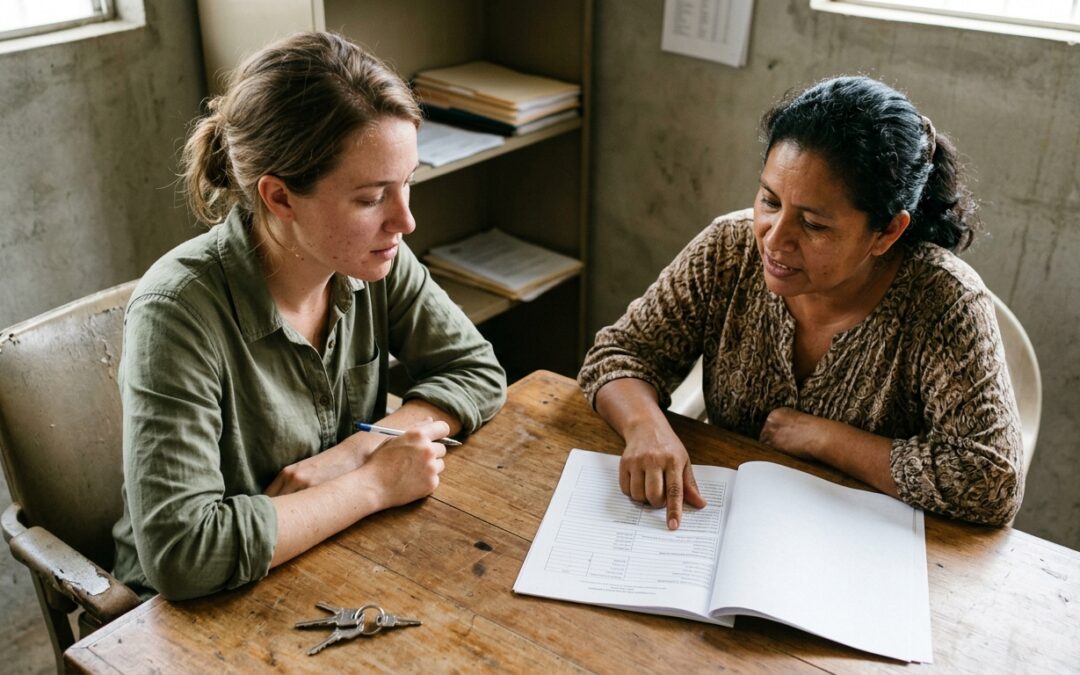
The first line of accountability is information. Impact Others receives regular financial and project reports from its local partners. These reports are not annual summaries reviewed once a year, they are the ongoing pulse check that makes early intervention possible.
Independent bookkeeping is maintained on Impact Others' side, separate from what the local partner reports. Monthly financials are reported to the Impact Others board of directors. That combination, partner-side reporting, independent bookkeeping, and board-level review, means that discrepancies, delays, or underperformance have multiple points of detection before they become serious problems.
This structure matters because the alternative is common in international humanitarian work: an organization sends funds, receives occasional updates, and only learns about a problem after months of drift. Impact Others' model is designed specifically to avoid that gap. When something looks off in a financial report, or when a project milestone is missed, that signal reaches the organization's leadership and board before the situation compounds.
What Happens to Donor Communication When a Project Faces Problems?
Transparency with donors is not reserved for good news. Impact Others communicates project progress to donors as a standing practice, which means that when a project encounters delays or a partner is not performing to expectations, that communication continues, it does not go quiet.
Donors who have directed DAF grants toward a specific project are not left to wonder. The organization's responsibility is to keep them informed about what is happening, what steps are being taken, and what the realistic path forward looks like.
One donor who traveled to Honduras to see project work firsthand described the experience this way: "I feel like it's very difficult to have a complete understanding until you physically put your hands on it." That observation applies equally to the accountability side of giving: donors who are kept in the loop, through reports, updates, and the option to visit, have a fundamentally different experience than those who send a check and wait.
Real estate developers who became Impact Others partners put it plainly: "One of the things we love about Impact Others is that you get to participate firsthand. You can be as involved as you want, but the great thing is you actually get to see the incredible work being done around the world."
That option to verify nonprofit impact through direct engagement is part of what makes the accountability model credible, not just procedural.
What Does Impact Others Actually Do When a Partner Fails to Deliver?
Knowing about a problem early creates options. When a local partner underperforms or a project stalls, Impact Others has the ability to adjust scope, redirect funds, or make decisions about whether to continue with a partner based on documented performance rather than assumptions.
Because Impact Others functions as a funding and stewardship organization, not a construction manager or direct program operator, the local partners are accountable for delivering results. That accountability is built into the relationship from the start. Partners understand that financial reports are reviewed, that milestones are tracked, and that the organization maintains its own independent records.
When a partner is not meeting expectations, the response depends on what the reports show. Is this a temporary delay due to local conditions? Is there a financial discrepancy that needs to be resolved? Is the partner's capacity genuinely insufficient for the scope of the project? Each situation calls for a different response, and the answer comes from the data, not from assumptions.
Funds are not reallocated arbitrarily. Any decisions about scope changes or fund redirection involve board oversight and are communicated to donors. That process protects both the charitable capital and the trust that donors have placed in the organization.
For donors who want to understand how the DAF grant disbursement process works before a project even begins, that structure also explains why funds move the way they do, and why there are checkpoints before additional disbursements are made.
How Does Board Oversight Protect Donors When Things Go Wrong?
The board of directors at Impact Others is not a ceremonial structure. Monthly financial reporting to the board means that leadership is accountable to an independent group of people who review the numbers regularly. When a project is underperforming, the board is aware of it at the same time as organizational leadership, not after the fact.
This matters for DAF holders and their advisors because reputational risk is real. Directing a grant toward an organization that cannot demonstrate what happened when a project went sideways is a legitimate concern. The question to ask any nonprofit is not just "what happens when things go well?" but "what happens when they don't?"
Impact Others' answer is specific: regular reporting surfaces problems early, independent bookkeeping provides a check on partner-reported data, board review ensures leadership accountability, and donor communication keeps grant-makers informed throughout. That is what financial reporting to donors looks like when it is built for transparency rather than optics.
What This Means for Your Charitable Capital
Stewardship does not end when a grant is sent. For DAF holders who care about measurable impact and for the financial advisors who help them give strategically, the accountability structure around a nonprofit matters as much as the mission itself.
Impact Others Inc. is built on the position that honest reporting, including reporting about problems, is what earns and keeps donor trust. The organization does not guarantee outcomes, because no honest nonprofit can. Field conditions change, local partners face real-world constraints, and humanitarian work is genuinely complex. What Impact Others can commit to is a structured process for catching problems early, communicating them honestly, and making decisions that protect both the mission and the charitable capital behind it.
For a full picture of how funds move from grant to project, the How It Works page walks through the stewardship process from start to field delivery.
If you have questions about a specific project or want to talk through how a DAF grant would be monitored, reach out directly. Impact Others Inc. can be reached at 2196780669, by email at info@impactothers.com, or by mail at 5885 Cumming Hwy Ste 108347, Sugar Hill, GA 30518.
Checklist
- Ask any nonprofit how problems are detected, specifically whether they maintain independent bookkeeping separate from partner-reported financials, and how often that data is reviewed.
- Confirm that board-level financial oversight exists, monthly reporting to a board of directors is a meaningful structural safeguard for DAF grants directed to international humanitarian nonprofits.
- Ask what communication you will receive if a project stalls, a clear answer to this question before you give is a reliable indicator of how a nonprofit handles nonprofit accountability when projects stall.
- Request documentation of how funds are reallocated when a partner underperforms, this should involve a defined process, not a case-by-case improvisation.
- Consider visiting the project, Impact Others Inc. takes donors to project sites so they can see the work and assess field conditions directly, which is one of the most concrete forms of verification available.
- Review the organization's financial reporting practices, Impact Others maintains independent bookkeeping and reports monthly financials to its board, which creates a documented trail donors and advisors can reference.
FAQ
What does Impact Others do when a local partner stops communicating or misses milestones?
Impact Others receives regular financial and project reports from local partners and maintains independent bookkeeping on its own side. When a partner misses a milestone or reporting goes dark, that gap is visible through the organization's own records. The situation is escalated to leadership and reviewed at the board level before decisions are made about next steps, which may include adjusting scope, pausing disbursements, or redirecting funds.
Can a DAF grant be redirected if the original project stalls?
Decisions about redirecting funds involve board oversight and are communicated to donors. Impact Others does not reallocate charitable capital without a documented rationale and transparency to the people whose grants are involved. The specifics depend on the nature of the stall, a temporary delay due to local conditions is handled differently than a partner who cannot account for funds already disbursed.
How often does Impact Others review what local partners are doing?
Impact Others receives regular financial and project reports from its local partners on an ongoing basis, not just annually. Monthly financials are reported to the Impact Others board of directors, which means the organization's leadership and its board are reviewing the financial picture consistently throughout the year.
Is there any independent check on what local partners report?
Yes. Impact Others maintains independent bookkeeping that is separate from what local partners submit. That independent record is what allows the organization to identify discrepancies early, rather than relying solely on partner-reported data.
What should a financial advisor tell a client who is worried about a grant going to a stalled project?
The honest answer is that no nonprofit can guarantee project outcomes, field conditions in international humanitarian work are genuinely unpredictable. What advisors can evaluate is the stewardship structure: does the organization have independent financial oversight, regular board reporting, and a defined communication process for donors when problems arise? Impact Others Inc. has all three, which is the structural answer to that concern.
Do donors find out if something goes wrong, or does the organization handle it quietly?
Impact Others communicates project progress to donors as a regular practice, and that communication continues when a project faces problems, it does not stop. Donors who have directed DAF grants toward a specific project are kept informed about what is happening and what steps are being taken, not presented with a cleaned-up summary after the fact.
How does Impact Others' model reduce the risk of funds being misused by a local partner?
The combination of regular partner reporting, independent bookkeeping maintained by Impact Others, and monthly board-level financial review creates multiple checkpoints before additional funds are disbursed. Because Impact Others is a funding and stewardship organization, not a direct program operator, local partners understand from the start that their financial and project performance is monitored and documented.