
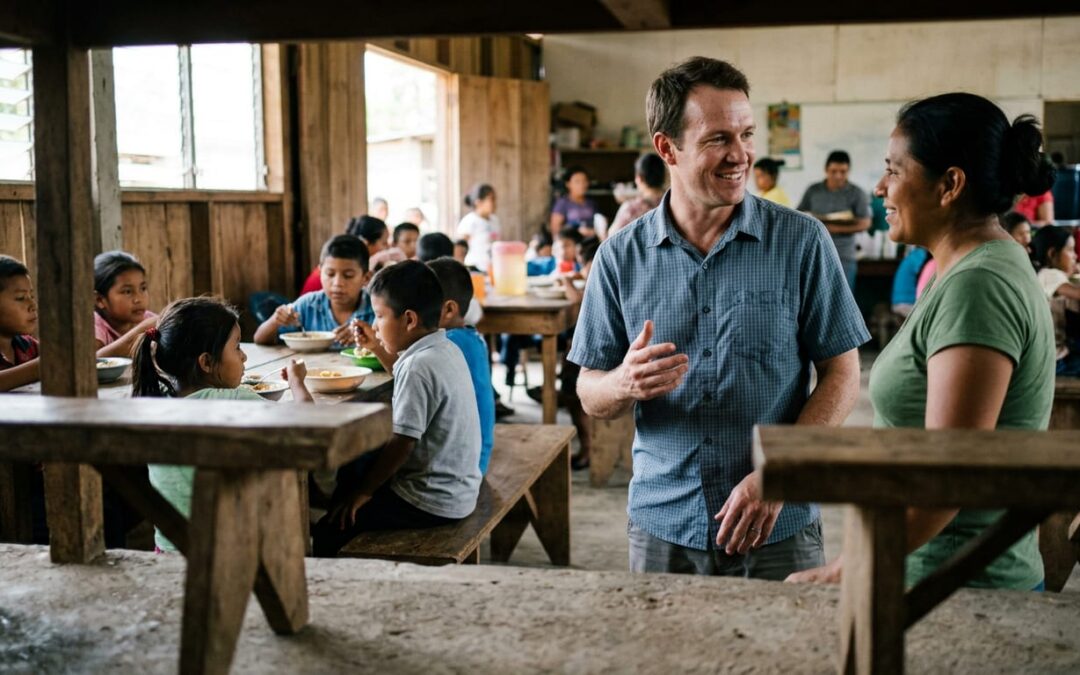
Most humanitarian nonprofits keep donors at arm's length – newsletters, emails, and annual reports. But yes, donors absolutely can visit project sites in person, and for many supporters, that firsthand experience transforms how they understand their own giving. Impact Others Inc. connects donors with trusted local partners worldwide so every act of generosity reaches the people who need it most – and those same partners open their doors to donors who want to see the work up close.
If you've been giving for months or years and still feel a step removed from the people your donations are helping, a donor site visit may be exactly what closes that gap.
What Does a Donor Site Visit Actually Look Like?
A donor site visit is a structured trip to an active project location – a feeding center, a water project, an orphanage, or a small business program – where you meet the local team, see the work in progress, and spend real time with the community.
These are not polished tours staged for cameras. The roads are real. The people are real. The conditions are real. One donor who traveled into the mountains of Honduras with Impact Others Inc. described crossing four rivers on the way up into remote communities – and spending his first night back in tears after meeting children at a feeding center and hearing the stories behind the work. His words capture something a newsletter never could: "The impact that's been made here is just outstanding… I feel like it's very difficult to have a complete understanding until you physically put your hands on it."
What donors typically experience on these trips:
- Visiting active project sites (feeding centers, water cisterns, orphanages, sewing centers)
- Meeting the local partner team and community members face to face
- Hearing directly from the people the projects serve
- Seeing where donated funds have been put to work
The visit isn't passive. Donors who make these trips often describe them as the moment giving stopped being transactional and became personal.
Why Do Some Donors Choose to Travel Instead of Just Give Remotely?
Remote giving is meaningful. But for a specific kind of donor – someone who wants to partner in humanitarian giving rather than just write a check – the distance between their generosity and its outcome can feel like an unresolved question.
Site visits answer that question without words.
One couple, real estate developers who joined a trip to Guadalajara, put it plainly: "One of the things we love about Impact Others is that you get to participate firsthand. You can be as involved as you want, but the great thing is you actually get to see the incredible work being done around the world."
Another donor who traveled with Impact Others Inc. described the draw this way: "When you come on these trips and you just connect with people who think the same mindset and that want to give back… Impact Others has done the hard job. They find the places with the right infrastructure with the right means and we just come and give a little part of us and make a bigger impact in every place."
There's a particular kind of donor who reaches a point where they need to close the loop – to stand in the place their giving built, to shake a hand, to see a child eating a meal that their monthly gift helped fund. That motivation is legitimate, and it's different from curiosity. It comes from wanting giving to mean something beyond a transaction.
How Does Impact Others Inc. Facilitate Donor Trips?
Impact Others Inc. is a funding and stewardship organization. The organization raises funds and channels them directly to trusted local partners who manage projects on the ground in countries including Honduras, Nigeria, Ghana, India, Egypt, Colombia, and Thailand. Those local partners also host donor visits.
When Impact Others Inc. organizes a donor trip, the local partner team handles the on-the-ground logistics – transportation, introductions, safety, and access. The Impact Others team travels alongside donors, making connections and providing context. Donors are not dropped into an unfamiliar place alone; they travel as part of a group with people who know the community and the work.
This matters practically. Remote project sites – mountain communities in Honduras, villages in Nigeria – require local knowledge to reach safely and respectfully. The partner infrastructure that makes the projects work is the same infrastructure that makes the visits possible.
For donors who want to get involved with a humanitarian nonprofit beyond donating, a structured site visit through an organization with established local relationships is the most grounded way to do it.
What Should You Expect Before, During, and After a Site Visit?
What do I need to do before the trip?
Donor trips are not open at all times – they are organized around project readiness and partner availability. Donors who are interested in visiting should connect with Impact Others Inc. directly to ask about upcoming trip opportunities. Being an active donor or monthly supporter is typically the starting point for that conversation.
Preparation matters. Donors who get the most from these visits arrive having read about the specific project they're visiting, having thought through what they want to understand firsthand, and with realistic expectations about conditions on the ground.
What will I experience during the visit?
Expect the unexpected – in the best sense. Donors who have made these trips consistently describe being changed by what they see and hear, not just informed by it. The children at a feeding center, the family using clean water from a cistern their donation helped fund, the woman running a small sewing business she could not have started without support – these are not statistics. They are people with names and stories.
A boy in Nigeria, whose community received a clean water project, described the before and after in simple terms: "We used to fetch water from this stream. It is polluted water with cattle and other animals. Now since we have this clean water we don't have to travel far to get the water."
That kind of moment is what a site visit delivers. No newsletter produces it.
What happens after the trip?
Donors who return from site visits consistently describe a shift – not just in their emotional connection to the work, but in how they talk about it with others. Many become advocates. Some increase their giving. Some bring friends or colleagues on future trips. The visit doesn't end the relationship; it deepens it.
For donors exploring local vs international giving decisions, seeing international project work firsthand often clarifies something that abstract research never quite resolves.
Is a Donor Site Visit Worth the Cost and Effort?
Donor trips involve real travel costs – airfare, accommodation, and time. Impact Others Inc. does not cover those personal travel expenses, and the trips are not inexpensive. What the organization provides is access: to the projects, to the local partners, to the communities.
The question of whether it is "worth it" depends entirely on what you're looking for. If you want to confirm that your giving is reaching real people in real places, a site visit is the most direct form of accountability available. You are not reading a summary of what happened – you are standing where it happened.
For donors who have been giving consistently and want to move from committed supporter to genuine partner in the mission, the cost of a trip is often described afterward as the best investment they made in their own sense of purpose.
How do donor site visits fit into a bigger picture of purposeful giving?
Giving with purpose isn't only about the dollar amount. It's about the connection between your generosity and a real outcome you can see, understand, and stand behind. Site visits make that connection tangible in a way that no other donor experience does.
If you've ever wondered whether your giving is actually changing lives – whether the water project got built, whether the children are eating, whether the orphanage is safe and full of hope – a donor trip answers those questions in person. You don't have to take anyone's word for it.
For donors thinking through the humanitarian nonprofit donor trip experience in more detail before committing, exploring what past travelers have described is a useful first step.
Checklist
- Ask about upcoming donor trips directly – contact Impact Others Inc. to find out when the next organized site visit is scheduled and what projects it will include.
- Start as an active donor first – site visits are designed for committed supporters; establish a giving relationship before requesting trip access.
- Research the specific project before you arrive – donors who understand the context of a feeding center, water project, or orphanage before they visit get far more from the experience.
- Prepare for real conditions – remote humanitarian project sites involve rough roads, basic accommodations, and situations that challenge comfortable assumptions; go with open expectations.
- Plan for what comes after – think in advance about how you'll process and share what you see; many donors find the post-trip period as meaningful as the trip itself.
- Connect with other donors who have traveled – hearing firsthand from someone who has made a site visit with a humanitarian nonprofit is one of the most honest ways to decide whether it's right for you.
FAQ
Who can join a donor site visit with Impact Others Inc.?
Donor trips are organized for active supporters – people who are already giving to projects or contributing through recurring monthly donations. There is no fixed threshold, but the trips are designed for donors who have an established relationship with the organization and want to see the work they've been funding. Reach out directly to ask about eligibility and upcoming opportunities.
Which countries does Impact Others Inc. take donors to visit?
Impact Others Inc. has active projects and local partners in Honduras, Nigeria, Ghana, India, Egypt, Colombia, and Thailand, as well as foster care work in the United States. Donor trips are organized based on project readiness and partner availability in those locations, so the destination varies by trip.
How much does a donor site visit cost?
Personal travel expenses – airfare, accommodation, and incidentals – are the donor's responsibility. Impact Others Inc. provides access to the projects and the local partner network, not subsidized travel. The total cost depends on the destination, travel dates, and individual choices. Donors should contact the organization directly for guidance on what a specific trip typically involves.
What do donors actually do on a site visit – is it just observation?
Site visits are more than observation. Donors meet the local partner team, spend time with community members, visit active project sites such as feeding centers, water cisterns, and orphanages, and hear directly from the people the projects serve. Some donors describe it as one of the most personally significant experiences of their giving journey – not a tour, but a genuine encounter with the work.
How is a donor trip different from volunteer travel or a mission trip?
Donor site visits through Impact Others Inc. are not construction or service trips. The organization is a funding and stewardship body – local partners manage the projects and their own teams. Donors visit to witness, understand, and connect, not to build or operate. This distinction matters: the local partner teams have the expertise and relationships; donors bring presence, encouragement, and the deeper commitment that often follows from seeing the work firsthand.
Who handles logistics and safety on donor trips?
The trusted local partner in each country manages on-the-ground logistics – transportation, access to sites, and community introductions. The Impact Others Inc. team travels alongside donors, providing context and continuity. Donors are not navigating unfamiliar or remote environments alone; the same local infrastructure that makes the projects possible makes the visits safe and meaningful.
Which project type do donors most often visit?
Feeding centers and clean water projects are among the most commonly visited, but donor trips can include orphanages, small business programs, and sewing centers depending on the country and the active projects at the time of travel. The specific itinerary is shaped around what is operational and accessible when the trip is scheduled.
If you're ready to move from giving at a distance to seeing the work in person, the next step is a conversation. Reach out to Impact Others Inc. at info@impactothers.com, call 2196780669, or write to 5885 Cumming Hwy Ste 108347, Sugar Hill, GA 30518. Ask about upcoming donor trips and what it takes to be part of one. The people your giving is helping are real – and so is the door to meet them.