Starting a family giving tradition begins with one shared commitment: choosing a cause you all care about and returning to it consistently, not just once. When a family gives together toward the same project – clean water, food for hungry children, an orphanage, or education – over months and years, generosity stops being an event and becomes part of who you are as a family. The research backs this up: according to Fidelity Charitable, people who grew up in families with strong giving traditions are significantly more likely to give at higher levels as adults. Impact Others Inc. funds clean water, food, orphanages, education, and new business opportunities through trusted local partners, so donors find real purpose in their giving – and families can build that tradition around a real, ongoing project they follow together.
What are the first steps to starting a giving tradition as a family?
The most durable family giving traditions share one quality: they are specific. A vague intention to "give more" fades. A named project, a consistent rhythm, and a shared reason to care stay with children and adults alike.
To build that foundation:
- Choose a cause that connects emotionally. Talk as a family about what matters most – safe drinking water, children without parents, kids going without food, or access to education. The conversation itself is part of the tradition.
- Pick one project and stay with it. Spreading giving across many causes dilutes the story. One project, followed over time, gives your family something to track and care about together.
- Set a recurring commitment, not a one-time gift. A recurring contribution creates a living connection to the project rather than a transaction. Families can give together under a single recurring commitment tied to a named project.
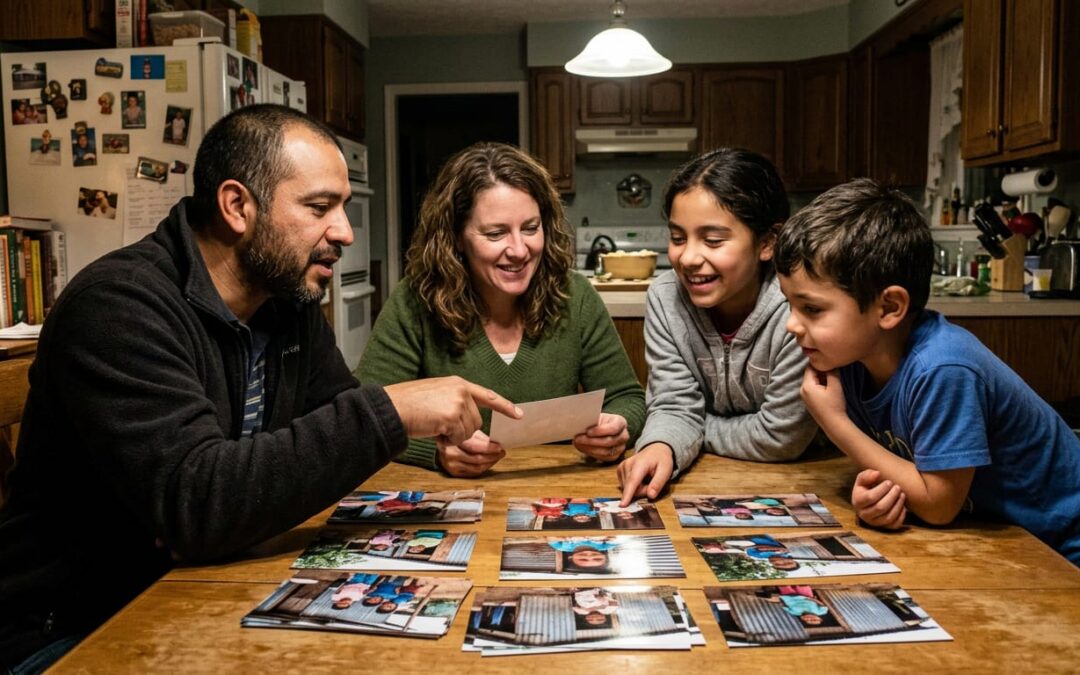
- Make it visible in your home. Put the project on the refrigerator, mention it at dinner, celebrate milestones. When teaching kids about giving starts at home, it tends to stay with them.
- Direct your giving to a specific area. Donors can focus their family's giving toward clean water, food, an orphanage, or education – so the cause is concrete, not abstract.
- Return to it consistently. Consistency is what separates a tradition from a gesture. The repetition is the point.
- Plan to see the work someday. Donor site visits let families see firsthand the work their giving supports – a powerful moment that turns giving into a real, shared memory.
Why does a shared, ongoing project matter more than one-time giving?
A single donation is generous. A tradition is transformative – for the family giving as much as for the people receiving.
When a family gives monthly to the same project, children grow up understanding that their family is the kind of family that does this. That identity is more powerful than any single act. Fidelity Charitable found that among parents who give, 62% discuss philanthropy with their children – and those conversations, repeated over years, are what shape the next generation of givers.
The difference between monthly giving and a one-time donation is not just financial. It is relational. A family that gives monthly has a project to follow, progress to watch, and a shared story to tell. A one-time gift closes a chapter. A recurring gift keeps it open.
This is exactly why choosing a specific project matters so much for a family tradition. When your family's giving goes toward a named project – say, clean water access in a specific community, or food for children at an orphanage – there is something real to come back to. Something to ask about. Something to show your children as they grow older.
How does a family giving tradition actually take shape over time?
The tradition builds in layers. In the early months, it is simply the act of giving together and talking about why. Over time, it becomes the story your family tells about itself.
Consider what that looks like in practice. Impact Others Inc. has seen a Christmas initiative reach 23,136 children across more than 13 countries and the United States in a single year – well beyond the original goal of serving 18,000 children. A family whose monthly giving contributed to that kind of effort has something real to celebrate together, not just a receipt to file away.
Or consider a one-week medical outreach clinic that provided care to more than 2,100 people, with donated eyeglasses helping restore vision for many patients. When a family's ongoing giving is connected to that kind of work, the tradition carries weight. It is not abstract. It is people.
In Nigeria, seven widows received financial assistance to launch small businesses in 2025, creating pathways toward long-term independence. In the United States, more than 5,000 children received Christmas gifts and participated in community celebrations through a single initiative. These are the kinds of stories a family can follow – and eventually witness in person on a donor site visit.
The tradition deepens when children are old enough to participate in the decision of where to give, to understand what the project does, and eventually to carry that commitment into their own adult lives. Monthly giving is not just a donor benefit – it is a family inheritance.
Is a family giving tradition worth starting if the budget is modest?
Yes – and the size of the gift matters far less than the consistency and intentionality behind it.
A family giving a modest amount every month to a specific project is doing something more meaningful than a large one-time donation made without connection. The tradition is not built by the dollar amount. It is built by the habit, the conversation, the shared identity, and the return to the same cause month after month.
For families wondering how to choose a nonprofit for monthly giving, the right question is not just "where does the money go?" but "does this organization give my family something real to connect to?" A project with a name, a location, and a community behind it gives a family's giving a story. That story is what a tradition is made of.
Mindy Tibbs, an Impact Others Inc. partner for about four years, described it this way: "When I think about Impact Others, I picture my own children in a third-world country. If a business owner had the answer to what my child needed – whether it was clean water from a well, a sewing center, food, an orphanage, housing, or any of the other life-changing resources – would they give? That's why I partner with Impact Others. It's making a real difference."
That instinct – imagining your own child in need – is exactly where a family giving tradition begins. It is personal. It is specific. And it grows with your family over time.
What makes a family giving tradition last across generations?
A tradition lasts when it is tied to something real, revisited consistently, and passed on intentionally.
The families who maintain giving traditions across generations are not necessarily the wealthiest. They are the ones who made giving part of their identity early, talked about it openly, and connected their generosity to specific people and places rather than abstract causes. When children grow up knowing their family's giving helped bring clean water to a community, supported children in an orphanage, or helped a widow launch a business, that story belongs to them too. They carry it forward.
Impact Others Inc. funds clean water, food, orphanages, education, and new business opportunities through trusted local partners, so donors find real purpose in their giving – and families can build that purpose into something that outlasts any single moment or season.
If your family is ready to begin, the Become a Monthly Supporter page on the Impact Others Inc. website is where a shared commitment can start – one project, one family, one step at a time.
Reach out to the team at Impact Others Inc. directly: call 2196780669, email info@impactothers.com, or write to 5885 Cumming Hwy Ste 108347, Sugar Hill, GA 30518. A real conversation about which project fits your family's heart is the best first step.
FAQ
Who should be involved in starting a family giving tradition?
Everyone who can participate meaningfully – including children old enough to understand the cause. Involving kids in the conversation about where to give, and why, is what makes the tradition stick. Fidelity Charitable found that 62% of parents who give discuss philanthropy with their children, and those conversations are what shape giving habits for life. The more voices included in the decision, the more ownership each family member feels.
Which type of project is best for a family giving tradition?
The best project is one your family can connect to emotionally and follow over time. Clean water, feeding programs, orphanages, and education all offer ongoing stories – communities being served month after month, not just once. Families that choose a named project rather than a general fund have something concrete to talk about, track, and eventually visit in person. Impact Others Inc. allows donors to direct their giving toward a specific project, which is what gives a family tradition its anchor.
Where can a family actually see the impact of their giving?
Impact Others Inc. offers donor site visits so families can travel to the communities their giving supports and witness the work firsthand. This is one of the most powerful moments in a family giving tradition – moving from monthly contributions to standing in the place those contributions helped build. It turns giving from a financial act into a shared memory and deepens the tradition in a way no update or photo can fully replicate.
How does monthly giving differ from donating once a year as a family?
Monthly giving creates a continuous connection to the project rather than a closed transaction. When a family gives once a year, it is a moment. When a family gives every month, it is a practice – something that shapes how children understand generosity, responsibility, and their place in a larger world. The rhythm of returning to the same cause each month is what turns a good intention into a real tradition.