
Yes, donors can see photos, written updates, and other documentation from the humanitarian projects their grants support. What you receive depends on what local partners document and submit from the field – they are the ones managing the work on the ground and producing the content. Impact Others Inc. shares that project documentation, including photos and written updates, directly with donors so giving connects to something real and observable, not just a transaction.
For donors who want more than submitted materials, there is another path entirely: visiting the project in person.
What kinds of documentation do funded projects produce?
The documentation available from a funded humanitarian project typically falls into a few categories: photographs of the work in progress or completed, written progress updates from local partners, and in some cases video footage. What exists for any given project depends on what the partner team captures and submits.
- Photographs are the most common form of documentation. They show physical evidence of a project – a water cistern under construction, children at a feeding center, or a small business getting started. Impact Others shares photos sourced from local partners so donors can see visual evidence of the work their grants support.
- Written updates describe what is happening on the ground: which phase a project is in, what has been completed, and what comes next. These come from the local partners who manage the work.
- Video documentation is sometimes available, though less consistent across all project types and locations. Availability depends entirely on what partners capture and submit.
- Site visit documentation – photos and observations from donors or Impact Others staff who travel to project locations – provides some of the most direct visual evidence, because it is produced by someone outside the partner organization.
The availability of any of these depends on the project, the partner, and what is logistically possible in that location. Remote or difficult-to-reach communities may have fewer materials than projects in more accessible areas.
How does Impact Others handle documentation from local partners?
Impact Others acts as a funding and stewardship organization. Trusted local partners manage projects on the ground, including their own teams and expenses. Those partners submit project updates and photos, which Impact Others uses to keep donors connected to the work their grants support.
This structure matters for understanding documentation: Impact Others does not send its own staff to build or operate projects, which means field-level content comes from partners, not from a central team. The grant outcome documentation a donor can expect is what partners capture and share through that process.
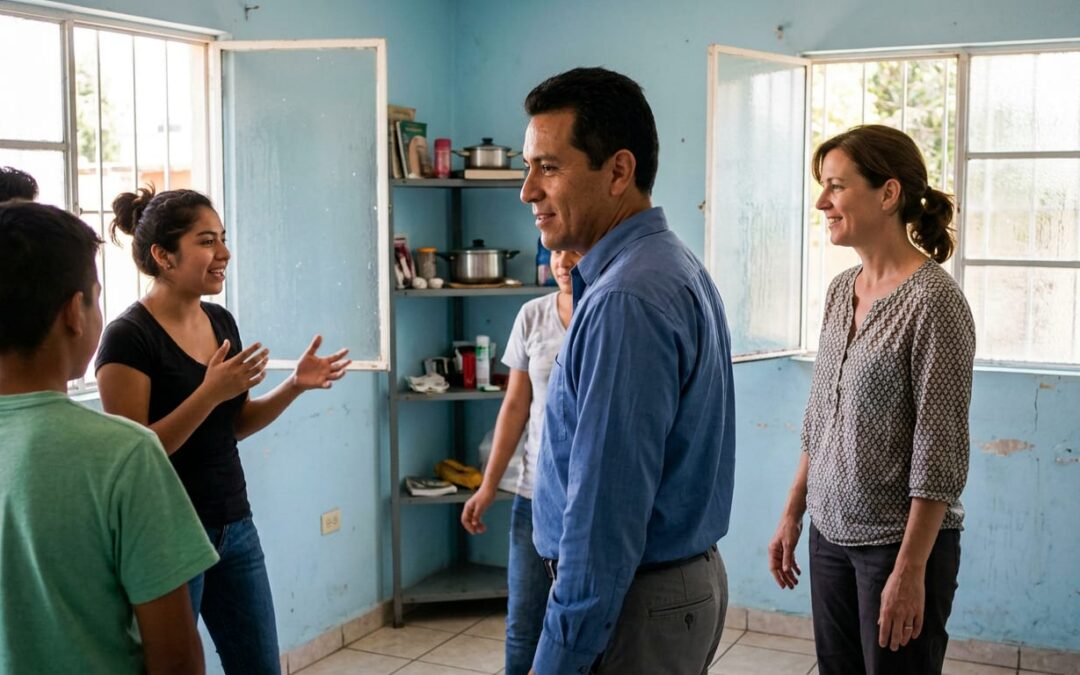
What that looks like in practice comes through clearly in the experience of a partner family who traveled to a project site in Guadalajara, Mexico. After their teenage child completed a one-week mission trip, the family decided they needed to get more deeply involved. One family member described it this way: "We just finished an amazing day. We had a master class with the young adults in the orphanage here, and it was truly impactful. We decided to become Impact Others partners after our 17-year-old had already done a one-week mission trip. We looked at each other and said, 'Oh my God, we really need to get heavily involved in being a partner and being part of this greater thing.'" The family frames their involvement around time, talents, and treasures – and describes the decision to become a partner as a calling to follow the example of those who have given their lives to serving others. Their account shows what documentation alone cannot fully convey: the texture of the work, the people it reaches, and what it feels like to witness it firsthand.
Visual and written documentation is part of how Impact Others maintains transparency and helps donors connect their grant to a real, observable result – rather than simply taking the organization's word for it. If you want to verify charity donation impact beyond submitted materials, the most direct option is seeing the work yourself.
Can donors visit project sites to see the work directly?
Yes, and for many donors this becomes the most meaningful form of accountability available. Impact Others offers donor trips to project locations so givers can observe the work directly rather than relying solely on submitted materials.
One donor who traveled to Honduras described crossing four rivers to reach a remote mountain community: "The overall experience has just been incredible… The work that they've done here is incredible from the water cisterns project that we visited and got to see to the amount of people that have been fed and continue to be fed on a daily basis."
That account points to the same thing submitted photos and updates can only partially convey: standing at the project site tells the rest of the story. If you are considering what a donor trip to humanitarian project actually involves, that article walks through the practical details of how those visits work.
What are the real limits of remote documentation?
Documentation submitted by local partners is genuine and valuable, but it has honest limits worth naming. Partners are managing active projects in communities that may have limited connectivity, equipment, or staff capacity for photography and video. Responsible partners follow meaningful, informed consent standards when interviewing, photographing, or filming people affected by humanitarian crises, and that can limit what is captured in sensitive settings.
The result is that documentation varies by project. Some programs produce rich visual records. Others, particularly those serving vulnerable populations like children in orphanages or people in remote communities, may have fewer images out of respect for the people involved.
This is why the donor trip option matters. It is not a substitute for documentation – it is a different kind of accountability altogether. Seeing a water cistern, meeting the children at a feeding center, or watching a small business owner at work is evidence that no photo submission fully replicates.
What does this mean for donors choosing where to give?
Impact Others Inc. funds clean water, food, education, and orphanages through trusted local partners – and invites supporters to visit the work in person.
For donors evaluating where to direct a DAF grant, the question of documentation is really a question of trust: can you connect your giving to a real, observable result? The answer here is yes – through partner-submitted photos and updates, and through the option to travel to the project yourself. Neither path involves taking the organization's word alone.
If you are working through the broader question of what to ask before committing a grant, the article on questions to ask a nonprofit before donating covers what verify nonprofit impact data actually looks like in practice.
To learn more about current projects or ask about donor trips, reach out directly: call 2196780669, email info@impactothers.com, or write to Impact Others Inc. at 5885 Cumming Hwy Ste 108347, Sugar Hill GA 30518.
FAQ
Who actually produces the photos and documentation from a funded project?
Local partners who manage the project on the ground are the source of field-level documentation. They submit photos and updates to Impact Others, which then shares that content with donors. Impact Others does not send its own construction or field teams to produce content independently.
Which projects are most likely to have strong visual documentation?
Projects in accessible locations with established partner teams tend to produce more consistent documentation. Projects serving vulnerable populations – such as children in orphanages – may have fewer images due to consent and privacy considerations that responsible partners follow.
Where can I see documentation before I decide to give, not after?
Impact Others shares project updates and photos as part of how it communicates the work to donors and prospective donors. Reaching out directly at info@impactothers.com or calling 2196780669 is the most direct way to ask about current project documentation before committing a grant.
How is a donor site visit different from receiving submitted photos?
A site visit puts the donor at the project location – crossing rivers to reach a mountain community, meeting children at a feeding center, or seeing a water cistern in use. Submitted photos show the work; a site visit lets the donor observe it firsthand and ask questions directly of the local team. Impact Others organizes these trips for donors who want that level of direct connection.
What if no video or photos exist for the specific project I funded?
Documentation availability depends on what partners capture and submit, and not every project produces the same volume of material. If documentation is limited for a specific project, a donor trip is the most direct alternative – it replaces the need for submitted media by making the donor a firsthand witness to the work.