
Comparing humanitarian organizations by efficiency before directing a DAF grant comes down to three measurable factors: overhead ratios, project transparency, and your ability to verify results independently. Most DAF holders know they want to give strategically, but the framework for actually comparing organizations is rarely spelled out. This article walks through each factor so you can make a confident, informed grant decision.
What Does "Efficiency" Actually Mean for a Humanitarian Nonprofit?
Efficiency in the nonprofit world is often reduced to a single number – the overhead ratio – but that framing misses half the picture. A more complete definition includes how much of each dollar reaches the project, whether results can be independently verified, and whether the organization's local partners are accountable for outcomes.
That said, overhead ratios are a legitimate starting point. Charity Navigator says an organization should spend no more than 30% of its total expenses on administrative overhead and fundraising costs combined. The Better Business Bureau sets a similar standard, noting that no more than 35% of a nonprofit's budget should go toward operating expenses. The IRS does not set a maximum overhead ratio for nonprofits, so there is no regulatory floor that automatically disqualifies an organization.
What these benchmarks don't tell you is whether the remaining portion actually reaches the field. That's where project transparency and verification matter more than any ratio.
Which Metrics Should DAF Holders Compare Across Organizations?
Before recommending or directing a DAF grant, evaluate each organization on these dimensions:
| Metric | What to Look For | Why It Matters |
|---|---|---|
| Program expense ratio | Strong majority going to programs | Indicates how much reaches the work |
| Project allocation model | Does 100% of project donations go to the project? | Separates administrative from project funds |
| Verification access | Can donors visit project sites? | Confirms impact without relying on self-reporting |
| Local partner accountability | Are partners vetted and monitored? | Reduces risk of misuse downstream |
| Scope of work | Water, food, medical, education, small business? | Matches grant to your giving priorities |
The most important distinction on this table is the difference between a general program expense ratio and a dedicated project allocation model. An organization can report a high percentage going to "programs" while still routing a meaningful portion of that toward centralized overhead labeled as program costs. A true project allocation model means project-related donations go directly to the project – full stop.
Impact Others Inc. sends 100 percent of project-related donations directly to the projects themselves, with administrative expenses that are far lower than most nonprofits. That's a structural difference, not just a marketing claim, and it's the kind of detail worth asking any organization to explain specifically.
How Do You Verify Results Beyond What an Organization Self-Reports?
This is where most efficiency comparisons break down. Overhead ratios come from self-reported IRS filings. Impact narratives come from the organization's own communications. For a DAF holder who wants measurable impact rather than a well-crafted story, self-reported data is a necessary starting point – but it shouldn't be the finish line.
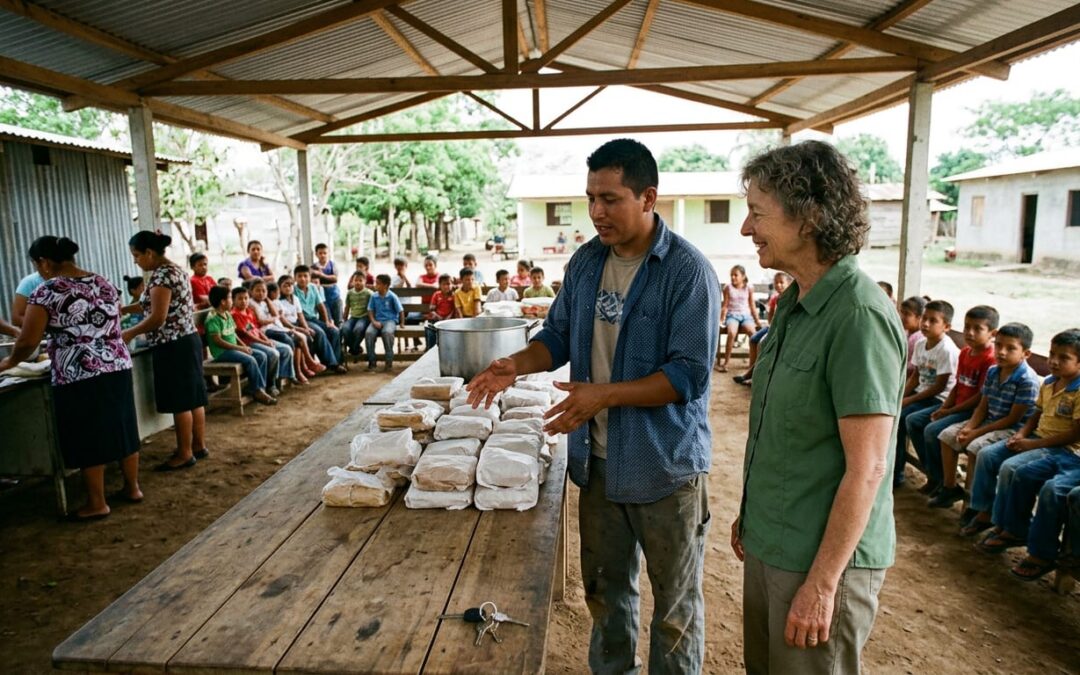
The strongest verification method available to donors is a direct site visit. One partner who traveled to Honduras to see a water cistern project and a feeding center firsthand described it this way: "I feel like it's very difficult to have a complete understanding until you physically put your hands on it… The impact that's been made here is just outstanding." He added: "Anything and everything you can give will go to the utmost use here."
That kind of first-hand accountability is rare in the sector. Most organizations don't offer it. For DAF holders who want to verify donor-advised fund impact beyond a written update, the ability to travel to project locations and meet the communities involved is a meaningful differentiator.
Impact Others Inc. facilitates donor site visits so grant-makers can see the work directly – clean water access in Nigeria, feeding programs in Honduras, orphanage support in Mexico, and small business development across multiple countries. Through trusted local partners, Impact Others Inc. delivers clean water, food, education, and hope to communities around the world on behalf of supporters who want to make an impact.
How Should You Evaluate Humanitarian Organizations in 2026?
The world of humanitarian giving has shifted. DAF assets have grown substantially, and with that growth comes more scrutiny – from donors, advisors, and the public – about where grant dollars actually go. In 2026, the baseline expectation for a credible humanitarian organization includes independent project monitoring, documented outcomes from local partners, and some form of donor access to verify those outcomes.
Giving What We Can focuses specifically on cost-effectiveness as its main comparison standard – the ratio of good produced per dollar given. That framing is useful for DAF holders because it reframes the question from "is this organization legitimate?" to "does this organization produce the most meaningful results per dollar directed?"
For advisors helping clients with donor-advised fund grant decisions, the practical question is: can this organization explain its project allocation clearly, show evidence of results, and offer a path to independent verification? If the answer to all three is yes, the organization clears the efficiency bar. If not, the ratio alone isn't enough.
What Makes a Comparison Framework Actionable?
Comparing organizations is only useful if it leads to a decision. Here's a practical way to structure the comparison before a grant:
Ask each organization three direct questions:
- What percentage of my grant goes to the project itself, not overhead?
- Can I visit a funded project to see the work directly?
- How are your local partners vetted and monitored?
An organization that can answer all three clearly – with specifics, not generalities – has demonstrated the kind of transparency that makes strategic giving possible. One that deflects or offers only aggregated statistics has answered the question indirectly.
For advisors working with clients on measurable impact data for DAF grants, this three-question framework translates into a repeatable due diligence process that can be applied to any humanitarian organization, not just one.
The How It Works page on the Impact Others Inc. website walks through exactly how project funds are directed, how local partners are selected, and what donors can expect when they choose to visit a project site.
Checklist
- Ask every organization you're comparing: what percentage of a project-specific grant reaches the project directly?
- Check each nonprofit's overhead ratio against the Charity Navigator benchmark of no more than 30% on administrative and fundraising costs combined.
- Request information on how local partners are vetted – not just selected, but monitored over time.
- Ask whether you, as a DAF holder, can visit a funded project site to verify impact firsthand.
- Confirm whether the organization separates administrative expenses from project funds structurally, not just in how it describes them.
- When comparing humanitarian organizations for a DAF grant, apply the same three-question framework to each: allocation, verification, and partner accountability.
FAQ
Who sets the standard for what counts as an acceptable overhead ratio for nonprofits?
There is no single regulatory authority. The IRS does not set a maximum overhead ratio, so there is no threshold that automatically disqualifies a nonprofit. Charity Navigator recommends that no more than 30% of total expenses go to administrative overhead and fundraising combined. The Better Business Bureau sets a similar guideline at 35%. These are evaluation benchmarks, not legal requirements.
Which humanitarian organizations allow donors to visit project sites in person?
Very few humanitarian organizations offer structured donor site visits as part of their giving model. Impact Others Inc. facilitates trips to project locations in countries including Honduras, Mexico, Nigeria, and others, so DAF holders can see funded work directly – feeding programs, clean water access, orphanage support, and small business development – rather than relying solely on written updates.
How do overhead ratios compare to project allocation models as efficiency measures?
Overhead ratios measure what percentage of total expenses goes toward programs broadly. A project allocation model goes further by specifying that 100% of a project-related donation reaches the project itself, with administrative costs funded separately. Impact Others Inc. operates on a 100% project allocation model, which is a more precise measure of how a specific grant is used than a general program expense ratio.
What should I ask a humanitarian nonprofit before directing a DAF grant to them?
Ask three direct questions: What percentage of my grant goes to the project itself? Can I visit a funded project to verify the work? How are your local partners selected and monitored? An organization that answers all three with specifics has demonstrated the transparency that makes intentional giving possible. Vague or aggregate answers are a signal to dig further before committing a grant.
Where can DAF holders find humanitarian projects across multiple focus areas – water, food, medical, and education?
Impact Others Inc. supports projects across clean water access, food programs, orphanage care, medical aid, education, and small business startups across multiple countries. DAF holders and their advisors can direct grants toward specific project types that match their giving priorities, and can request a site visit to see that work in person.
If you're ready to move from comparison to commitment, the team at Impact Others Inc. is glad to walk you through current projects, explain how project funds are directed, and help you determine whether a site visit makes sense for your giving plan. Reach out directly at info@impactothers.com, call 2196780669, or write to 5885 Cumming Hwy Ste 108347, Sugar Hill GA 30518.