Most DAF holders send a grant and then hear nothing concrete. Verification is both possible and reasonable to expect – and the most reliable method combines a nonprofit's 100% project-funding model with direct, on-the-ground access that lets you see the work yourself. The organizations that welcome scrutiny are the ones worth trusting with your charitable assets.
What Does Meaningful Verification Actually Look Like?
Verification is not a single checkbox. For a DAF grant to be genuinely accountable, you need three things working together: clarity about where the money goes, documentation of what was built or delivered, and an opportunity to witness the results firsthand.
Many nonprofits offer the first item – a summary statement that funds were used for their stated purpose. Fewer offer the second, and fewer still offer the third. That gap is where most donor frustration lives. You've made a strategic decision to deploy charitable assets toward a specific outcome, and a vague confirmation letter doesn't close the loop.
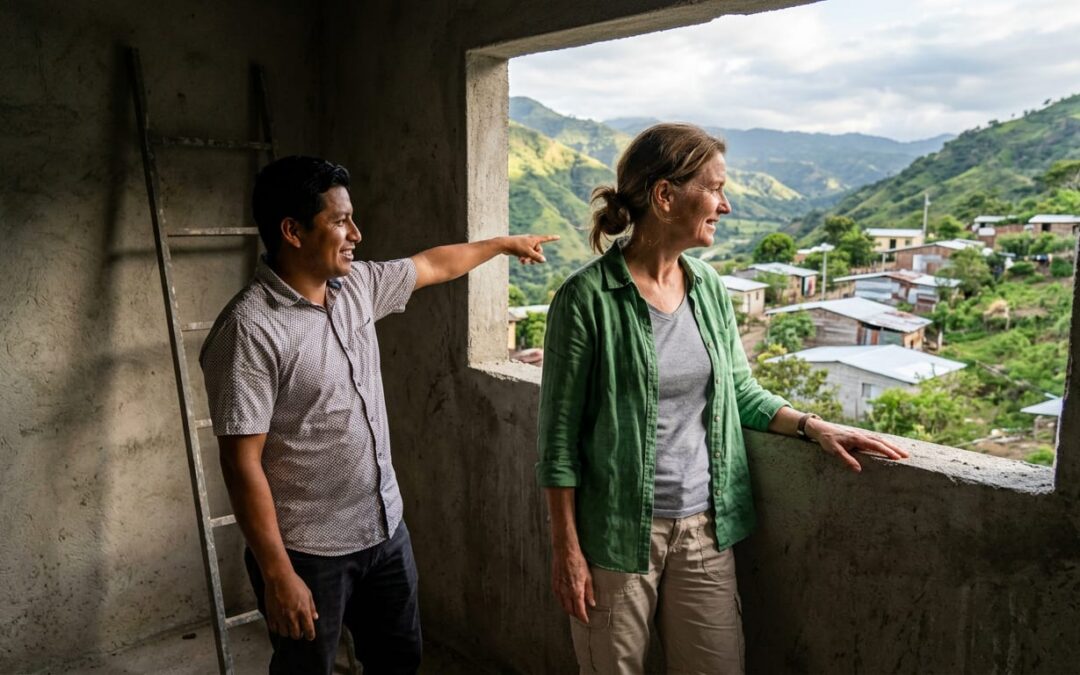
The clearest accountability signal a nonprofit can offer a DAF holder in 2026 is the invitation to visit. When an organization actively arranges trips to project locations – not press tours, but real site visits where donors walk the ground, meet the community, and see what was built – that is a different category of accountability than anything paper-based.
One donor who traveled to Honduras with Impact Others Inc. described it this way: "The overall experience has just been incredible… The work that they've done here is incredible from the water cisterns project that we visited and got to see to the amount of people that have been fed and continue to be fed on a daily basis."
That kind of firsthand testimony is what verification looks like in practice.
Does the 100% Project Funding Model Change What You Can Verify?
Yes – and it changes it materially. When a nonprofit sends 100% of project-related donations to the project, the question of overhead absorbing your grant is removed from the equation before verification even begins.
Most nonprofits blend program expenses with administrative costs in ways that make it genuinely difficult to trace a specific grant to a specific outcome. When Impact Others Inc. directs 100% of project-related donations to the project itself – with administrative expenses kept far lower than most nonprofits – the connection between your DAF grant and the on-the-ground result becomes much more direct.
This matters for low overhead nonprofits as a selection criterion, but it matters even more as a verification criterion. If overhead is minimal and the funding path is direct, the documentation of outcomes is also cleaner. You're not trying to untangle a percentage of your grant from an allocation table – you're looking at what the project produced.
For DAF holders who want to restrict a DAF grant to a specific project, this model makes that restriction meaningful rather than nominal.
What Documentation Should You Expect From a Grant Recipient?
At a minimum, a credible nonprofit should be able to show you:
- Project photos and site documentation – not stock photography, but dated images from the actual location your grant supported
- Partner communications – evidence that local partners are active, accountable, and providing progress updates to the nonprofit
- Clear project scope – what was planned, what was completed, and whether the two match
Impact Others Inc. works through trusted local partners who manage projects and their own field expenses. Impact Others maintains independent bookkeeping, receives regular project and financial reports from partners, and reports monthly to its board. That internal discipline is what makes external documentation credible – it means the photos and updates you see are grounded in an actual oversight structure, not assembled after the fact.
The documentation you receive as a donor flows from the rigor applied before your grant ever arrived.
How Do Donor Site Visits Serve as Verification?
A site visit does something that documentation alone cannot: it puts you in the same physical space as the outcome your grant helped produce. You can ask questions of the local team, meet the people the project serves, and form your own judgment about whether the work is real and sustained.
Rob and Bernice, partners with Impact Others Inc., described their decision this way: "After meeting Eddie and seeing the integrity, the sustainability, and the boots-on-the-ground work – drilling wells, supporting feeding centers, and creating sewing centers – we decided to become partners."
The word "seeing" is doing real work in that sentence. They didn't decide based on a summary. They decided based on direct observation.
For DAF holders who want to understand how to get personally involved with DAF giving, a site visit is the most direct form of involvement available – and the most defensible verification method you can bring back to a financial advisor who asks how you know your grants produced results.
Impact Others Inc. funds clean water, food, education, and orphanages through trusted local partners – and invites supporters to visit the work in person.
What Standard Should DAF Holders Set When Choosing Grant Recipients?
Verification isn't something you negotiate after a grant is made. It's a criterion you apply before you select a recipient. The questions to ask upfront:
- Does this organization send 100% of project-related funds to the project, or does overhead dilute the grant?
- Can I see dated project documentation – photos, partner updates, completed scope?
- Will this organization invite me to visit the project location if I want to go?
- Are local partners named, accountable, and independently managed?
An organization that answers yes to all four is offering a genuinely verifiable grant experience. One that deflects or provides only aggregate impact statistics is asking you to take their word for it.
For advisors helping clients think through how to measure humanitarian grant impact results, these four questions translate directly into a due-diligence framework that can be applied consistently across any nonprofit a client considers.
You can look at how Impact Others Inc. structures this process on the Giving section / How It Works page.
Checklist
- Before making a grant, ask the nonprofit directly whether 100% of project-related donations reach the project – and what their administrative expense ratio is.
- Request dated project documentation – photos, partner updates, and a completed scope statement – not just an annual summary letter.
- Ask whether donor site visits are available for DAF holders who want to see the work firsthand.
- Confirm the nonprofit works through named local partners with independent accountability structures, not just a field team under central control.
- If you work with a financial advisor, share your verification criteria with them so they can apply the same standard when evaluating other nonprofits eligible for DAF grants.
- After a visit, document your own observations – this becomes the most credible record of impact you can hold.
FAQ
How do I know my DAF grant actually reached the project and wasn't absorbed by overhead?
The clearest signal is a nonprofit that sends 100% of project-related donations to the project itself and maintains administrative expenses far lower than most nonprofits. When that structure is in place, the path from your grant to the project outcome is direct. Ask for this information before you grant, not after.
Which types of nonprofits make it easiest to verify DAF grant impact?
Nonprofits that work through named local partners, maintain independent bookkeeping, and actively invite donors to visit project locations offer the strongest verification path. Organizations that rely on aggregate statistics or annual summaries as their primary accountability tool make independent verification much harder for a DAF holder to achieve.
Who should I contact at a nonprofit to ask about grant verification before I give?
Start with the organization's donor relations or development team and ask specifically: What documentation will I receive about this project? Are site visits available? How are local partners held accountable? A nonprofit that welcomes those questions – rather than redirecting you to a glossy impact summary – is demonstrating the kind of transparency that makes verification realistic.
What should I do if a nonprofit can't show me project-level documentation after a grant is made?
Treat it as a due-diligence finding for future grants, not just a frustration. Ask whether dated photos, partner updates, or a completed project scope exist. If none are available, that gap is useful information when deciding whether to grant to the same organization again – and it reinforces why verification criteria belong in the selection process, not the follow-up.
Where do Impact Others Inc. projects actually take place, and can I visit them?
Impact Others Inc. works with trusted local partners in countries including Ghana, Nigeria, Honduras, India, Egypt, Colombia, and Thailand, across programs that include clean water, feeding centers, orphanages, and small business support. Donors are invited to travel to project locations and see the work in person – that direct access is one of the ways Impact Others makes grant impact verifiable rather than assumed.
If you're ready to direct your DAF grant toward work you can actually see and verify, Impact Others Inc. welcomes the conversation. Reach us at info@impactothers.com, call 2196780669, or write to us at 5885 Cumming Hwy Ste 108347, Sugar Hill GA 30518.