
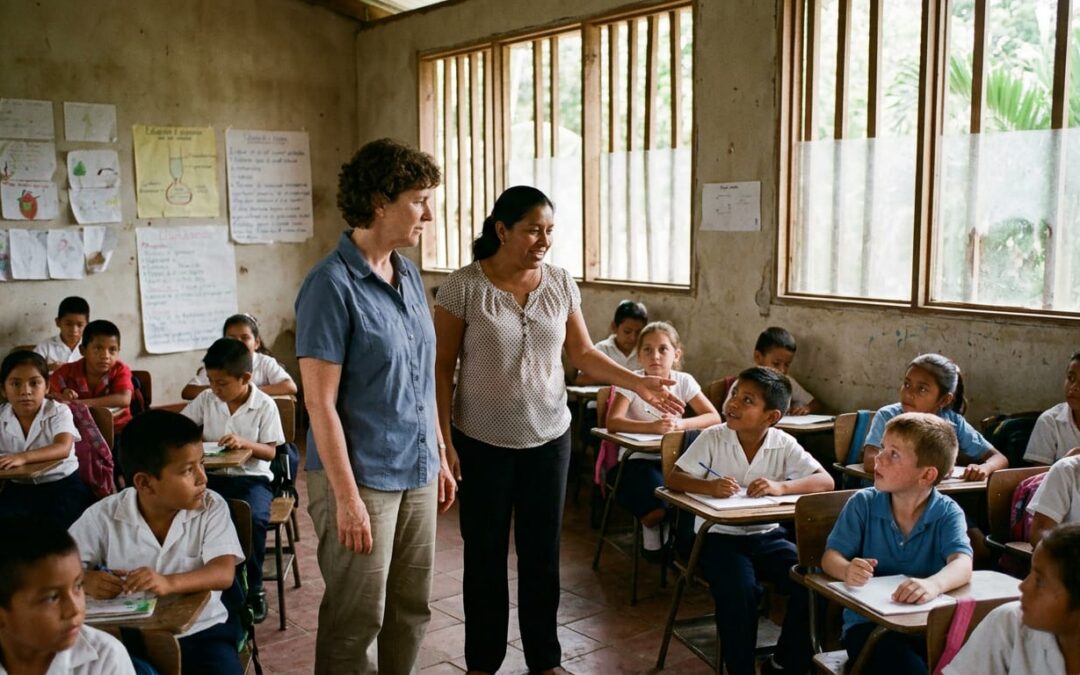
Yes – some nonprofit organizations do allow donors to travel to the schools and education programs they fund, and Impact Others Inc. is one of them. Donor site visits are built into how Impact Others operates: supporters can fund education initiatives through trusted local partners, then travel to project locations to meet beneficiaries and see the work firsthand. That combination – funding and presence – is what separates a transaction from a genuine connection.
For donors who want more than a receipt, this matters. Giving to an education project in Honduras or another country feels different when you have stood in a classroom, met the children, and talked to the people running the program.
Which nonprofits let donors visit education projects they fund?
A small number of organizations actively welcome donors at project sites rather than simply sending updates from a distance. The key is whether the organization has trusted local partners on the ground who can host visitors safely and meaningfully – not every nonprofit has that infrastructure.
Here are the types of organizations worth looking at, and what to ask:
- Organizations with established local partner networks – Look for nonprofits that fund projects through vetted in-country partners rather than managing everything remotely. Local partners can arrange logistics, provide context, and introduce donors to the communities they serve.
- Nonprofits that explicitly offer donor travel programs – Some organizations, like Impact Others Inc., build donor trips directly into their model. Ask whether trips are organized, how often they run, and what a visit typically includes.
- School-based programs that welcome visitors – The Cambodian School Project, for example, invites visitors to its schools in Siem Reap, with an English teacher meeting guests at their hotel and taking them roughly 15 miles to the project village of Poum Steung.
- Community foundations with site visit programs – The Jewish Community Foundation of San Diego has taken donors on site visits to verify donation impact at organizations like The Monarch School, which serves unhoused students and their families.
- Organizations with a 100% project donation model – When administrative costs are kept separate from project funds, more of what you give reaches the program you want to visit. Ask whether project-related donations go directly to the work.
The clearest signal that an organization genuinely welcomes donor travel is whether they can describe what a visit looks like, not just say it is possible.
What does a donor trip to an education project actually look like?
Donor trips to education projects vary by organization and country, but the most meaningful ones share a common shape: you travel with people who know the community, you spend time with the beneficiaries rather than observing from a distance, and you leave with a direct understanding of what your support is funding.
At Impact Others Inc., donor trips have taken supporters into some genuinely remote places. Zach Whitley, a donor who traveled to Honduras, described crossing four rivers on the way up into the mountains to reach the communities Impact Others funds through local partners. "The overall experience has just been incredible," he said. "The impact that's been made here is just outstanding." He reflected on visiting water cistern projects, meeting children at a feeding center, and hearing directly from the team on the ground. "I think Impact Others is very empowering. The work that they've done here is incredible… if you have an opportunity to contribute, contribute. Anything and everything you can give will go to the utmost use here."
That kind of immersion – crossing rivers, meeting families, seeing the actual infrastructure – is what separates a donor trip from a promotional tour. Education projects in Impact Others' partner countries follow the same model: supporters who travel meet the children and educators their funding supports, not a curated highlight reel.
For donors who support donor field visits as a way to validate their giving, the experience tends to shift how they think about generosity entirely.
How does funding education projects through Impact Others work?
Impact Others Inc. funds clean water, food, orphanages, education, and new business opportunities through trusted local partners, so donors find real purpose in their giving. The funding model is direct: 100% of project-related donations go to the project itself. Impact Others raises and stewards the funds, maintains independent bookkeeping, and receives regular project updates from local partners – but the people managing education programs on the ground are the local teams who know those communities.
This matters for donor travel because it means the people you meet on a site visit are the ones actually running the programs. There is no layer of outside management between the donor and the community.
Education is one of several areas where Impact Others works through partners across more than 13 countries. The organization's reach across multiple countries – demonstrated through programs like Project Dakota's Christmas Initiative, which reached 23,136 children globally against an original goal of 18,000 – shows the scale of what trusted local partnerships can accomplish.
Donors interested in supporting education projects can give as a one-time contribution or through a recurring monthly commitment, and those who want to travel can connect with Impact Others to learn about upcoming trip opportunities.
What does it cost to join a donor trip to an education project?
The cost of a donor trip depends on destination, travel logistics, and timing – no two trips are identical. What drives the difference is mostly geography: reaching a partner community in the mountains of Honduras involves different logistics than visiting a program in Ghana or India. Flights, ground transportation, accommodations, and the duration of the trip all factor in.
What Impact Others does not do is bundle trip costs into the project donation itself. The 100% model means project funds go to the project. Trip-related expenses are handled separately, which keeps the two things clean. If you are comparing organizations that offer donor travel, that distinction is worth asking about directly: does the trip cost come out of your project donation, or is it accounted for separately?
The better question for most donors is not the dollar amount but what the trip includes. A visit that puts you in a classroom, introduces you to the educators and students, and gives you time with the local partner team is a fundamentally different experience from a brief stop on a broader tour.
Is donor travel to education projects worth it for most supporters?
For donors who give because they want to feel the connection between their resources and real lives, traveling to an education project is one of the most direct ways to close that gap. The experience tends to answer questions that updates and photos cannot: Are the programs running? Are the children actually there? Do the people on the ground believe in what they are doing?
Those questions matter especially for donors who have struggled to trust organizations from a distance. Seeing the work – sitting in a classroom, meeting a teacher, watching children learn in a space that your giving helped make possible – is a different kind of accountability than any document can provide.
It is not for every donor. Some supporters give generously and find deep purpose in the giving itself, without needing to travel. But for the donor who craves that tangible connection, the organizations that make travel possible are in a category of their own.
If you want to fund education projects through Impact Others Inc. and find out about donor travel opportunities, the Donate page or Become a Monthly Supporter page is the place to start. You can also reach the team directly at info@impactothers.com, call 2196780669, or write to 5885 Cumming Hwy Ste 108347, Sugar Hill GA 30518.
FAQ
Who can join a donor trip to an Impact Others education project?
Any supporter interested in traveling to a project location is welcome to reach out to Impact Others Inc. to learn about upcoming trips. Trips are organized through trusted local partners who manage the logistics on the ground, so the experience is grounded in the real community rather than a staged visit. There is no requirement to be a long-term donor – the trip itself is often what deepens a supporter's commitment.
Which countries does Impact Others fund education and humanitarian projects in?
Impact Others works with trusted local partners across more than 13 countries, including Honduras, Ghana, Nigeria, India, Egypt, Colombia, and Thailand, as well as foster care work in the United States. Education is one of several program areas alongside clean water, food, orphanages, and new business opportunities. The specific countries where education projects are active can change as new partnerships are established.
Where do donors actually go on a site visit – a school building, a village, or somewhere else?
It depends on the project and the partner community. In Honduras, for example, donor trips have taken supporters into mountain communities accessible only by crossing rivers on foot – meeting families, visiting feeding centers, and seeing water infrastructure in place. Education visits typically bring donors into the actual spaces where programs run: classrooms, community centers, or learning programs managed by local partner organizations. The goal is direct contact with the community, not a brief overview from the outside.
How is a donor trip different from just receiving a project update?
A project update – photos, written summaries, progress notes – tells you what happened. A site visit puts you in the place where it is happening. Donors who have traveled with Impact Others describe the experience as transformative in a way that written updates cannot replicate: meeting the children, hearing directly from local partners, and seeing the physical results of funded work. For donors whose purpose in giving is rooted in genuine human connection, the trip closes a gap that no communication from a distance fully bridges.