
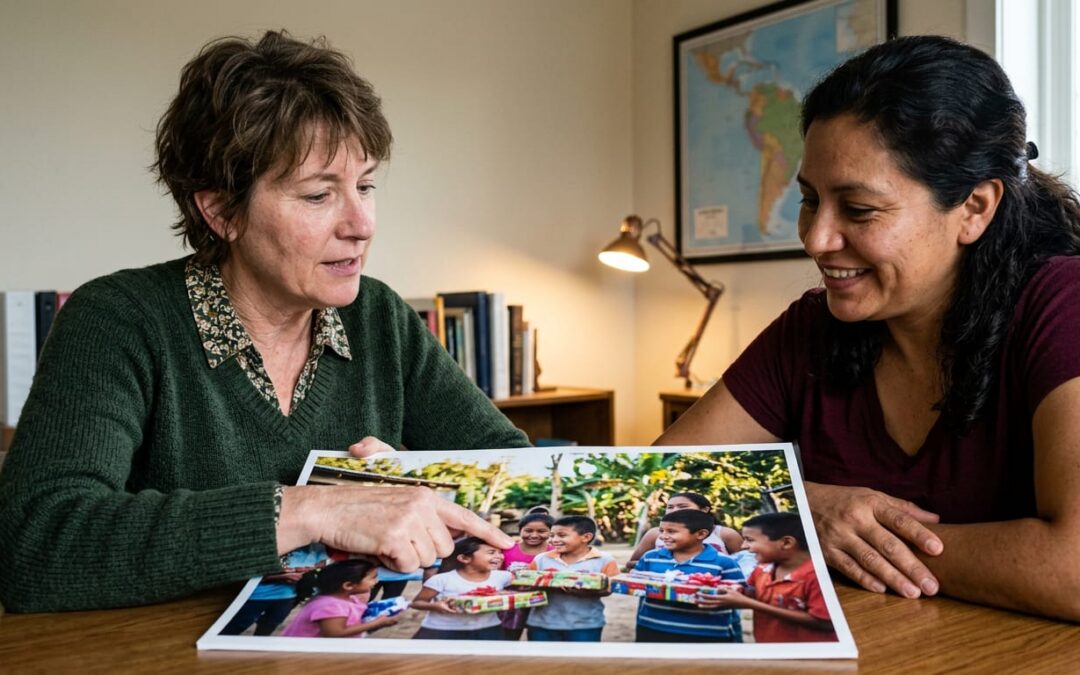
International humanitarian giving is a strong fit for many DAF clients because it addresses foundational human needs – clean water, food, medical care, shelter – in communities where the gap between need and available resources is most acute. For clients whose philanthropic values extend beyond their zip code, a well-structured international grant can produce a visible, tangible result that reinforces why they set up a DAF in the first place. Impact Others Inc. works alongside financial advisors to connect DAF holders with vetted local partners delivering exactly that kind of work across more than 13 countries.
The conversation doesn't have to be complicated. It starts with one question: what does your client actually want their giving to do?
What Makes International Giving a Natural Fit for DAF Holders?
International humanitarian programs address foundational needs – clean water, food security, medical aid, and education – in communities where the gap between need and available resources is significant. For clients who have already funded local causes and want to extend their philanthropic reach, international giving offers a clear next step.
The kind of impact this produces is concrete and personal. In Nigeria, a community that previously shared a water source with animals – and walked significant distances to reach it – now has access to clean water closer to home. In the words of one community member: "We thank you Impact Others for helping us get this clean water that we don't have to walk many miles to get water." In Ghana, a medical outreach clinic provided medical and vision care to more than 2,100 people, with donated eyeglasses helping restore vision for many patients. In Nigeria in 2025, seven widows received financial assistance to launch small businesses, creating opportunities for long-term independence and economic sustainability. These are the kinds of outcomes DAF clients can picture and connect to their values – a clear line between the grant and the result.
A few reasons international giving connects with DAF clients specifically:
- The grant produces a visible, discrete result. A clean water project in Nigeria, a medical outreach clinic in Ghana, a small business grant for widows in a developing community – these are outcomes a client can picture and connect to their values. For clients who want their giving to produce a visible, tangible result rather than fund general operating budgets, program-specific international giving can offer a clearer line between the grant and the outcome.
- The need is proportional to the gift. In many international communities, a relatively modest grant funds a project that would require far more capital in a domestic context. That isn't a pitch – it's a structural reality of where resources are scarce.
- It complements, not competes with, local giving. Advisors can frame international humanitarian giving as one option within a broader philanthropic strategy, not a replacement for local giving, but a way to extend the client's impact to communities with acute needs.
- DAF mechanics support it. A donor-advised fund is a fund or account owned and controlled by a sponsoring organization, where the donor holds advisory privileges over distributions. That structure works well for international grants, provided the sponsoring organization uses the correct compliance path.
- The impact is verifiable. When the funding organization takes donors on site visits and documents outcomes with photos, clients aren't taking the nonprofit's word for it – they're seeing the work directly.
How Do DAF Compliance Rules Apply to International Grants?
This is where advisors often hesitate, and it's worth addressing head-on. Grants from a DAF to a foreign organization require the sponsoring organization to follow one of two IRS-approved paths: expenditure responsibility or a good-faith equivalency determination, as the Council on Foundations notes. In plain terms, the sponsoring organization must either maintain oversight of how the funds are spent, or confirm that the foreign grantee would qualify as a public charity under U.S. standards.
For advisors, this means the compliance burden sits with the DAF sponsor – not with the client. What matters for the client conversation is selecting a U.S.-registered nonprofit that already has these relationships in place and directs grants through established local partners rather than directly to foreign entities. That structural distinction is what makes international giving through a U.S. nonprofit straightforward for the DAF holder.
IRS instructions also specify that grants from a donor-advised fund must be awarded on an objective and nondiscriminatory basis under a procedure approved in advance by the sponsoring organization's board, per IRS Form 990-SD guidance. Advisors who understand this can help clients ask the right due-diligence questions before recommending any international grantee.
For a practical framework on vetting before a grant recommendation, the resource on how to vet humanitarian nonprofits for DAF grants walks through the specific questions worth asking.
What Does International Humanitarian Impact Actually Look Like?
Concrete results move clients. Abstract program descriptions don't. Here are examples from Impact Others Inc.'s own work with local partners:
Small business development in Nigeria. In 2025, seven widows received financial assistance to launch small businesses, creating opportunities for long-term independence and economic sustainability.
Project Dakota Christmas Initiative. Through Project Dakota, more than 5,000 children in the United States received Christmas gifts and participated in community celebrations. Globally, 23,136 children were reached through Project Dakota's Christmas Initiative, exceeding the original goal of serving 18,000 children across more than 13 countries and the United States.
Through trusted local partners, Impact Others Inc. delivers clean water, food, education, and hope to communities around the world on behalf of supporters who want to make an impact.
When clients hear these specifics – not "we support water access programs" but "a community in Nigeria no longer shares water with animals" – the conversation shifts from abstract to personal. That's when advisors see clients move from interested to committed.
For advisors looking for organizations that provide this level of concrete documentation, the article on documented humanitarian impact outlines what to look for when evaluating nonprofits on this dimension.
How Do You Frame International Giving Without Overselling It?
The strongest advisors don't oversell international giving – they contextualize it honestly. A few principles that hold up in practice:
Start with the client's values, not the program. Ask what kind of outcome your client wants to see. If they say "I want to know something concrete changed because of my gift," international humanitarian programs are a natural match. If they want to support something they can visit regularly, that's a different conversation – though site visits to international projects are an option for committed donors.
Be honest about what giving can and cannot do. A DAF grant to a clean water project doesn't solve global water scarcity. It serves a specific community through a specific project. That honesty actually builds trust – clients who feel they've been given a realistic picture are more likely to give again.
Let the outcomes carry the weight. Mindy Tibbs, an Impact Others Inc. partner for about four years, put it plainly:
"My name is Mindy Tibbs, and I've been an Impact Others partner for about four years. I remember attending my first gala during the early stages of our business. I listened as highly successful people stood up and shared what giving to Impact Others had done for their businesses in return. That day, I committed to giving a certain percentage of every dollar that came into our business. Since then, we've grown from $500,000 a year in revenue to more than $11 million a year. I don't say that for any reason other than this: when you commit to giving to others and impacting others, it's incredible how that decision ends up impacting you. When I think about Impact Others, I picture my own children in a third-world country. If a business owner had the answer to what my child needed – whether it was clean water from a well, a sewing center, food, an orphanage, housing, or any of the other life-changing resources – would they give? That's why I partner with Impact Others. It's making a real difference. It's creating an impact beyond myself, beyond my business, and investing in what truly matters: impacting others."
That framing – imagining your own family in the same position – is one of the most honest and effective ways an advisor can help a client connect to international giving.
Position it as part of a broader philanthropic strategy. International giving doesn't replace local giving. It extends it. Clients who give locally and internationally often describe a greater sense of purpose in their overall philanthropic portfolio, not because they gave more, but because they gave more intentionally.
The Impact Others Inc. overview for advisors and DAF holders covers the full range of program areas – clean water, food, orphan care, medical aid, education, and small business development – giving advisors a concrete menu to discuss with clients.
If you're working with a client who has a funded DAF and hasn't yet found a cause that truly resonates, or if you're looking for a vetted international partner you can recommend with confidence, Impact Others Inc. welcomes the conversation. Reach out at info@impactothers.com, call 2196780669, or write to 5885 Cumming Hwy Ste 108347 Sugar Hill GA 30518.