
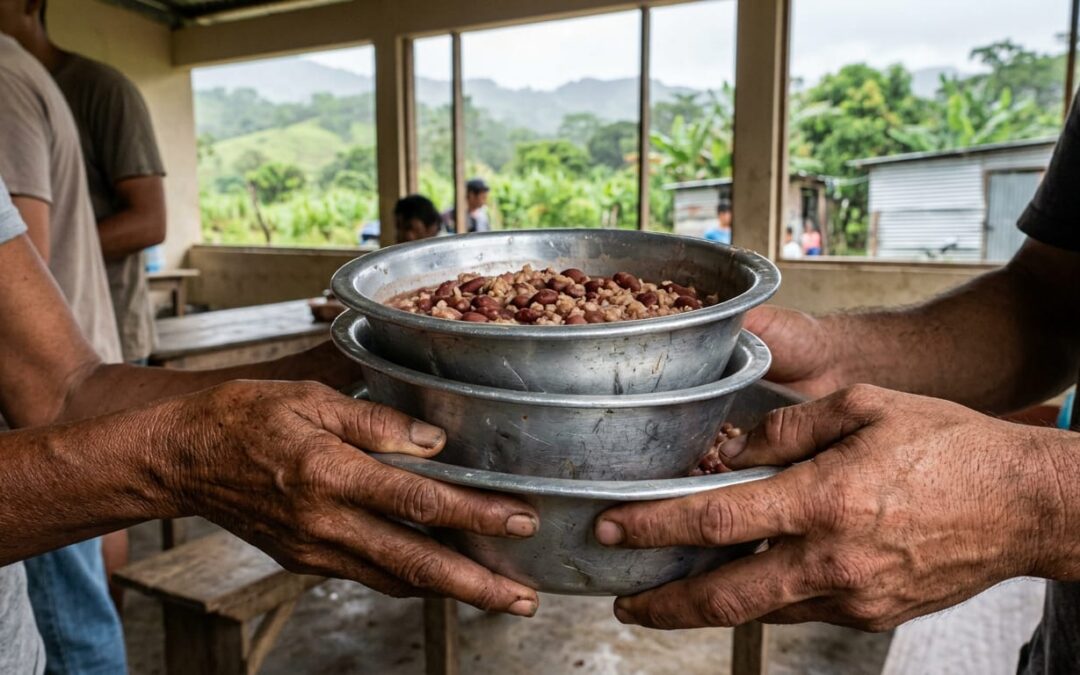
Building a family giving tradition around a shared cause starts with choosing one specific need – clean water, food, orphanages, or education – and committing to it together as a recurring practice, not a one-time event. When every family member, from grandparents to grandchildren, can point to the same cause and say we give to that, generosity stops being abstract and becomes part of who your family is. Impact Others Inc. works with families who want exactly that kind of intentional, lasting commitment – directing 100 percent of project-related donations to the project through trusted local partners who manage the work on the ground.
The family giving tradition you build today shapes how your children and grandchildren understand what generosity means. That is the real inheritance.
What Makes a Family Giving Tradition Actually Last?
A giving tradition lasts when it is specific, visible, and repeated. Vague good intentions fade; a concrete commitment to a named cause does not.
Fidelity Charitable research found that families who engaged in six or more giving activities were more likely to give more to charity over time. The pattern is consistent: frequency and structure reinforce the habit. But structure alone is not enough – the cause has to mean something to everyone in the family, not just the adults writing the check.
Here is what distinguishes a tradition that holds from one that quietly disappears:
- Choose one cause and stay with it. Families who pick one area – a clean water project, a feeding program, an orphanage, or an education initiative – build a shared story over time. Everyone knows what the family gives to and why.
- Make it recurring, not occasional. A one-time donation is a gift. A monthly commitment is a practice. Children notice the rhythm, and that rhythm becomes part of the household's identity. Understanding why monthly giving creates more purpose in generosity helps families frame the habit in a way that sticks.
- Give every family member a role. Younger children can help decide which cause to support. Teenagers can research the need. Adults can manage the giving. Everyone has a role, which means everyone has ownership.
- Build a story you can tell. When your family can say "we helped fund a feeding program that reached children in Honduras" or "our monthly gift supports an orphanage in Ghana," that story travels. It gets told at dinner tables, in classrooms, and eventually to the next generation.
- Find a way to see the impact. Photos from the field, project updates, or an in-person site visit transform an abstract donation into a real relationship with real people. Families who can stand in the place their giving helped and witness the work firsthand carry that experience forward in a way no newsletter can replicate.
How Does a Shared Cause Become a Family's Identity?
A shared cause becomes a family identity when it is chosen together and returned to consistently – not assigned by one person and forgotten by everyone else.
What consistent giving makes possible is real, and the scale can be surprising. Through a Christmas initiative, 23,136 children were reached globally across more than 13 countries and the United States, exceeding the original goal of serving 18,000 children. More than 5,000 of those children were in the United States, receiving gifts and participating in community celebrations. A one-week medical outreach clinic in Ghana provided medical and vision care to more than 2,100 people, with donated eyeglasses helping restore vision for many patients. In one outreach, 360 children – many living with illness, disability, or abandonment – experienced a celebration with dignity. In Nigeria, seven widows received financial assistance to launch small businesses, creating opportunities for long-term independence and economic sustainability. These outcomes came from communities of consistent givers, each family's recurring commitment adding to something larger than any one household could build alone.
Goldman Sachs Private Wealth Management research on enduring family philanthropic legacies finds they are built around a clearly defined mission, not just a pool of money. That mirrors what happens at the project level: families who direct their giving toward a specific area – water, food, orphanages, or education – can point to something tangible and say that is what we stand for.
Fidelity Charitable's 2023 research found that 81 percent of parents who give said their children under age 18 also participated in a charitable activity in the past year. The modeling effect is real: when children watch parents give with intention and conviction, they internalize generosity as a value, not a chore.
Teaching children that the family gives to a specific cause – and showing them what that cause looks like in practice – is one of the most direct ways to pass down values. Teaching kids about humanitarian giving works best when it is grounded in something real and visible, not a lecture about why giving matters in the abstract.
Impact Others Inc. funds clean water, food, orphanages, education, and new business opportunities through trusted local partners, so donors find real purpose in their giving. Because the work is carried out by community-rooted partners rather than outside teams, families are supporting people who understand the local need – and that story is one worth telling your children.
What Should a Family Look for in a Giving Partner?
The right giving partner for a family tradition is one that is honest about how it operates, specific about where the money goes, and capable of showing you the work in a way your whole family can understand and connect with.
A few things worth evaluating:
Transparency about what happens to your donation. Impact Others Inc. sends 100 percent of project-related donations directly to the project. Administrative costs are kept deliberately low. That means when a family commits a monthly gift to a clean water project or a feeding program, the full amount reaches the local partner managing that work. For families who want to tell a clear, honest story about where their giving goes, this matters.
The ability to direct your giving. Families build stronger traditions when they can point to a specific cause – not a general fund. Impact Others Inc. allows donors to direct their giving toward a specific project area, which gives the family a named cause to rally around year after year.
A connection that goes beyond a transaction. The IMD Family Philanthropy Navigator emphasizes that families who give with lasting impact treat their philanthropy as a relationship, not a transaction. Site visits, field documentation, and photos from project locations let a family see the faces and places their giving supports. That is the difference between writing a check and building something your family can be proud of together.
Community-led work, not outside solutions. Impact Others Inc. works through trusted local partners who manage the projects and understand the communities they serve. Families are not funding an outside organization imposing a solution – they are backing people already doing the work.
How Does a Monthly Commitment Reinforce the Tradition Over Time?
A monthly giving commitment turns a family's values into a visible, repeatable habit – and that repetition is what makes the tradition real.
More than two-thirds of parents give to charity, and 54 percent of those givers say parenting increased the priority of giving in their lives, according to Fidelity Charitable's 2023 research on parenting and philanthropy. The decision to give does not shrink when children enter the picture – for most families, it grows. The question is whether that giving has a shape the whole family can participate in.
A monthly commitment gives it that shape. The family knows what they give to. They know it happens every month. Over years, that consistency becomes part of the household's story – and eventually, something the next generation inherits.
Mindy Tibbs, who has partnered with Impact Others for about four years, describes what that commitment has meant in practice:
"I remember attending my first gala during the early stages of our business. I listened as highly successful people stood up and shared what giving to Impact Others had done for their businesses in return. That day, I committed to giving a certain percentage of every dollar that came into our business.
Since then, we've grown from $500,000 a year in revenue to more than $11 million a year. I don't say that for any reason other than this: when you commit to giving to others and impacting others, it's incredible how that decision ends up impacting you.
When I think about Impact Others, I picture my own children in a third-world country. If a business owner had the answer to what my child needed – whether it was clean water from a well, a sewing center, food, an orphanage, housing, or any of the other life-changing resources – would they give?
That's why I partner with Impact Others. It's making a real difference. It's creating an impact beyond myself, beyond my business, and investing in what truly matters: impacting others."
For families ready to make that commitment, the Compassion Donors monthly giving program is designed for exactly this kind of intentional, recurring partnership – giving families a clear, consistent way to direct their generosity toward a cause that matters.
Building a family philanthropic legacy does not require a foundation or a large endowment. It requires a cause you care about, a commitment you return to, and an organization honest enough to show you where your giving goes. If your family is ready to give with that kind of intention, reach out to Impact Others Inc. directly – by phone at 2196780669, by email at info@impactothers.com, or by mail at 5885 Cumming Hwy Ste 108347, Sugar Hill, GA 30518. The conversation about what your family wants to build together is a good place to start.
FAQ
Who in the family should lead the conversation about choosing a shared cause?
There is no single right answer, but traditions tend to hold when the decision is made together rather than handed down. Many families start with the adults framing two or three options – clean water, food programs, orphanages, or education – and letting children weigh in on which one resonates. When children have a voice in the choice, they carry more ownership of the tradition as they grow.
Which type of cause tends to work best for families giving together for the first time?
Causes with a visible, concrete outcome tend to resonate most easily across generations. A clean water project, a feeding program, or an orphanage gives every family member – including young children – a clear picture of who is being helped and why. Abstract causes are harder to explain to a seven-year-old; a child who needs food or safe water is not. Impact Others Inc. lets families direct their giving toward a specific project area, which gives the whole family a named cause to return to.
How does a family see the impact of their giving without traveling overseas?
Field documentation and photos from project sites give families a direct, honest look at the work their giving supports. Impact Others Inc. also takes donors on in-person site visits to project locations in countries including Ghana, Nigeria, Honduras, India, Egypt, Colombia, and Thailand – giving families a shared experience that connects their generosity to real people and real places. That kind of firsthand connection is one of the most powerful ways to make a giving tradition meaningful across generations.
Where does the money actually go when a family gives monthly to Impact Others Inc.?
Impact Others Inc. sends 100 percent of project-related donations directly to the project, managed by trusted local partners who oversee the work and handle their own expenses. Administrative costs are kept deliberately low. Families can direct their giving toward a specific area – water, food, orphanages, or education – so the commitment has a clear destination and a story the whole family can share honestly.