Most families who give generously do so in parallel – each person writing their own checks, to their own causes, with little shared conversation about why. A Donor-Advised Fund changes that dynamic. A DAF can be structured to bring multiple family members into a single, coordinated philanthropic plan, turning giving from a solo financial transaction into a shared family practice built around values you actually talk about.
That shift matters more than most advisors initially realize. When children and grandchildren participate in choosing where grants go – even in small ways – the family's philanthropic identity becomes something inherited, not just assumed.
What Makes a DAF Well-Suited for Family Giving?
A Donor-Advised Fund is well-suited for family involvement because it separates the contribution decision from the grant decision, and that gap is where family conversation lives.
When a client contributes assets to a DAF, the charitable deduction is established at the time of the contribution. The actual grant recommendations – which nonprofits receive funds, how much, and when – can happen over months or years. That timeline creates natural moments to involve a spouse, adult children, or even younger grandchildren in a structured way.
Financially, DAFs can accept non-cash assets donor-advised fund contributions like appreciated stock or real estate, which can make a larger initial contribution possible than cash alone would allow. That larger pool gives the family more to work with collectively – and more reason to approach the grant-making process with intention rather than impulse.
The mechanics also allow for named successor advisors, meaning a parent can designate adult children to continue recommending grants after they are no longer able to. That succession element is one of the most underused tools in multigenerational philanthropic planning.
How Do Advisors Structure a Family Philanthropic Plan Around a DAF?
The most effective family philanthropic plans start with a values conversation before any grant is recommended. Advisors who facilitate that conversation early – before causes are selected, before amounts are decided – tend to see far more family cohesion in the giving process than those who treat philanthropy as a line item to fill.
A practical structure often looks like this:
| Stage | Who Is Involved | What Happens |
|---|---|---|
| Values conversation | All family members | Identify shared causes and priorities |
| Cause selection | Parents with adult children | Narrow to 2-4 focus areas |
| Grant research | Younger family members | Evaluate nonprofits against criteria |
| Grant recommendation | Full family | Submit recommendations together |
| Impact review | All family members | Review updates, photos, and site visit options |
The key takeaway: each stage is a teachable moment, not just a transaction. Assigning the grant research stage to younger family members in particular gives them ownership and builds the habit of evaluating a nonprofit for DAF grant quality before funds move.
Advisors can support this by building the annual review charitable plans conversation into the broader financial planning calendar – not as a separate philanthropy meeting, but as part of the same review where investment performance and estate planning are discussed. Philanthropy sits alongside those conversations because it is part of the same long-term picture.
What Does Multi-Generational Giving Actually Look Like in Practice?
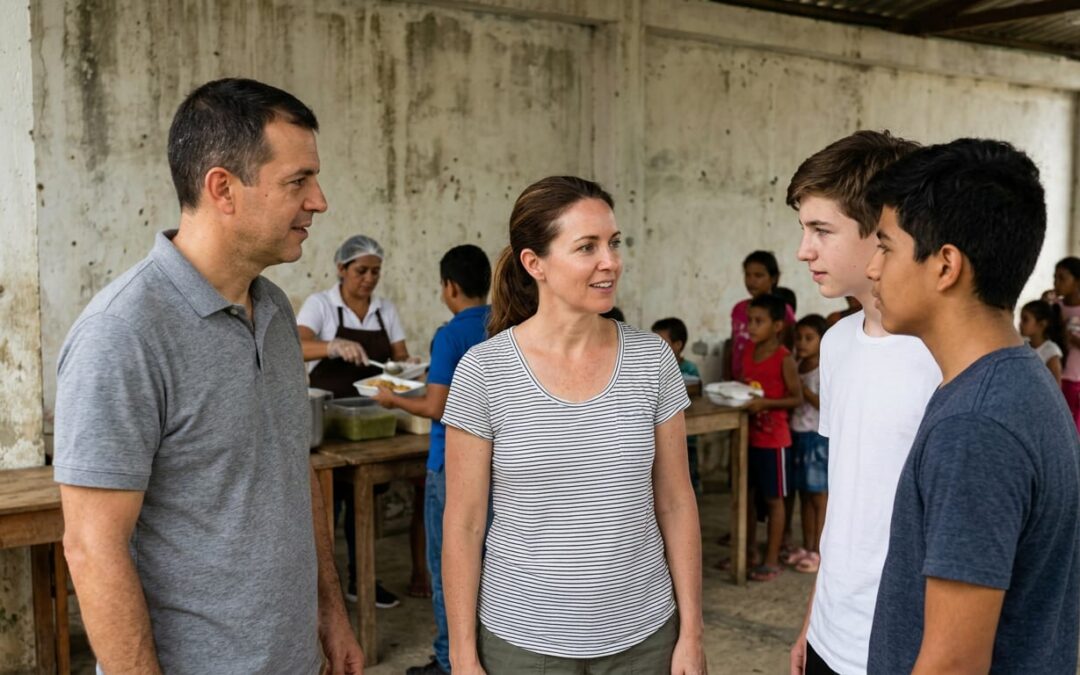
One family's experience illustrates what this can look like when it takes root. After their 17-year-old completed a one-week mission trip, the parents stepped back and reassessed their entire giving approach. As one partner described it:
"We decided to become Impact Others partners after our 17-year-old had already done a one-week mission trip. We looked at each other and said, 'Oh my God, we really need to get heavily involved in being a partner and being part of this greater thing.' We look at serving in three ways: with your time, your talents, and your treasures."
That moment – a teenager's direct experience prompting a family-wide shift in giving strategy – is exactly what structured family philanthropy is designed to create. The child's experience became the catalyst. The parents built a framework around it.
For families who have not yet had that kind of firsthand moment, site visits to humanitarian projects serve a similar function. Seeing clean water infrastructure in a community that previously had none, or meeting children in an orphanage supported by the family's grant, produces the kind of shared memory that abstract giving never does. That shared memory is what carries the philanthropic identity into the next generation.
How Do You Choose Causes That the Whole Family Can Support?
Choosing causes for a family DAF is different from choosing causes for an individual. Individual givers often follow a single strong personal conviction. Families need a cause broad enough to hold multiple perspectives – but specific enough to feel meaningful rather than generic.
A few approaches that work well in practice:
Start with shared experiences, not shared opinions. Families that have traveled together, volunteered together, or witnessed need firsthand tend to land on causes more easily than those who begin with a theoretical discussion. If the family has no shared experience yet, creating one – through a site visit or a volunteer trip – often resolves the impasse faster than any meeting would.
Let each generation propose, then find the overlap. Ask every family member – including teenagers – to name two or three causes they care about. The overlap is usually more significant than families expect, and the process of finding it builds buy-in that a top-down decision never would.
Anchor the plan to a cause category, not a single organization. A family that agrees on "clean water access" or "child welfare" has enough shared direction to evaluate multiple nonprofits together, which keeps the conversation open and gives younger members a genuine role in the research.
For advisors, choosing causes for DAF grants is a conversation that belongs in the planning process – not something left to the donor to figure out alone after the DAF is funded.
What Role Can Younger Family Members Play in Grant Decisions?
Younger family members can play a more substantive role than most families initially expect – and giving them that role early produces better outcomes than waiting until they are adults.
Teenagers and young adults can research nonprofit credibility, review project documentation, and participate in grant recommendation discussions. Even children in middle school can be involved in cause selection conversations in age-appropriate ways. The goal is not to hand over control of the DAF; it is to build the habit of intentional giving before they are making independent financial decisions.
Families that involve children early tend to find that by the time those children are managing their own finances, philanthropy is already part of how they think about money – not an afterthought they add later. That transmission of values is arguably the most durable outcome a family philanthropic plan can produce.
Does Involving Family Change How Much the DAF Should Hold?
Involving family in a DAF does not necessarily change the contribution amount, but it does change how that amount should be thought about over time. A DAF designed for individual giving can be funded and deployed on one person's schedule. A family philanthropic plan benefits from a longer horizon – enough assets in the fund to support meaningful annual grant-making across multiple causes, while still leaving room for the fund to grow.
The charitable giving financial plan question – how much to contribute and when – becomes more layered when the family is involved. Advisors who help clients think through that structure early, before the DAF is fully funded, tend to produce philanthropic plans that stay active rather than sitting dormant.
The cost of establishing and maintaining a DAF varies by sponsoring organization and is driven primarily by the fund balance, investment options, and any minimum grant requirements. Those factors, not a flat fee, are what advisors and clients should compare when choosing a DAF sponsor for a family giving plan.
How Does Verifiable Impact Support Family Giving?
One of the quiet challenges in family philanthropy is keeping younger members engaged after the initial enthusiasm fades. Abstract giving – writing a check to a cause that produces no visible result – rarely sustains a teenager's interest across multiple years.
Verifiable impact changes that equation. When a family's grant supports a specific project and the family can see photographs, project documentation, or visit the site in person, the giving becomes a story the family shares – not just a line on a statement.
Impact Others Inc. funds clean water, food, education, and orphanages through trusted local partners – and invites supporters to visit the work in person. That invitation is not incidental to the family giving model; it is central to it. A family that has stood at a water cistern in Honduras or met children at a feeding center in Colombia has a shared reference point that no amount of written communication can replicate.
For advisors building a family philanthropic plan, pairing the DAF structure with a nonprofit partner that offers firsthand access to its work closes the loop that most giving plans leave open. The Giving page on the Impact Others Inc. website outlines the specific programs and projects available for DAF grants, giving advisors and families a concrete starting point for that conversation.
Checklist
- Facilitate a values conversation before cause selection – ask every family member, including teenagers, to name two or three causes that matter to them before any grant is recommended.
- Assign grant research to younger family members – give children and young adults the task of evaluating nonprofit credibility and project documentation as part of the DAF grant process.
- Review the DAF's successor advisor designation – confirm that adult children or other family members are named to continue grant recommendations in the future.
- Build the annual philanthropy review into the broader financial planning calendar – advisors who treat giving as part of the overall plan keep families more engaged than those who schedule it separately.
- Identify a nonprofit partner that offers site visit access – for families with Donor-Advised Funds, choosing a grant recipient where the family can see the work firsthand sustains multi-generational engagement in ways that documentation alone cannot.
- Anchor the family plan to a cause category first – agreeing on "clean water" or "child welfare" before selecting specific organizations keeps the conversation open and gives every family member a genuine role.
FAQ
How do you add family members to a Donor-Advised Fund account?
Most DAF sponsoring organizations allow account holders to designate successor advisors – typically adult children or a spouse – who can recommend grants after the original account holder. Some sponsors also allow co-advisors during the account holder's lifetime. The specific process varies by sponsor, so advisors should review the account agreement to understand what is permitted and how to document the designation properly.
Who should lead the grant decision in a family DAF?
There is no single right answer, and the structure often evolves as children get older. Many families start with parents holding final grant authority while inviting younger members to research and propose. As adult children become more involved in the family's finances, the decision-making can shift toward a more collaborative model. The important thing is that the structure is explicit – families that leave it undefined tend to have less engagement, not more.
Which causes work best for multi-generational family giving?
Causes that have a visible, human dimension tend to sustain engagement across generations better than abstract policy or advocacy causes. Clean water access, child welfare, food security, and education are categories where families can see the direct result of a grant – which makes it easier to keep younger members involved. Causes where the family can visit a project site or receive project documentation are especially effective for building shared philanthropic identity.
What is the right age to involve children in DAF grant decisions?
Children as young as middle school age can participate meaningfully in cause selection conversations and basic nonprofit research. Teenagers can take on more substantive roles, including evaluating organizations and drafting grant rationales. The goal is not to give children financial control, but to build the habit of intentional, values-driven giving before they are making independent financial decisions as adults.
Does a family philanthropic plan require a large DAF balance to be worthwhile?
No. The value of a family philanthropic plan is less about the dollar amount and more about the shared practice it creates. A modest DAF with consistent annual grant-making, structured family involvement, and a cause the family genuinely cares about produces more durable philanthropic identity than a large fund that sits dormant. Advisors can help clients right-size the contribution to match both their financial situation and their giving goals.
How can a financial advisor bring up family philanthropy without it feeling like an add-on?
The most natural entry point is the estate and legacy planning conversation, where values transmission is already on the table. Advisors who ask clients directly – "What do you want your children to understand about how you used your wealth?" – often find that philanthropy surfaces immediately. Framing the DAF as a tool for answering that question, rather than as a separate charitable product, keeps the conversation grounded in what the client already cares about.
Where can families see the humanitarian work their DAF grants support?
Some nonprofit organizations, including Impact Others Inc., offer site visit opportunities where donors and their families can observe projects firsthand – water infrastructure, feeding centers, orphanages, and small business programs supported by their grants. These visits are one of the most effective ways to keep younger family members engaged in the giving plan over time, because a shared experience produces a shared story that abstract giving never does.
If you are an advisor building a family philanthropic plan for a client, or a DAF holder looking for a grant recipient where your family can engage directly with the work, reach out to Impact Others Inc. to learn more about current projects and site visit opportunities. Call 2196780669, email info@impactothers.com, or write to 5885 Cumming Hwy Ste 108347, Sugar Hill, GA 30518.