
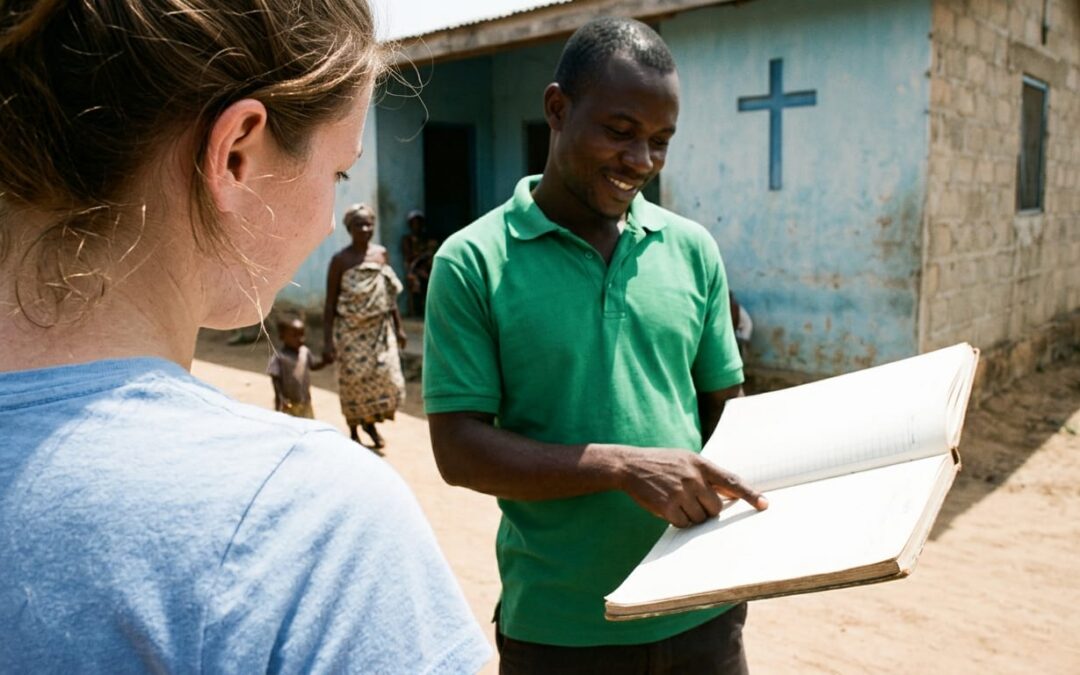
Transparent nonprofits are identified by two things: what they disclose without being asked, and whether they invite you to verify it yourself. The strongest signal is not a rating badge or a glossy annual summary – it is an organization that proactively shares its finances, introduces you to its local partners, and offers to put you on a plane to see the work firsthand. Impact Others Inc. funds clean water, food, education, and orphanages through trusted local partners – and invites supporters to visit the work in person.
If you have been burned before by vague impact claims or organizations that deflect detailed questions, you are not being unreasonable. You are applying the same standard you would to any serious financial decision.
What Does Operational Transparency Actually Look Like?
Genuinely transparent nonprofits make their financial and governance information available before you ask. Here is what to look for:
- Publicly accessible Form 990. The IRS requires tax-exempt organizations to make their annual information return available for public inspection for a three-year period. If a nonprofit makes you work to find it, that resistance is itself informative.
- Low administrative expense ratio. Ask what percentage of total revenue goes to programs versus overhead. Organizations with administrative expenses far below sector averages have less to obscure and more to show.
- Named local partners. A nonprofit that can tell you exactly who manages each project on the ground – and introduce you to them – is operating with a level of accountability that vague "partner networks" cannot match.
- Project-level donation allocation. Some organizations route every project-related dollar directly to the project, covering administrative costs separately. That structure makes it straightforward to trace where a specific gift went.
- Governance documentation. Board composition, meeting cadence, and conflict-of-interest policies are public for any well-run nonprofit. The IRS encourages charities to post Form 1023, Form 990, annual reports, and financial statements on a public website.
- Consistent communication. Not just a year-end appeal, but ongoing project updates with photos and documentation showing work in progress.
What operational transparency looks like in practice is best understood through a specific example. In Nigeria, a young girl described what life was like before Impact Others Inc. brought clean water to her community: her family walked a long distance to fetch water from a stream shared with animals, with no alternative. After the project was completed, she said, "We thank you Impact Others for helping us get this clean water that we don't have to walk many miles to get water." That single account captures what the checklist items above are actually protecting against – a situation where donated funds either never reach the community or produce nothing a real person can point to. The project is documented, the local partner is named, and the result is visible to anyone who visits. Outside research consistently finds that communities with reliable access to clean water see improvements across health, education, and economic participation, which is why water infrastructure is one of the most scrutinized categories in humanitarian giving. The Nigeria project meets that scrutiny directly.
The difference between an organization that tolerates scrutiny and one that welcomes it shows up in how quickly and specifically it answers direct questions. When you verify charity impact reports before donating, you are not being difficult – you are doing exactly what a responsible donor should do.
How Does Experiential Verification Differ from Paperwork?
Operational transparency answers the question of where money goes. Experiential verification answers the question of whether the work is real.
The most credible form of accountability is a nonprofit that invites you to visit its project locations. Not a curated press tour – an actual site visit where you meet the people the work serves, walk through the facilities, and talk to the local partners managing day-to-day operations.
One donor who traveled to Honduras with Impact Others Inc. described the experience at length. The trip involved crossing rivers and trekking into the mountains to reach the communities being served. He said: "I feel like it's very difficult to have a complete understanding until you physically put your hands on it. The impact that's been made here is just outstanding… I think I spent my first night crying. I woke up the next morning and cried after hearing John's stories, getting to meet kids at the first feeding center, experiencing things firsthand… The work that they've done here is incredible from the water cisterns project that we visited and got to see to the amount of people that have been fed and continue to be fed on a daily basis… Anything and everything you can give will go to the utmost use here."
That kind of firsthand observation is not available from a dashboard or a summary. It is the difference between trusting a claim and knowing it is true. For DAF donor involvement in humanitarian projects, site visits are one of the most meaningful ways to close the gap between writing a check and understanding where it landed.
Organizations that offer this are confident in what they have built. Organizations that avoid it are often protecting something.
What Should You Ask Before Trusting a Nonprofit's Transparency Claims?
Transparency claims are easy to make. These questions separate the ones that mean it:
"What percentage of my donation goes directly to the project?" A clear, immediate answer with no hedging is a good sign. Ambiguity about overhead allocation is not.
"Can I see your most recent Form 990?" It should be on their website. If it is not, ask why.
"Who manages the project locally, and how do you verify their work?" Trusted local partners with names, track records, and direct contact are the foundation of accountable international work. Vague references to "our teams on the ground" are not.
"Can I visit a project location?" The answer to this question tells you more than any document. An organization that has nothing to hide will say yes.
"How do you document project progress?" Photos, community testimonials, and independent observation from donor visits are more meaningful than internally produced summaries.
These are the same questions worth asking when you verify nonprofit impact data for any grant decision. The answers reveal organizational culture, not just policy.
What Does Transparent Giving Look Like in Practice Right Now?
In 2026, donor expectations around nonprofit transparency are higher than they have ever been – and the gap between organizations that meet that bar and those that do not is widening. DAF holders and their advisors are increasingly asking for verifiable outcomes, not just stated intentions.
The organization's administrative expenses are far lower than most nonprofits, and every project-related donation goes directly to the project.
Recent work illustrates what that structure produces. A one-week medical outreach clinic in Ghana provided medical and vision care to more than 2,100 people, with donated eyeglasses helping restore vision for many patients. In Nigeria, seven widows received financial assistance to launch small businesses, creating opportunities for long-term independence. Through Project Dakota's Christmas Initiative, 23,136 children were reached globally across more than 13 countries and the United States – exceeding the original goal of serving 18,000 children. More than 5,000 children in the United States received Christmas gifts and participated in community celebrations through Project Dakota.
These are not estimates. They are documented outcomes from specific projects, delivered through named local partners, and open to direct observation by donors who want to see the work themselves.
For anyone who wants to understand the full process before directing a grant, the How It Works page walks through exactly how funds move from donor to project and how Impact Others Inc. maintains accountability at each step.
If you are ready to ask direct questions or visit a project site, reach out at info@impactothers.com, call 2196780669, or write to Impact Others Inc. at 5885 Cumming Hwy Ste 108347, Sugar Hill GA 30518. Skepticism is welcome here.
FAQ
Which types of nonprofits are most likely to welcome donor site visits?
Organizations that deliver projects through named local partners and have nothing to obscure tend to be the ones that offer site visits. Humanitarian nonprofits focused on clean water, food security, medical aid, and community development – where the physical results are visible – are more naturally suited to this kind of verification than organizations doing diffuse advocacy work. Impact Others Inc. actively arranges donor trips to project locations in countries including Honduras, Ghana, and Nigeria.
Who should I contact at a nonprofit to ask transparency questions?
Go directly to the executive director or a senior staff member, not a general donation inquiry form. A transparent organization will route your questions to someone who can answer them specifically. If your questions get redirected to a brochure or a generic FAQ, that response pattern is itself a data point about organizational culture.
How do I compare two nonprofits on transparency when both claim to be accountable?
Put them through the same set of concrete questions: Form 990 availability, named local partners, administrative expense ratio, and whether they offer site visits. Build a simple side-by-side comparison on those specific factors rather than relying on self-reported ratings. Evaluating charities by cost per outcome charitable giving metrics alongside transparency practices gives a more complete picture than either measure alone.
Where can I verify that a nonprofit's Form 990 is current and accurate?
The IRS requires tax-exempt organizations to make their Form 990 available for public inspection for a three-year period beginning with the filing due date. You can access filings directly through the IRS website or through ProPublica's Nonprofit Explorer, which aggregates publicly filed returns. Cross-reference the figures against what the organization states on its website – significant discrepancies are worth a direct conversation.