Giving to others does create genuine meaning – and the evidence behind that isn't wishful thinking. Research consistently shows that people who give regularly report higher levels of life satisfaction and a stronger sense of purpose than those who don't. But not all giving produces the same depth of meaning. The kind that changes how you see yourself – and how you see your place in the world – tends to involve a real connection to where your generosity actually lands.
What Does Research Actually Say About Giving and Purpose?
Generosity and well-being are genuinely linked. According to research published by the American Psychological Association, prosocial spending – giving money or time to benefit others – is associated with greater emotional well-being than spending on oneself, and this pattern holds across a wide range of income levels and cultures.
The mechanism isn't mysterious. When you give in a way that feels connected to something real, your brain registers it as meaningful action. Psychologists describe this as a shift from hedonic well-being (feeling good) to eudaimonic well-being (living with purpose). The second one runs deeper and lasts longer.
That distinction matters for donors who have asked themselves: Why do I still feel like something is missing even though I give? The answer is usually connection. Giving that feels transactional – a donation made and forgotten – rarely reaches the level of meaning that sustained, connected giving does. When you can see the work, follow its progress, and understand who it reaches, the psychological return is categorically different.
If you've already wondered why giving to charity doesn't feel fulfilling, this distinction between transactional giving and connected giving is exactly the gap worth examining.
Why Does Helping Others Create a Sense of Meaning – Not Just Happiness?
Happiness and meaning are related but not the same. Happiness tends to be tied to how things are going for you right now. Meaning is built from what you contribute to something beyond yourself.
Giving to others – especially when the need is real and the impact is visible – positions you as part of a larger story. You're not just a bystander. You're a participant in someone else's access to clean water, food, education, or safety. That sense of active contribution is one of the most reliable sources of sustained purpose researchers have identified.
This is why donors who engage deeply with the work they fund tend to describe it differently than those who give occasionally. One supporter who has partnered with Impact Others Inc. for about four years described the shift this way:
"When you commit to giving to others and impacting others, it's incredible how that decision ends up impacting you… It's making a real difference. It's creating an impact beyond myself, beyond my business, and investing in what truly matters: impacting others." – Mindy Tibbs, Impact Others partner
That's not a marketing sentiment. It's a description of what happens when giving becomes a practice rather than a transaction.
Does the Type of Charity You Give to Affect How Much Purpose You Feel?
The cause matters, but so does the structure of how you give. Four factors consistently shape whether giving deepens your sense of purpose or leaves you feeling disconnected:
| Factor | Lower Meaning | Higher Meaning |
|---|---|---|
| Visibility of impact | You never hear what happened | You receive progress updates on projects |
| Connection to the work | Giving feels anonymous | You understand who benefits and how |
| Consistency | One-time or sporadic gifts | Regular giving tied to ongoing work |
| Trust in the organization | Uncertainty about where funds go | Transparent stewardship and accountability |
When all four are present, giving stops feeling like an obligation and starts feeling like a genuine contribution to something worth caring about.
This is where the structure of a giving relationship matters as much as the cause itself. Donors who give to Impact Others Inc. receive regular updates on project progress from trusted local partners managing the work on the ground. Every project donation is stewarded directly to those partners – Impact Others Inc. raises and manages the funds, maintains independent bookkeeping, and communicates what's happening in the field. That accountability loop is what transforms a donation into a relationship with the work.
For those weighing which kind of organization to trust with their giving, understanding the monthly donor experience at a humanitarian nonprofit can clarify what that ongoing connection actually looks like in practice.
What Makes Regular Giving More Meaningful Than One-Time Donations?
Sustained giving builds something that a single donation cannot: a sense of ongoing participation in something larger than yourself. When you give regularly, you're not just responding to a moment of need – you're choosing, month after month, to be part of the answer.
Two supporters who joined a donor trip to see project locations firsthand described what that depth of involvement produced:
"One of the things we love about Impact Others is that you get to participate firsthand. You can be as involved as you want, but the great thing is you actually get to see the incredible work being done around the world." – Real estate developers, Impact Others partners
Another supporter who traveled to project sites in Honduras reflected:
"I think Impact Others is very empowering. The work that they've done here is incredible… if you have an opportunity to contribute, contribute. Anything and everything you can give will go to the utmost use here." – Impact Others donor, Honduras trip participant
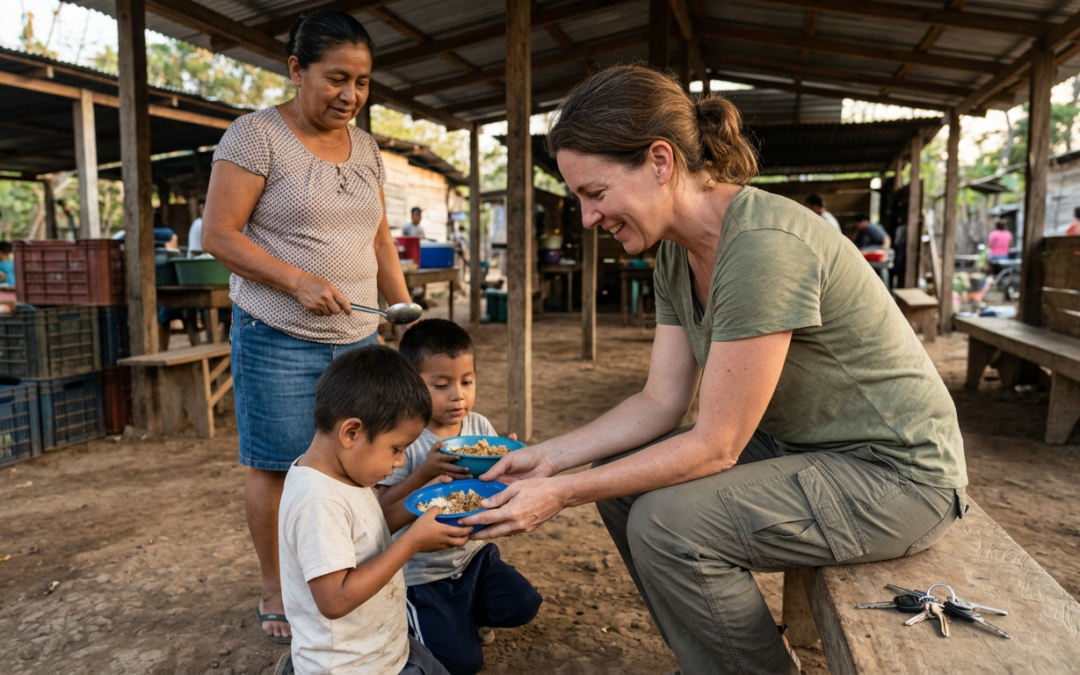
Both accounts point to the same dynamic: involvement deepens meaning. Seeing the feeding centers, the water projects, the orphanages, and the small business programs that donors help make possible moves giving from an abstract act to a lived experience.
Impact Others Inc. connects donors with trusted local partners worldwide so every act of generosity reaches the people who need it most. That connection – knowing your giving has a clear path to real people in real places – is what converts generosity into purpose.
For those ready to move from occasional giving to something that builds meaning over time, the Become a Monthly Supporter page outlines how a regular commitment works and what you can expect in return.
Is Giving to Charity Worth It for Your Own Well-Being in 2026?
In 2026, more donors are asking not just where their money goes, but what it does to me to give. That's an honest question, and it deserves an honest answer.
Giving does not automatically produce purpose. A donation made without connection, transparency, or follow-through can feel hollow – and that hollowness is a signal worth listening to. It usually means the giving structure isn't working, not that generosity itself is the problem.
When the structure is right – when you trust the organization, understand the work, and see progress – giving becomes one of the most reliable sources of meaning available to people at any stage of life. The psychological research supports it. The testimony of people who've done it confirms it. And the practical reality is that knowing your donation is making a difference is not a luxury – it's the thing that makes the meaning stick.
Giving with purpose isn't about the size of the gift. It's about the quality of the connection between what you give and what it becomes.
Checklist
- Ask whether you can follow your donation's progress – organizations that provide regular project updates give your giving a narrative, which is what creates sustained meaning rather than a one-time emotional lift.
- Consider moving from occasional to regular giving – monthly humanitarian giving builds a sense of ongoing participation that single donations rarely produce.
- Look for a nonprofit that connects you to local partners doing the actual work – transparency about who manages projects and how funds are stewarded is what separates purposeful giving from transactional charity.
- If you feel disconnected from your giving, investigate the structure, not the cause – the cause may be right but the organization's accountability may be missing.
- Take the option to see the work firsthand if it's available – donor trips to project locations consistently deepen the sense of meaning donors describe from their giving.
- Evaluate whether your current giving aligns with what you personally care about – misaligned giving (choosing a cause because it's popular rather than because it resonates) is one of the most common reasons generosity feels unfulfilling.
FAQ
Does giving to charity actually make you happier?
According to research published by the American Psychological Association, prosocial spending is associated with greater emotional well-being than spending on oneself, and this holds across income levels and cultures. The effect is stronger when the giving feels connected and visible – not when it's anonymous and forgotten.
Who benefits most from giving to others – the recipient or the donor?
Both benefit, but in different ways. Recipients gain access to resources they need – clean water, food, safety, education, or business opportunities. Donors who give in a structured, connected way gain a sense of purpose and meaning that researchers associate with eudaimonic well-being, which is deeper and more lasting than ordinary happiness.
Which type of giving creates the most sense of purpose?
Regular, transparent giving tied to real projects tends to produce the most sustained meaning. When donors can follow what their contributions fund – whether it's a feeding center, a water project, or an orphanage – the giving becomes a relationship rather than a transaction, and that relational quality is what deepens purpose.
Why doesn't my giving feel meaningful even though I donate regularly?
The most common reason is a lack of connection to the outcome. If you donate but never hear what happened, the psychological loop that creates meaning never closes. Organizations that communicate project progress and give donors visibility into the work help close that loop.
How do I know if a humanitarian nonprofit is actually using my donation well?
Look for independent financial oversight, regular project updates from local partners, and a clear explanation of how funds are stewarded. Impact Others Inc. maintains independent bookkeeping, communicates project progress to donors, and sends project donations directly to trusted local partners who manage the work – a structure designed to give donors confidence that their generosity reaches the people who need it.
Where can I see the humanitarian projects my donation funds?
Impact Others Inc. organizes donor trips to project locations in countries including Honduras, Nigeria, Colombia, India, and others, so supporters can see the feeding centers, water projects, orphanages, and small business programs their giving supports. Seeing the work firsthand is consistently what donors describe as the moment giving moves from meaningful to transformative.
What's the difference between giving that creates purpose and giving that just feels like an obligation?
Purpose-driven giving is connected, consistent, and visible – you understand who benefits, you trust the organization, and you can follow the work over time. Obligatory giving tends to be reactive, anonymous, and disconnected from outcomes. The difference isn't in the size of the gift; it's in the quality of the relationship between the donor and the work being done.
If you're at a point in life where you want your generosity to mean something – not just to the people it reaches, but to you – that desire is worth taking seriously. Giving with real purpose starts with finding an organization you trust, a cause that genuinely resonates with you, and a structure that keeps you connected to the work.
Impact Others Inc. is that kind of organization for a lot of people. If you'd like to learn more about how it works or take the next step, reach out directly: call 2196780669, email info@impactothers.com, or write to Impact Others Inc. at 5885 Cumming Hwy Ste 108347, Sugar Hill, GA 30518.