Wondering whether your donation to a humanitarian nonprofit actually reaches the people it's meant for is one of the most honest questions a donor can ask. The short answer: a trustworthy organization gives you a clear, documented trail from your gift to the work it funds – and then keeps you informed as that work moves forward. Impact Others Inc. connects everyday supporters with humanitarian work around the world, giving each gift a clear purpose and a real outcome to stand behind. That connection doesn't happen by accident. It requires financial accountability, transparent communication, and the option to see the work yourself.
What Does Accountability Actually Look Like From a Donor's Perspective?
Accountability in humanitarian giving isn't a feeling – it's a set of verifiable practices. For a donor, it means knowing who received your funds, what those funds were designated for, and whether the work is progressing as described.
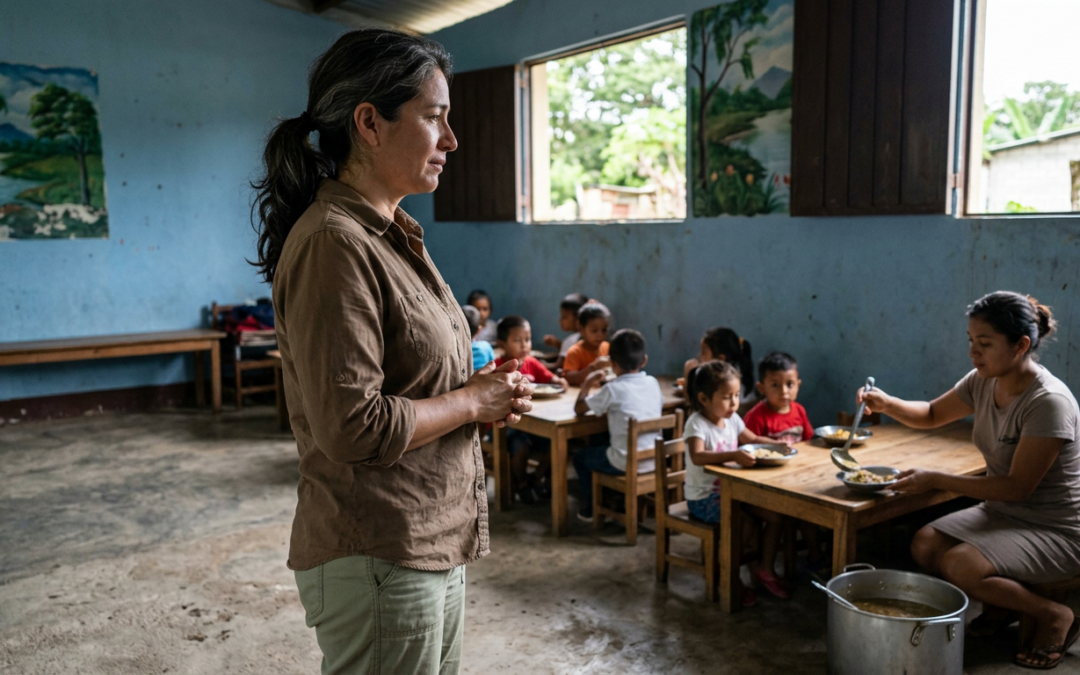
Impact Others Inc. receives regular financial and project updates from its trusted local partners and shares that information with donors so you can follow the progress of the work your giving supports. That means you're not left wondering whether something happened – you receive communication that connects your gift to a specific project, whether that's a feeding center, a clean water cistern, an orphanage, or a small business program.
On the financial side, Impact Others Inc. maintains independent bookkeeping and shares monthly financials with its board, providing an additional layer of accountability that sits above what most small nonprofits offer. That structure matters because it means multiple sets of eyes are reviewing where funds go – not just the people raising them.
When you're evaluating donor impact reporting from any organization, ask specifically: how often will I receive updates, and will those updates tie back to the project I funded? Vague newsletters don't answer that question. Project-specific communication does.
How Does Impact Others Know the Money Reached the Right Place?
This is where the structure of how Impact Others Inc. operates matters most. Impact Others is a funding and stewardship organization – it raises funds and sends them directly to trusted local partners who manage the projects and their own expenses on the ground. Impact Others does not manage construction, supervise field teams, or operate the programs directly. The local partners do.
What Impact Others does is maintain independent bookkeeping, receive regular financial and project updates from those partners, and communicate progress to donors. That separation of roles – one organization raising and stewarding funds, another managing delivery – is actually a strength when it's paired with rigorous oversight, because the local partners bring deep community knowledge that a distant organization cannot replicate.
Understanding how Impact Others vets its local partners before funding is channeled to them is a key part of the answer here. Vetting doesn't stop at a first conversation – it's an ongoing relationship built on trust, transparency, and accountability over time.
Because 100 percent of project-related donations go directly to the project, you can have confidence that your funds are reaching the work rather than being absorbed into administrative overhead before they ever leave the organization.
Can You Actually See the Work in Person?
For many donors, reading an update is meaningful – but seeing the work changes something. Supporters who travel with Impact Others Inc. to project locations can observe the funded work firsthand and speak directly with the local partners managing it.
One donor who traveled into the mountains of Honduras described the experience this way: "The impact that's been made here is just outstanding… The work that they've done here is incredible from the water cisterns project that we visited and got to see to the amount of people that have been fed and continue to be fed on a daily basis."
A couple who joined a trip to Guadalajara, Mexico, put it plainly: "One of the things we love about Impact Others is that you get to participate firsthand. You can be as involved as you want, but the great thing is you actually get to see the incredible work being done around the world."
That option – the ability to travel to a project location and witness the work – is rare in humanitarian giving. Most donors never have it. It's worth knowing it exists, because a donor trip to see humanitarian projects removes the uncertainty that written updates alone can't fully resolve.
What If You Can't Travel – How Else Do You Verify Impact?
Travel isn't possible for every donor, and accountability shouldn't depend on it. For those who give from a distance, the verification trail runs through documentation, communication, and organizational structure.
Start with the basics: Does the organization have verifiable financial oversight? Does it separate project funds from administrative expenses? Does it communicate with donors in ways that connect back to specific projects rather than general mission statements?
For Impact Others Inc., the answer to each of those questions is yes. Monthly financials go to the board. Project updates come from local partners. Donors receive communication that reflects real progress on real work – food programs, water access, orphanage support, and small business development across countries including Honduras, Mexico, Ghana, Nigeria, India, Egypt, Colombia, and Thailand.
One donor described what that accountability means at a personal level: "It means so much knowing that each one of us is contributing. We may each play a very small part, but every part is critical to the mission and success of Impact Others. I'm grateful that I can give back in any way I can."
If you're still working through whether any humanitarian nonprofit deserves your trust, reviewing red flags before donating to a nonprofit is a practical starting point – it gives you a framework for evaluating any organization, not just this one.
How Does the Cost of Giving Compare Across Humanitarian Nonprofits?
"Cost" in giving isn't just the dollar amount – it's what portion of your dollar reaches the work versus what covers organizational overhead. That ratio varies widely across nonprofits, and it's one of the most important things to compare before you commit.
| What to Compare | Questions to Ask |
|---|---|
| Overhead ratio | What percentage of donations covers administrative costs? |
| Project designation | Can you direct your gift to a specific project or program? |
| Fund separation | Are project funds kept separate from operating expenses? |
| Accountability structure | Who reviews financials, and how often? |
| Donor communication | How will you know what happened with your gift? |
For Impact Others Inc., 100 percent of project-related donations go directly to the project. Administrative expenses are kept very low compared to most nonprofits. That structure means the comparison isn't just about the size of the organization – it's about how seriously the organization treats the money you trusted it with.
The key takeaway: the right question isn't just "how much does it cost to give?" – it's "how much of what I give actually reaches the people it's meant for?"
Does Giving This Way Actually Feel Like It's Working?
Accountability answers the logical question. But donors also carry an emotional one: will I feel like my giving matters?
That feeling tends to come from connection – not just confirmation. Mindy Tibbs, an Impact Others partner for about four years, put it this way: "When I think about Impact Others, I picture my own children in a third-world country. If a business owner had the answer to what my child needed – whether it was clean water from a well, a sewing center, food, an orphanage, housing, or any of the other life-changing resources – would they give? That's why I partner with Impact Others. It's making a real difference. It's creating an impact beyond myself, beyond my business, and investing in what truly matters: impacting others."
That's not a marketing line. It's the honest description of what purposeful giving feels like when the accountability structure is real and the connection to the work is maintained over time. If you've ever wondered why finding purpose through giving feels elusive with some organizations, the answer often comes down to whether you can actually trace your gift to a life it touched.
The accountability framework at Impact Others Inc. – financial oversight, project updates, donor communication, and the option to travel – is designed to make that connection real, not theoretical.
When you're ready to learn more about how your giving is stewarded, reach out directly. The team at Impact Others Inc. welcomes questions about specific projects, financial practices, and how to get more involved. You can call 2196780669, email info@impactothers.com, or write to 5885 Cumming Hwy Ste 108347 Sugar Hill GA 30518.
Checklist
- Ask for project-specific updates – before giving to any humanitarian nonprofit, confirm that donor communication ties back to named projects, not just general mission statements.
- Verify financial oversight – look for independent bookkeeping and board-level financial review as signs that a nonprofit takes stewardship seriously.
- Check the overhead ratio – find out what percentage of your donation reaches the project versus covering administrative costs; this is the most direct measure of giving efficiency.
- Ask whether you can see the work – organizations that invite donors to visit project locations are demonstrating a level of transparency that is uncommon and worth weighing.
- Review how a humanitarian nonprofit handles setbacks – a trustworthy organization communicates honestly when a project faces challenges, not only when things go well.
- Compare how different nonprofits designate funds – confirm that your gift can be directed to a specific program (clean water, food, orphanage, education, or small business support) and that those funds are kept separate from operating expenses.
FAQ
How will I know if my donation to a humanitarian nonprofit actually reached the project?
A trustworthy organization maintains independent bookkeeping, receives financial and project updates from the partners managing the work, and shares that information with donors. Impact Others Inc. receives regular financial and project updates from its local partners and communicates project progress to donors, so you can follow what happened with your gift rather than guessing.
Who reviews the finances at Impact Others Inc. to make sure donations are handled correctly?
Impact Others Inc. maintains independent bookkeeping and shares monthly financials with its board of directors. That board-level review provides an additional layer of accountability beyond what the fundraising team alone can offer, and it means financial oversight is built into the organization's regular operations.
Which types of projects can I direct my donation toward at Impact Others Inc.?
Donations can support specific programs including clean water access, food and feeding centers, orphanages, education, small business development, and toy drives. Impact Others Inc. funds these programs through trusted local partners operating in Honduras, Mexico, Ghana, Nigeria, India, Egypt, Colombia, Thailand, and the United States.
Can I visit a project location to see the work my donation is funding?
Yes. Supporters who travel with Impact Others Inc. to project locations can observe the funded work in person and speak directly with the local partners managing it. Donor trips have included visits to water cistern projects, orphanages, and feeding centers in Honduras and Mexico, among other locations.
What percentage of my donation actually goes to the project versus overhead?
Impact Others Inc. currently sends 100 percent of project-related donations directly to the project. Administrative expenses are kept very low compared to most nonprofits, which means a higher share of each gift reaches the work it was designated for.
How often does Impact Others Inc. update donors on where their money went?
Impact Others Inc. receives regular financial and project updates from its local partners and communicates that progress to donors on an ongoing basis. The frequency and format of those communications can vary by project, but the intent is to keep supporters informed about the work their giving supports rather than sending only year-end summaries.
What red flags should I watch for before donating to any humanitarian nonprofit?
Key warning signs include vague financial disclosures, no independent financial oversight, inability to tell you what percentage of donations reaches the project, and communication that never connects your gift to a specific outcome. Organizations that cannot explain how funds are separated from administrative expenses, or that resist answering direct questions about project progress, warrant careful scrutiny before you give.