Verifying a nonprofit's impact before donating is entirely possible, and it's the right question to ask. The clearest verification methods include reviewing financials, requesting project information and visiting project sites in person. If an organization cannot or will not provide these, that itself is useful information.
Past giving that produced no visible results doesn't mean all nonprofits operate that way. It means you haven't yet found one with the transparency infrastructure to show you what your dollars actually did. That distinction matters, because the skepticism protecting you from another disappointing experience is also the same instinct that will lead you to a better one.
What Financial Documents Should You Ask a Nonprofit to Share?
IRS Form 990s are the starting point for any serious donor review. These documents are public record for registered 501(c)(3) organizations, and they can reveal what percentage of funds actually reach programs versus administration and fundraising.
When reviewing financials, look specifically at:
-
Program expense ratio: What percentage of total expenses goes directly to programs? Higher is generally better, though ratios alone don't tell the whole story.
-
Fundraising cost per dollar raised: If an organization spends $0.60 to raise $1.00, that's a significant red flag.
-
Auditor independence: Was the audit performed by an independent CPA firm, or self-reported?
Impact Others Inc. sends 100 percent of project-related donations directly to the projects themselves, with administrative expenses running far lower than most nonprofits. That's not a marketing claim, it's a figure visible in financial reporting reviewed monthly by the board. When you ask an organization to show you this breakdown and they can, that's transparency in practice, not just in principle.
Third-party watchdog organizations like Charity Navigator, GuideStar (now Candid), and the Better Business Bureau's Wise Giving Alliance independently evaluate nonprofits against financial and governance standards. These ratings aren't perfect, but they provide an outside perspective that doesn't rely solely on what the organization says about itself.
How Can You See Physical Proof of a Nonprofit's Work?
Financial documentation tells you where money went. Physical documentation tells you what happened when it got there.
Ask any organization you're considering for project-specific photo and video updates, and progress reports from the local partners actually managing the projects. These materials should be tied to specific projects, not generic images of "communities we've served."
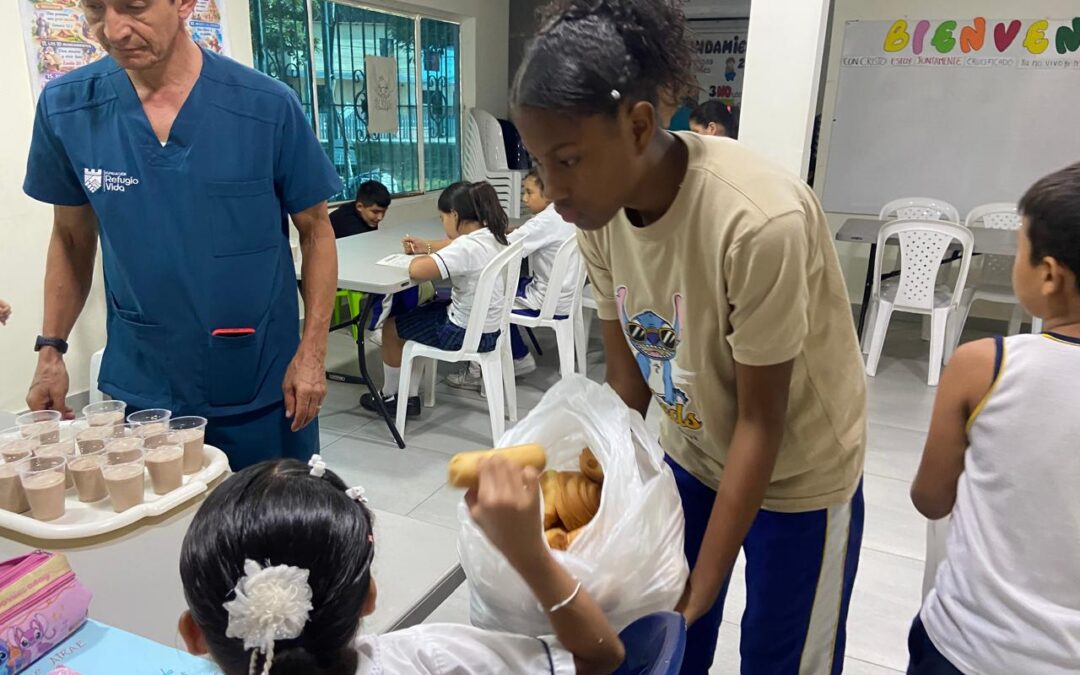
For donors who want to go further, site visits offer the most direct form of verification available. Impact Others Inc. takes donors to project locations so they can see the work firsthand, a drilled water well, a functioning feeding center, a sewing center where women are learning a trade. That kind of direct observation removes the reliance on reported outcomes entirely.
As one Impact Others partner described it: "After meeting Eddie and seeing the integrity, the sustainability, and the boots-on-the-ground work, drilling wells, supporting feeding centers, and creating sewing centers, we decided to become partners."
The ability to verify nonprofit impact through site visits before committing ongoing support is one of the most underused tools available to serious donors. Most organizations don't offer it. When one does, it signals a fundamentally different relationship with accountability.
What Questions Should You Ask Before Trusting an Organization Again?
Rebuilding trust after a disappointing giving experience requires more than a good website or a compelling story. It requires specific answers to direct questions.
Before donating again, ask:
"What percentage of my donation reaches the project itself?"
A clear, documented answer is reasonable to expect. Vague responses about "operational costs" without specifics are a warning sign.
"Who manages the project on the ground, and how are they accountable to you?"
Impact Others Inc. raises funds and sends them directly to trusted local partners who manage the projects and their own expenses. The organization receives regular financial and project reports, maintains independent bookkeeping, and reports monthly financials to its board. That accountability chain matters, it means there's a documented trail between your gift and the outcome.
"Can I see documentation from a completed project?"
Not a future plan. A finished one. Photos, financial reconciliation, and a narrative report from the local partner managing the work.
The mission alignment nonprofit partnership you're looking for starts with these conversations. Organizations with nothing to hide answer these questions readily. Those without strong accountability systems often deflect.
Does the 100% Model Actually Mean What It Claims?
The phrase "100% goes to the cause" appears in nonprofit marketing often enough that it's reasonable to be skeptical of it. The critical question is: what's included in the denominator?
Some organizations use accounting methods that classify fundraising and marketing costs as "program expenses," which artificially inflates program ratios. Others operate separate foundations to absorb overhead, making the primary nonprofit appear leaner than it is.
When Impact Others Inc. says 100 percent of project-related donations go directly to projects, the mechanism behind that claim is specific: administrative expenses are funded separately, and project donations fund the projects. The board receives monthly financial reports. That structure is what makes the claim verifiable rather than promotional.
For Donor-Advised Fund holders, this structure is particularly relevant. If you're directing a DAF grant toward a specific project, you want documentation that the grant reached that project, not a general operating fund. Knowing how to direct DAF donations to programs rather than overhead is a practical step that protects the intent behind your giving.
What Does Verified Impact Actually Look Like in Practice?
Mindy Tibbs, an Impact Others partner for about four years, described her experience this way:
"When I think about Impact Others, I picture my own children in a third-world country. If a business owner had the answer to what my child needed, whether it was clean water from a well, a sewing center, food, an orphanage, housing, or any of the other life-changing resources, would they give? That's why I partner with Impact Others. It's making a real difference. It's creating an impact beyond myself, beyond my business, and investing in what truly matters at the end of the day: impacting others."
That kind of confidence doesn't come from a brochure. It comes from seeing the work, reviewing the financials, and watching the reports come in over time.
Verified impact is not a single document. It's a pattern of documentation, accountability, and access that accumulates into trust, the kind that makes intentional giving feel like a decision you can stand behind, not one you have to hope worked out.
For DAF holders and their advisors, the How It Works page on the Impact Others website walks through exactly how funds are raised, directed, tracked, and reported so donors understand the full accountability structure before making a grant decision.
What Should You Check Before Donating to a Nonprofit?
-
Request the most recent IRS Form 990, which is public record and should be provided without hesitation.
-
Ask specifically what percentage of your donation reaches the project, not the general program expense ratio, and request documentation to support the answer.
-
Ask for completed project information, photos and connection to a local partner who finished the project.
-
Inquire whether site visits are available so you can observe the work directly rather than relying entirely on reported outcomes.
-
For DAF holders, confirm the organization can accept DAF grants and provide grant-level documentation showing where your specific contribution was directed.
FAQ
Why don't most nonprofits show donors what their money actually did?
Many nonprofits report impact in aggregate, "we served X people this year", rather than connecting specific donations to specific outcomes. This is partly a reporting systems issue and partly a donor communication gap. Organizations that build project-level tracking and documentation from the start are better positioned to show individual donors what their gift produced. It's a structural choice, not an inevitable limitation.
Can I visit the projects my donation supports?
With some organizations, yes. Impact Others Inc. takes donors to project locations, including water wells, feeding centers, and sewing centers, so they can observe the work directly. This is one of the most concrete verification tools available, and most organizations don't offer it. If verifying impact firsthand matters to you, ask explicitly whether site visits are part of the donor relationship.
What's the difference between a program expense ratio and 100% going to projects?
A program expense ratio is a percentage calculated from an organization's total expenses, it includes salaries, facilities, and other costs classified as program-related. "100% of project donations go to projects" means something more specific: the donation itself is not reduced by administrative fees before reaching the project. Impact Others Inc. funds administrative expenses separately, so project-designated donations travel intact to the local partners managing the work.
How do I know a nonprofit's local partners are actually trustworthy?
Ask how the organization vets its local partners, how long those relationships have been in place, and what financial reporting local partners are required to submit. Impact Others Inc. receives regular financial and project reports from its local partners and maintains independent bookkeeping. The length and depth of a partner relationship, combined with documented reporting requirements, is a more reliable indicator than a partner's name recognition alone.
What should I do if a nonprofit can't answer my verification questions?
Treat it as meaningful information. An organization that deflects, provides only aggregate data, or cannot produce documentation from completed projects may not have the accountability infrastructure to give you confidence. Giving strategically means directing your resources where you can actually verify the outcome, not simply hoping for the best.
Are donations to Impact Others Inc. eligible for DAF grants?
Impact Others Inc. is a registered 501(c)(3) nonprofit, which makes it eligible to receive grants from Donor-Advised Funds. DAF holders should confirm with their sponsoring organization that the recipient meets their specific grant criteria. Consult your financial advisor or tax professional for guidance on your individual situation.
If you've given before and walked away wondering what actually happened, you're not alone, and that experience is worth taking seriously. The organizations that earn trust do so through documentation, access, and accountability that doesn't require you to simply take their word for it.
Impact Others Inc. is built around that standard. If you'd like to learn more about how funds are tracked, reported, and verified, or if you want to talk through whether a grant to Impact Others makes sense for your giving plan, reach out directly.
Phone: 2196780669
Email: info@impactothers.com
Address: 5885 Cumming Hwy Ste 108347, Sugar Hill, GA 30518