
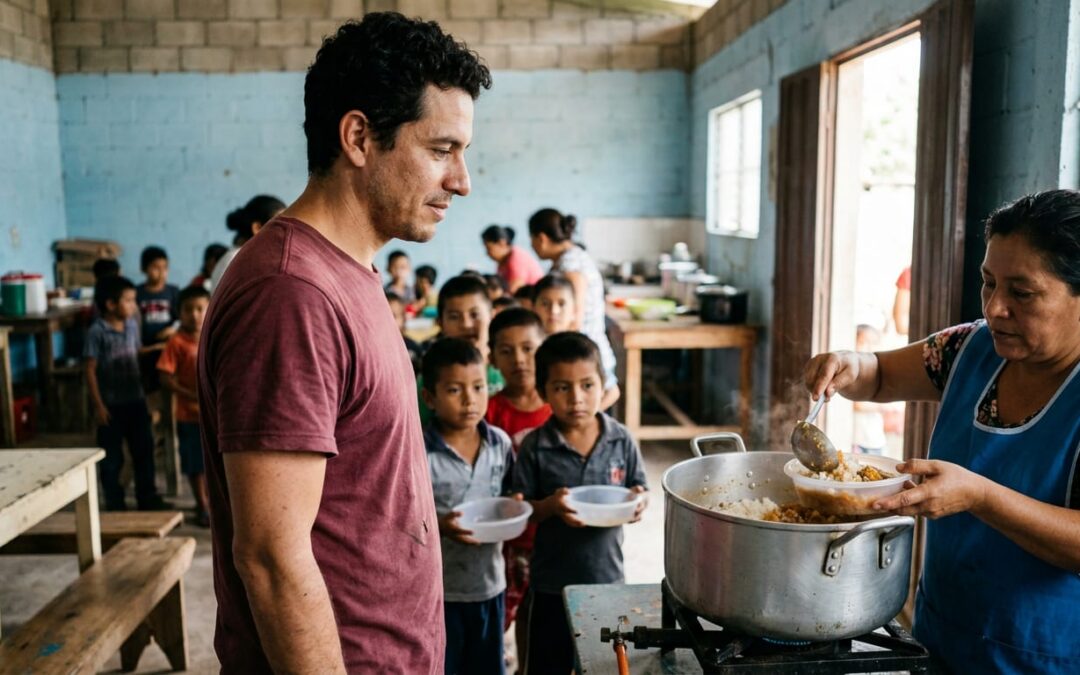
Starting to donate to international causes is more straightforward than most first-time givers expect. You choose a cause that matters to you – clean water, food security, orphan care, education, or small business development – find an organization that works through trusted local partners in that region, and make your first gift. Impact Others Inc. has seen this pattern repeat across many first-time donors: the biggest barrier is not the giving itself, but knowing where to begin and feeling confident the money will actually reach people in need.
What Are the First Steps to Give Internationally?
The clearest path for a first-time international donor starts with your own values, not an organization's branding. Work outward from what you care about most, then find the structure that fits.
- Identify your cause. Clean water, food, orphan care, education, safety, or new business opportunities for families – each addresses a distinct need. Picking one area first makes your giving feel personal, not abstract.
- Decide how involved you want to be. Some donors give once and move on. Others want to follow a specific project over time, visit the community, or give monthly. Your level of engagement shapes which organization fits best.
- Look for organizations that work through local partners. Local teams understand the community, the language, and the infrastructure. An organization that funds and stewards those local relationships – rather than parachuting in its own staff – tends to produce more lasting outcomes.
- Verify the organization before you give. Check that it is a registered U.S. nonprofit, that it publishes clear information about how donations are used, and that its administrative costs are reasonable. Resources like how to find effective charity walk through the specific signals to look for.
- Start with a single gift. You do not have to commit to a recurring donation on day one. A one-time gift to a specific project lets you see how the organization communicates with donors before you decide to deepen the relationship.
- Consider whether you can visit. Some organizations offer donor site visits so you can see the work firsthand. That direct experience changes how most people understand the impact of their giving.
Which Type of International Giving Is Right for You?
Three broad approaches exist for giving internationally, and each suits a different kind of donor.
| Approach | How it works | Best for |
|---|---|---|
| Give directly to a foreign organization | Funds go straight to an overseas charity | Donors with existing relationships abroad |
| Give through a U.S.-registered nonprofit | A domestic organization funds vetted local partners | Most first-time international donors |
| Donor-advised fund or foundation | Donor pools funds and recommends grants over time | High-net-worth donors or family giving strategies |
For most everyday donors, giving through a U.S.-registered nonprofit is the most practical starting point. The Internal Revenue Service notes that contributions made directly to foreign organizations are generally not deductible for U.S. federal income tax purposes, which is one practical reason most first-time international donors work through a domestic organization rather than giving abroad directly.
The middle row – a U.S. nonprofit that funds local partners – is where most first-time international donors land. The domestic organization handles compliance, vetting, and stewardship. The local partner handles delivery. You give with confidence and stay connected to the work.
One group that traveled with Impact Others Inc. to Brazil captured what that connection can feel like. After spending time with children and seniors in the community, one participant wrote: "Thank you for giving us an experience we will never forget. The smiles and joy of the children, and the opportunity to bring a little comfort and kindness to the seniors, touched our hearts deeply! We came to Brazil hoping to make a difference, but we feel like we received so much more than we gave. This experience has reminded us how powerful kindness, compassion and simply showing up for others can be. Thank you for allowing us to be part of something so meaningful. We're leaving with beautiful memories and a desire to continue making a difference. We hope this is just the beginning of many more journeys together." That response – arriving to give and leaving transformed – is what the local-partner model makes possible. The infrastructure is already in place; donors step into it and connect directly with the people being served.
How Do You Know Your Donation Actually Reaches People in Need?
This is the question every thoughtful first-time donor asks, and it deserves a direct answer rather than a reassurance.
The clearest accountability signal is not a glossy annual summary – it is whether the organization lets you get close to the work. Impact Others Inc. connects donors with trusted local partners worldwide so every act of generosity reaches the people who need it most. One way the organization makes that tangible is by taking donors directly to project locations so they can see the work themselves.
When an organization is willing to put donors in the same room – or the same village – as the people being served, it is not hiding anything.
Beyond site visits, look for organizations that maintain independent bookkeeping, present financials to a governing board, and communicate project progress through photos and documentation rather than vague updates. When evaluating any organization, the questions around choosing a humanitarian charity that matches your values can help you sort credible operations from less transparent ones.
What Does It Cost to Make a Meaningful International Gift?
There is no minimum that makes a gift "meaningful," and any honest organization will tell you that. What drives the real value of a donation is not its size alone – it is what percentage of it reaches the project.
Some organizations carry significant administrative overhead, which means a portion of every dollar funds salaries, offices, and marketing before a cent reaches the field. Impact Others Inc. sends 100 percent of project-related donations directly to the project, keeping administrative expenses low compared to most nonprofits. That structure means a smaller gift can carry more weight than the same amount given elsewhere.
For donors thinking about long-term humanitarian projects vs one-time donations, the recurring monthly model tends to let organizations plan ahead, sustain feeding centers and water systems, and avoid gaps in service. A one-time gift is a meaningful start; a recurring commitment is what sustains a project through the months when need does not pause.
One business owner who became a regular Impact Others Inc. partner put the decision in plain terms: "When I think about Impact Others, I picture my own children in a third-world country. If a business owner had the answer to what my child needed – whether it was clean water from a well, a sewing center, food, an orphanage, housing, or any of the other life-changing resources – would they give? That's why I partner with Impact Others."
What Should You Expect After Your First International Gift?
Most first-time international donors expect silence after giving. A credible organization breaks that pattern.
After a gift, you should expect communication about the project your donation supported – photos from the field, updates on progress, and a clear sense of what your giving made possible. What you should not expect from a well-run organization is a flood of pressure-based appeals or demands to give more before you are ready.
The deeper shift most donors describe is personal. A donor who traveled to an orphanage in Guadalajara, Mexico described becoming an Impact Others Inc. partner this way: "We look at serving in three ways: with your time, your talents, and your treasures. Becoming an Impact Others partner was the first step – writing checks and serving with our checkbook." That progression – from a first gift to a deeper sense of purpose – is what most engaged donors say they were looking for when they started.
If you are ready to take that first step, you can reach Impact Others Inc. at info@impactothers.com, by phone at 2196780669, or by mail at 5885 Cumming Hwy Ste 108347, Sugar Hill, GA 30518. The team can walk you through current projects and help you find the cause that fits what you care about most.
FAQ
Who should give internationally versus focusing on local causes?
Both are valid, and they are not mutually exclusive. Donors who feel a pull toward international giving often connect it to a specific cause – clean water, orphan care, food security – that they do not see addressed close to home. First-time international donors tend to start with a single cause in one country rather than trying to give broadly across many regions.
Which international causes tend to have the most direct impact for everyday donors?
Clean water, food programs, and orphan care are areas where a relatively modest, sustained gift supports a tangible, ongoing need. Small business development programs that help families become self-sufficient over time also create lasting change. The key is choosing a cause you can stay connected to rather than one that feels abstract.
Where does my money actually go when I donate to an international nonprofit?
With a well-structured organization, your donation is stewarded by the U.S.-based nonprofit and passed to a vetted local partner who manages the project on the ground. The local partner handles delivery, the domestic organization handles compliance and stewardship, and you receive updates on what your giving made possible. Organizations that send 100 percent of project-related donations to the project – and keep administrative costs low – give your gift the most direct path to the people it is meant to serve.
Is donating to an international nonprofit tax-deductible in the U.S.?
Gifts to U.S.-registered 501(c)(3) organizations that fund international work are generally deductible for U.S. federal income tax purposes. Consult a qualified tax advisor to confirm deductibility based on your specific situation, as tax laws vary and individual circumstances differ.