DAF grant committees, foundation boards, and family giving conversations all ask the same question: what actually happened? Humanitarian projects with measurable, documented outcomes do exist – and finding them is the right place to start before directing a grant. Impact Others Inc. funds clean water, food, education, and orphanages through trusted local partners – and invites supporters to visit the work in person.
The frustration most DAF holders describe isn't a lack of generosity. It's the gap between writing a check and being able to say, with confidence, what that check produced. That gap matters more now than it did a decade ago, when measurable impact data for DAF grants has become a standard expectation from sponsoring organizations, advisors, and the next generation of donors alike.
What Makes a Humanitarian Project "Documented" Enough for a DAF Grant?
A documented project is one where the outcome can be described in concrete, verifiable terms – not just intention, but result. For DAF grantmaking purposes, that means the project must meet two practical tests: the sponsoring organization can confirm the grant went to an IRS-qualified public charity, and the work itself produced something a reasonable person can point to.
DAF grants can be made only to IRS-qualified public charities and used for qualified charitable purposes, per NPTrust – so the eligibility question is a threshold, not a differentiator. What separates strong grant candidates from weak ones is what happens after eligibility is confirmed: Can the donor describe the outcome? Can a board member or family member understand what changed?
Projects that meet this bar tend to share a few traits. The local partner managing the work provides progress documentation. The funding organization maintains independent bookkeeping and receives project updates. And ideally, a donor or advisor can physically visit the site and see the result – not as a luxury, but as the most direct form of verification available.
What Types of Projects Produce the Clearest Outcomes?
Some humanitarian work is easier to document than others. Infrastructure projects – clean water systems, feeding centers, orphanage facilities – produce visible, lasting results that can be photographed, visited, and described in plain language. That's not a coincidence: these are the categories where Impact Others Inc. concentrates its work.
Clean water. A community in Nigeria that previously walked miles to share a stream with livestock now has a dedicated water source. One young person who received clean water through an Impact Others-funded project put it plainly: "We used to fetch water from this stream. It is polluted water with cattle and other animals. Now since we have this clean water we don't have to travel far to get the water. Thank you Impact Others for getting us this clean water." That kind of before-and-after is documentable.
Feeding programs. Feeding centers in Honduras serve children daily. The count of meals, the children served, and the continuity of the program over time are all trackable metrics a DAF holder can point to.
Orphanages and education. Facilities that house and educate children produce outcomes measurable in enrollment, attendance, and the progression of individual children through programs. Donors who have visited the orphanage in Guadalajara, Mexico, describe it as immediately tangible – one partner said the master class they observed with young adults was "truly impactful," not as a vague impression but as a lived experience they could describe to others.
Small business startups. Helping a family start a small income-generating business – a sewing center, a small trade – produces economic outcomes visible within the community, even if they're harder to quantify than a water cistern.
How Does On-Site Verification Change the Documentation Picture?
For a DAF holder who needs to demonstrate impact to a foundation board or a family giving circle, photographs and project updates tell part of the story. A site visit tells the rest.
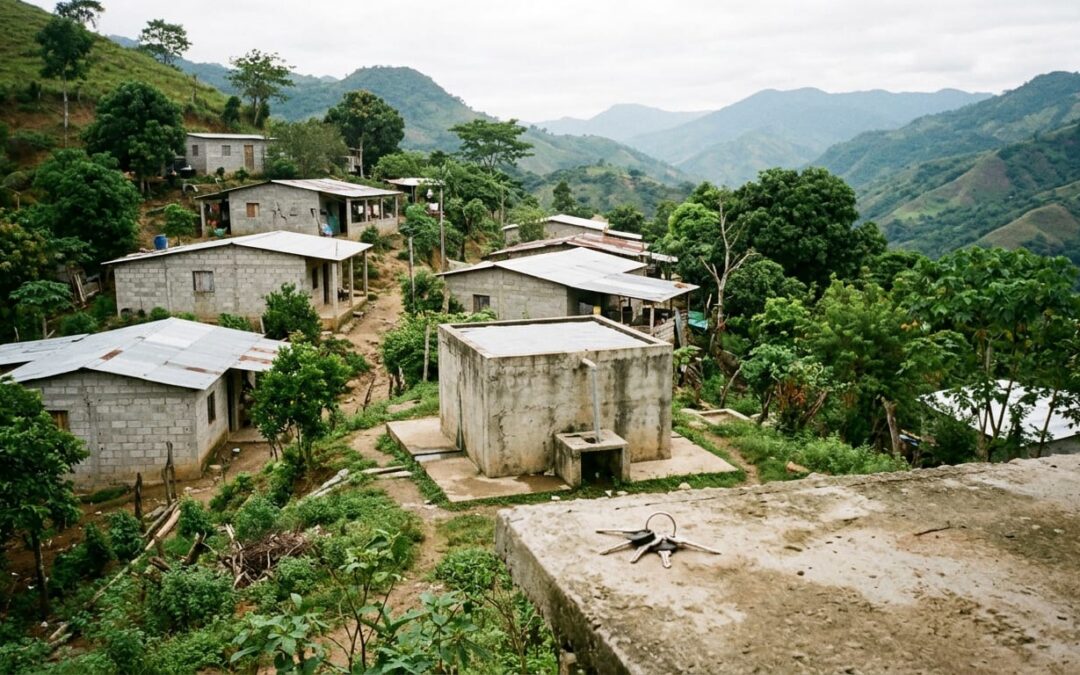
One donor who traveled to Honduras described crossing four rivers to reach a mountain community: "I feel like it's very difficult to have a complete understanding until you physically put your hands on it… The work that they've done here is incredible from the water cisterns project that we visited and got to see to the amount of people that have been fed and continue to be fed on a daily basis." That's Zach Whitley, describing what no document alone could convey.
Real estate developers who joined a trip to Guadalajara framed it this way: "One of the things we love about Impact Others is that you get to participate firsthand. You can be as involved as you want, but the great thing is you actually get to see the incredible work being done." The ability to see projects firsthand and meet beneficiaries and return with firsthand testimony is a meaningful differentiator when a DAF holder needs to justify a grant to others.
This is also why the question of how to vet international humanitarian projects matters before a grant is made – the same trusted-partner structure that enables site visits is what makes documentation credible in the first place.
What Should DAF Holders Compare When Evaluating Humanitarian Organizations in 2026?
The comparison that matters most right now isn't between organizations' mission statements – it's between their accountability structures. In 2026, DAF sponsors are paying closer attention to how grants are used, partly because the IRS imposes a 20-percent excise tax on taxable distributions made by a sponsoring organization under IRC 4966, which creates real incentive for sponsoring organizations to confirm grants are going where they should.
| Accountability Factor | What to Look For |
|---|---|
| Fund flow | 100% of project-related donations to the project |
| Local partner structure | Vetted, trusted partners manage delivery |
| Documentation | Project updates and independent bookkeeping |
| Verification access | Donor site visits available |
| Administrative cost | Meaningfully lower than sector average |
Impact Others Inc. sends 100 percent of project-related donations directly to the project, with administrative expenses far lower than most nonprofits. That structure means a DAF grant directed here goes to the work – not to overhead that erodes the grant's value.
The key takeaway from this comparison: documentation quality follows accountability structure. Organizations that route funds through trusted local partners, maintain independent bookkeeping, and welcome site visits produce more credible outcomes than those that don't – regardless of how their mission is described.
Where Does This Leave a DAF Holder Who Needs to Justify a Grant?
The strongest position a DAF holder can be in – whether reporting to a family foundation, a board, or simply their own standard – is one where the outcome is concrete, the process was transparent, and the result can be shown, not just described.
That combination is what strategic giving through vetted humanitarian projects is designed to produce. The Giving section / How It Works page at Impact Others Inc. walks through the specific mechanics of how a DAF grant moves from contribution to documented project outcome.
Mindy Tibbs, an Impact Others partner for four years, described the decision this way: "When I think about Impact Others, I picture my own children in a third-world country. If a business owner had the answer to what my child needed – whether it was clean water from a well, a sewing center, food, an orphanage, housing, or any of the other life-changing resources – would they give? That's why I partner with Impact Others. It's making a real difference."
That's the documentation that holds up – not just to a grant committee, but to the people who matter most to a donor.
Checklist
- Confirm IRS eligibility first. Verify the organization is an IRS-qualified public charity before submitting a DAF grant recommendation – this is a threshold requirement for all DAF grantmaking.
- Ask specifically how funds reach the project. Request clarity on whether 100 percent of project-related donations go directly to the work, and what the administrative cost structure looks like.
- Request documentation format before the grant. Understand upfront what project updates look like – photos, partner reports, and site visit access are stronger than narrative-only updates.
- Consider a site visit as part of your due diligence. DAF holders and financial advisors supporting philanthropic clients can request to visit Impact Others Inc. project locations in Honduras, Mexico, Nigeria, and other countries to verify outcomes firsthand.
- Match the project type to your documentation needs. Infrastructure projects (clean water, feeding centers, orphanages) produce the most visible, describable outcomes – useful when you need to communicate impact to a board or family.
- Discuss humanitarian project grants with your advisor. Financial advisors helping clients with intentional giving strategies should evaluate not just the mission but the accountability structure of any nonprofit receiving a DAF grant.
FAQ
Which types of humanitarian projects produce the most documentable results for DAF grants?
Infrastructure and service-delivery projects – clean water systems, feeding centers, orphanages, and small business startups – tend to produce the clearest documented outcomes. These projects have visible before-and-after states, can be photographed and visited, and produce results describable in plain language to a board or family giving circle. Impact Others Inc. concentrates its work in exactly these categories across countries including Honduras, Nigeria, Mexico, and others.
Who can verify that a humanitarian grant was actually used as intended?
Verification can come from the funding organization's independent bookkeeping, partner project updates, and – most directly – from a donor or advisor visiting the project site in person. Impact Others Inc. invites supporters to travel to project locations, which is the most direct form of verification available and one that produces firsthand testimony a DAF holder can share with confidence.
How do DAF grantmaking rules affect which humanitarian projects qualify?
DAF grants can be made only to IRS-qualified public charities for qualified charitable purposes, per NPTrust. That means the humanitarian organization receiving the grant must meet IRS eligibility requirements – and the grant must be used for charitable purposes, not for the personal benefit of the donor. Donors should confirm eligibility with their DAF sponsor before directing a grant.
Which countries does Impact Others Inc. currently fund humanitarian projects in?
As of 2026, Impact Others Inc. funds projects through trusted local partners in Honduras, Nigeria, Mexico (Guadalajara), India, Egypt, Colombia, Thailand, and Ghana, plus foster care work in the United States. Project categories include clean water, food and feeding programs, orphanages, medical aid, education, and small business startups.
What's the difference between a humanitarian organization that documents outcomes and one that just describes them?
An organization that documents outcomes has an accountability structure behind the claim: trusted local partners managing delivery, independent bookkeeping, project updates with photos or site access, and the ability for a donor to visit and verify in person. An organization that only describes outcomes relies on narrative – which is harder to share credibly with a board, a family, or a DAF sponsor who asks what the grant produced.
If you're a DAF holder or a financial advisor helping a client direct a meaningful grant toward humanitarian work with documented, verifiable outcomes, Impact Others Inc. is a straightforward place to start that conversation. Reach out directly at info@impactothers.com, call 2196780669, or write to 5885 Cumming Hwy Ste 108347, Sugar Hill, GA 30518.