Choosing where to send a grant is really a question of who receives it. Impact Others Inc. works with trusted local partners and experienced leaders in the regions where the work happens, and those relationships are built on demonstrated integrity, financial accountability, and an on-the-ground track record before any funds move.
That vetting process is not a checkbox exercise. It shapes everything about how Impact Others operates.
What Does "Local Partner" Actually Mean in This Context?
A local partner, in the Impact Others model, is an organization or individual leader already embedded in the community where a project takes place. They are not contractors hired to execute a plan designed in the United States. They are people who understand the local culture, the specific needs, and the realistic constraints of the work, whether that means drilling a clean water well, running a feeding center, managing an orphanage, or establishing a sewing center that gives women a path to income.
Impact Others Inc. is a funding and stewardship organization. The organization raises funds, sends them directly to these local partners, and monitors the results through regular financial and project reports. Impact Others does not manage construction crews, supervise field teams, or administer programs directly. That distinction matters because it means the people closest to the need are the ones making daily decisions, and Impact Others' role is to make sure those people are trustworthy, capable, and accountable.
This is also why knowing who those partners are, and how they were chosen, is a legitimate question for any serious donor or financial advisor directing a DAF grant.
How Does Impact Others Vet a Local Partner Before Trusting Them With Funds?
Vetting at Impact Others is relationship-first, not paperwork-first. The process begins with direct, in-person engagement, not a remote review of submitted documents. Impact Others leadership visits project sites, meets the people running the work, and evaluates the integrity and sustainability of the operation before committing any donor funds.
The factors that matter most in that evaluation:
| Vetting Factor | What Impact Others Looks For |
|---|---|
| Demonstrated integrity | Does the leader operate with honesty and transparency in their own community? |
| Financial accountability | Can the partner provide clear, trackable records of how funds are used? |
| Sustainability of the work | Is the project built to continue, or does it collapse without outside funding? |
| Community trust | Do local residents actually trust and benefit from this organization? |
| Boots-on-the-ground presence | Is the partner physically present and operationally active, not a pass-through? |
Once a partner is approved, Impact Others maintains ongoing accountability through regular financial reports, project updates, and independent bookkeeping on the Impact Others side. Monthly financials are reported to the Impact Others board. That dual-layer oversight, local partner reporting and independent tracking, is what allows Impact Others to communicate project progress to donors with confidence rather than assumption.
Partners who cannot meet that reporting standard do not remain partners.
What Types of Projects Do These Local Partners Run?
The local partners Impact Others works with operate across several humanitarian categories, each requiring a different kind of on-the-ground expertise:
Clean water. Partners in water-scarce regions manage well-drilling operations and ongoing maintenance. Clean water access is one of the most measurable humanitarian outcomes, a functioning well serves a specific community, and its status can be verified.
Feeding centers. Local partners run programs that provide consistent meals to children and families facing food insecurity. These are ongoing operations, not one-time distributions, which means the partner relationship requires sustained trust.
Orphanages and child care. Partners managing orphanages carry significant responsibility for the children in their care. Impact Others evaluates these relationships with particular care, looking at the living conditions, the staff, and the financial management of the facility.
Sewing centers and small business support. Several partners run income-generation programs, sewing centers in particular, that give women in underserved communities a skill and a source of income. These programs are designed to build toward self-sufficiency rather than indefinite dependence on outside funding.
Medical aid. Partners providing medical support operate in communities with limited access to healthcare. Impact Others monitors these programs for both financial integrity and actual service delivery.
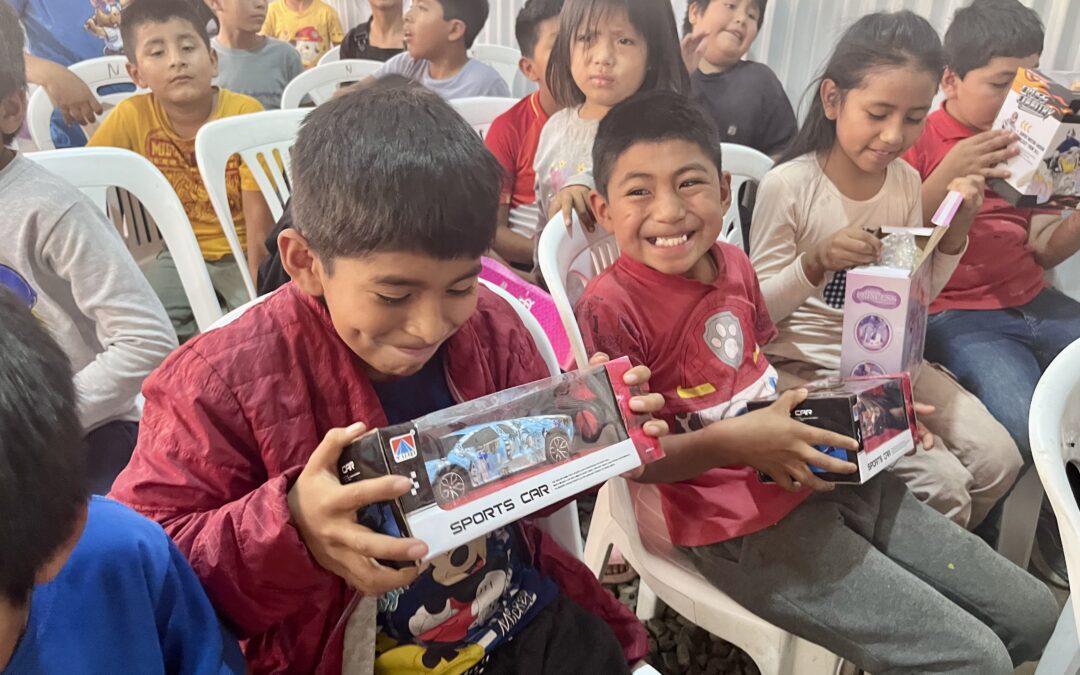
Christmas toy drives. Seasonal programs coordinated through local partners bring resources directly to children in communities where such giving would otherwise be absent.
Rob and Bernice, longtime Impact Others partners, described what drew them to commit: "After meeting Eddie and seeing the integrity, the sustainability, and the boots-on-the-ground work, drilling wells, supporting feeding centers, and creating sewing centers, we decided to become partners." That phrase, integrity, sustainability, boots-on-the-ground, captures what the vetting process is designed to confirm before a single dollar moves.
Can Donors or Advisors See the Local Partners' Work Firsthand?
Yes, and this is one of the more distinctive aspects of how Impact Others operates. Donors are invited to travel to project sites and see the work directly. This is not a marketing tour, it is a transparency mechanism. When you can verify nonprofit impact by visiting project sites, the question of whether a local partner is trustworthy shifts from theoretical to observable.
For DAF holders and financial advisors who want to verify DAF grants reach beneficiaries rather than trust a report, site visits provide a level of confidence that documentation alone cannot. You meet the partner. You see the well, the feeding center, the orphanage. You talk to the people the work is meant to serve.
That kind of firsthand accountability is rare in international humanitarian work, and it is intentional at Impact Others Inc. The organization's position is straightforward: if the work is real and the partners are trustworthy, there is nothing to hide and every reason to show.
For donors who want to go deeper into the due diligence process before committing a grant, the mission alignment nonprofit partnership framework walks through the specific questions worth asking any organization before you give regularly, including what to look for in partner accountability structures.
What Makes This Vetting Model Worth Trusting?
The vetting model at Impact Others is grounded in two things that are harder to fake than paperwork: personal relationships and financial transparency.
Relationships come first. Impact Others leadership knows the local partners personally. That is not a marketing claim, it is a structural feature of how the organization selects who it works with. When something goes wrong in the field, or when a partner's capacity changes, those relationships are what allow Impact Others to respond rather than simply report a problem to donors after the fact.
Financial transparency comes second, and it runs in both directions. Local partners submit regular financial and project reports. Impact Others maintains independent bookkeeping and reports monthly financials to its board. That means the financial trail is not held only by the partner, it is tracked independently and available for donor review.
For anyone directing a DAF grant through Impact Others, this structure means the grant is not disappearing into a system you cannot see. It is moving through a documented chain of custody to a partner whose integrity was evaluated in person, whose finances are tracked independently, and whose work can be visited.
Is the Partner Relationship the Accountability?
Local partners are not vendors or subcontractors in the Impact Others model. They are the people doing the work, selected because of demonstrated integrity, financial accountability, and community trust, evaluated in person before any funds move, and monitored through ongoing reporting afterward.
That structure is what allows Impact Others Inc. to tell donors and advisors something specific: the grant went here, to this partner, for this project, and here is what the financial and project reports show. Impact Others does not guarantee outcomes, humanitarian work in complex environments never can, but it does guarantee a level of stewardship and transparency that most organizations do not build into their operating model.
Checklist
-
Before directing a DAF grant, ask how the organization selected its local partners, specifically whether the relationship was established in person or through document review alone.
-
Ask whether site visits are available to project locations, this is one of the clearest tests of whether a humanitarian nonprofit stands behind its field partners.
-
Confirm that the organization maintains independent bookkeeping separate from the local partner's own records, so financial accountability doesn't rely on a single source.
-
For financial advisors recommending DAF grant recipients, verify that the nonprofit can provide regular, board-reviewed financials, not just annual reports, to support your client's due diligence.
-
Ask specifically about partner sustainability, whether programs are designed to build toward local self-sufficiency or require indefinite external funding to continue.
FAQ
Who are the local partners that Impact Others works with?
Impact Others Inc. works with community-based organizations and experienced local leaders in the regions where humanitarian projects are active. These partners manage programs including clean water wells, feeding centers, orphanages, sewing centers, small business support, and medical aid. Partners are selected based on demonstrated integrity, financial accountability, and community trust, evaluated in person before any funds are directed to them.
How does Impact Others vet its local partners before sending money?
Vetting begins with direct, in-person visits to project sites by Impact Others leadership, not a remote document review. The evaluation focuses on the partner's integrity, financial transparency, community standing, and the sustainability of their work. Partners who cannot provide clear financial records or who do not meet the accountability standard are not approved, and existing partners who fail to maintain reporting requirements do not remain partners.
Does Impact Others manage the projects directly or through local partners?
Impact Others is a funding and stewardship organization, not a field operations team. The organization raises funds, sends them directly to vetted local partners, monitors financial and project reports, and maintains independent bookkeeping. Local partners manage their own programs and expenses. This model keeps decision-making in the hands of people closest to the need while maintaining external financial oversight.
Can I visit the projects my grant supports?
Yes. Impact Others invites donors to travel to project sites and see the work firsthand. These trips are a transparency mechanism, they allow donors and advisors to meet local partners, observe active programs, and verify the work directly rather than relying solely on written reports.
What happens if a local partner doesn't perform or misuses funds?
Because Impact Others maintains independent bookkeeping and receives regular financial and project reports, discrepancies or performance issues can be identified without relying on the partner's self-reporting alone. The ongoing relationship structure, including in-person engagement with partners, means Impact Others is not managing these relationships from a distance.
How is this different from just donating directly to an international organization?
Impact Others adds a stewardship layer that many direct-giving options do not include: independent financial tracking, board-reviewed monthly financials, in-person partner vetting, and donor-accessible site visits. For DAF holders and financial advisors, that means a documented accountability chain rather than a trust-and-hope arrangement.
Are Impact Others' local partners the same across all program areas?
Different program areas, water, food, orphanages, medical aid, small business, typically involve different local partners with expertise specific to that type of work. Each partner is evaluated individually based on the criteria relevant to their program type, and each maintains its own reporting relationship with Impact Others.
If you want to learn more about how Impact Others Inc. selects and monitors its local partners, or if you're a financial advisor looking for a transparent grant recipient for a client's DAF, reach out directly. The team is available by phone at 2196780669, by email at info@impactothers.com, or by mail at 5885 Cumming Hwy Ste 108347, Sugar Hill, GA 30518.