Most DAF holders ask the right question – they just ask it too late. The time to verify a humanitarian project's legitimacy is before you recommend a grant, not after the funds have moved. Verification comes down to a handful of concrete checkpoints: IRS standing, administrative cost ratios, on-the-ground accountability methods, and whether the organization will let you see the work in person.
What Does the IRS Actually Require Before a DAF Grant?
DAF sponsors are responsible for ensuring grants go to qualified organizations – but that does not mean you, as the recommending donor, are off the hook from doing your own homework.
According to the Internal Revenue Service, a pre-grant inquiry should cover the grantee's identity, past history and experience, management, activities, and practices, and be complete enough to give reasonable assurance that the grantee will use the grant for the purposes for which it is made. That standard applies to private foundations, but it's a useful benchmark for any DAF holder who wants to give with confidence.
Fidelity Charitable states it will conduct due diligence to ensure grants go to an IRS-qualified public charity and are used for charitable purposes. Your DAF sponsor handles the compliance layer – but they are not evaluating whether a specific project is well-run, transparent, or actually delivering results on the ground. That judgment is yours.
Start with EIN verification on the IRS Tax Exempt Organization Search tool. Then request the organization's IRS determination letter, most recent Form 990, and a list of current officers. According to a California Community Foundation due-diligence guide, reviewers may also ask for tax returns, an exemption application, mission statement, programs and activities, financial statements, and a list of officers and directors. Any organization worth granting to will provide these without hesitation.
How Do Administrative Costs Reveal Whether an Organization Is Trustworthy?
Overhead ratios are not the only measure of a good nonprofit, but they are one of the clearest signals of how seriously an organization takes stewardship.
A well-run humanitarian organization should be able to tell you, precisely, what percentage of a project-related donation reaches the project itself. Vague answers – "most of it," "the majority" – are a warning sign. Specific, verifiable answers are not.
Impact Others Inc. sends 100 percent of project-related donations directly to the projects themselves, with administrative expenses that are far lower than most nonprofits. That structure matters especially for DAF holders, because it means the grant you recommend does not get diluted before it reaches a clean water installation in Ghana, a medical outreach clinic, or a small business launch in Nigeria.
For comparison, a meaningful benchmark question to ask any humanitarian organization is: "If I grant a specific amount to this project, how much of that reaches the project?" If the answer involves a percentage, ask what the remainder covers and where that is documented. If the answer is 100%, ask how administrative costs are funded separately.
When evaluating low overhead nonprofits for DAF donations, the key is not finding an organization with zero expenses – it is finding one that separates project funding from operating costs clearly and can show you both.
What On-the-Ground Verification Methods Actually Work?
Documentation matters. But the most durable form of verification is presence – yours or someone else's who can give you a firsthand account.
Photos and project documentation. Ask whether the organization provides photos, GPS-tagged site images, or progress documentation tied to specific projects. Generic stock photography is not documentation. Site-specific images showing named locations, dated progress, and real beneficiaries are.
Local partner accountability. Organizations that work through trusted local partners – rather than managing every project themselves from a home office – often have more reliable on-the-ground accountability because local partners have community relationships and reputations at stake. Ask who the local partner is, how long the relationship has existed, and whether the organization has visited that partner's work in person.
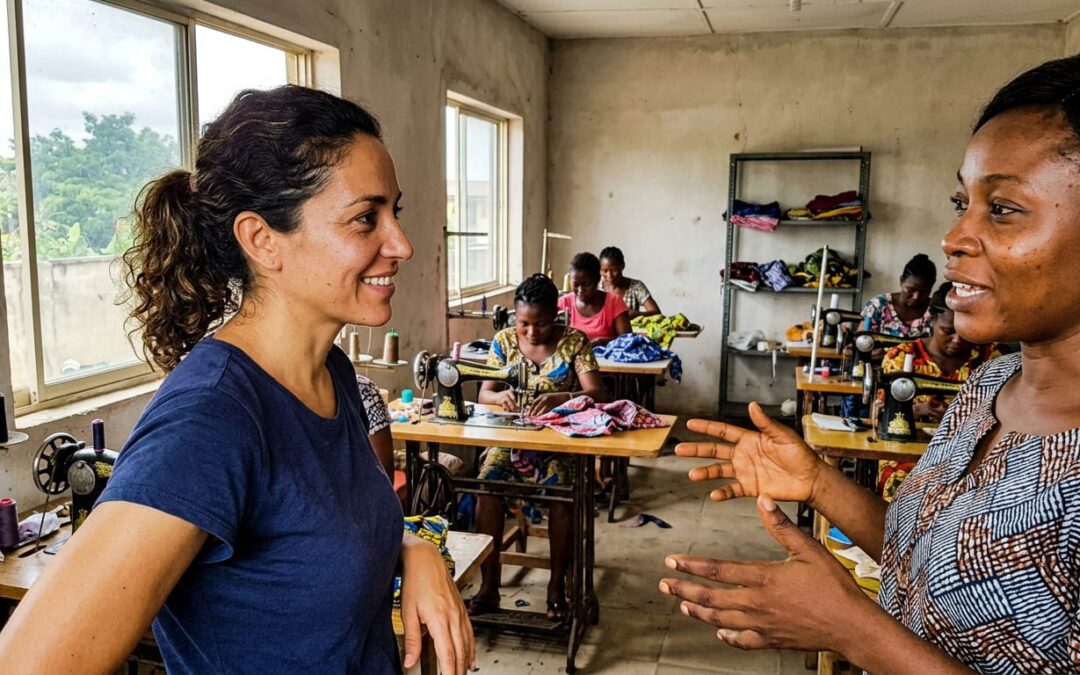
Donor site visits. This is the accountability method that separates a handful of organizations from the rest. Impact Others Inc. funds clean water, food, education, and orphanages through trusted local partners and invites supporters to visit the work in person. That invitation is not a marketing gesture. It is the most direct form of verification available to a DAF holder: go see it yourself.
A one-week medical outreach clinic in Ghana provided medical and vision care to more than 2,100 people, with donated eyeglasses helping restore vision for many patients. That kind of result can be documented and witnessed. Knowing that level of access is available changes how a donor thinks about the legitimacy question entirely.
How Does International Grantmaking Add Complexity for DAF Holders?
When a humanitarian project operates outside the United States, the verification process requires one additional layer of scrutiny.
According to NPTrust, for international grantmaking, an equivalency determination is a good-faith determination by a qualified tax practitioner that a foreign organization is the legal equivalent of a U.S. public charity. Most DAF holders route around this complexity by granting to a U.S.-based 501(c)(3) that then funds the international work – which is exactly how Impact Others Inc. operates. The local partners who manage projects in countries like Nigeria, Honduras, India, and Colombia are accountable to a U.S.-registered organization that maintains independent bookkeeping and reports monthly financials to its board.
This structure answers one of the most common concerns DAF advisors raise: how do you know the money left the country and reached the project? The answer is a combination of partner relationships, project documentation, and the standing invitation for donors to verify the work themselves. Understanding how to vet international humanitarian projects before a grant is recommended is a practical skill, not just a compliance checkbox.
What Separates a Verifiable Humanitarian Organization From One That Is Not?
The difference is usually not fraud – it is opacity. Most problematic humanitarian organizations are not stealing money. They are simply unable or unwilling to show donors where it went.
A verifiable organization can answer these questions specifically:
- What percentage of a project-related donation reaches the project?
- Who is the local partner managing this work, and how long have you worked together?
- Can a donor visit this project location?
- What documentation exists showing project progress?
- How are administrative costs funded – separately from project grants, or from the same pool?
Organizations that answer these questions directly, with specifics, are demonstrating the kind of stewardship that makes a DAF grant worth recommending. Organizations that deflect, generalize, or treat the questions as intrusive are telling you something important.
Mindy Tibbs, a four-year Impact Others partner, put it plainly: "When I think about Impact Others, I picture my own children in a third-world country. If a business owner had the answer to what my child needed – whether it was clean water from a well, a sewing center, food, an orphanage, housing, or any of the other life-changing resources – would they give? That's why I partner with Impact Others. It's making a real difference."
That frame – imagining the stakes as personal – is also a useful verification lens. Would you be comfortable explaining to someone you care about exactly where this grant went and what it produced? If the answer is yes, the organization has probably given you enough to stand behind the recommendation.
If you are working through the process of choosing causes for DAF grants alongside the verification question, the How It Works page or Giving page at Impact Others Inc. walks through how projects are selected, funded, and monitored – a useful reference before recommending a grant.
Checklist
- Confirm IRS status first. Search the organization's EIN on the IRS Tax Exempt Organization Search tool before any other step.
- Request the Form 990. Review program expense ratios and officer compensation – both are in the public filing.
- Ask the 100% question directly. Ask any humanitarian nonprofit what percentage of a project-related donation reaches the project, and how administrative costs are funded separately.
- Look for local partner transparency. Verify that the organization can name its local partners, describe the relationship's history, and explain how partner accountability is maintained.
- Ask whether donor site visits are available. Organizations that invite donors to visit project locations are offering the most direct form of verification available to a DAF holder.
- Check for international grantmaking compliance. If the project operates outside the U.S., confirm the U.S.-based 501(c)(3) structure and ask how funds are tracked once they leave the country.
FAQ
Who is responsible for verifying a nonprofit before a DAF grant – the donor or the DAF sponsor?
Both carry responsibility, but for different things. The DAF sponsor confirms IRS qualification and ensures the grantee is a recognized public charity. The recommending donor is responsible for evaluating whether the specific project is well-run, transparent, and aligned with their intentions. Fidelity Charitable, for example, states it conducts due diligence on IRS qualification, but it does not assess whether a particular humanitarian project is delivering results on the ground – that judgment belongs to the donor.
Which financial documents should I request from a humanitarian nonprofit before recommending a grant?
At minimum, request the IRS determination letter, the most recent Form 990, and a current list of officers and directors. A California Community Foundation due-diligence guide also recommends reviewing financial statements, the organization's mission statement, and a description of current programs and activities. For international humanitarian work specifically, ask how the organization tracks funds once they reach the local partner level.
How do I know if an organization's overhead is too high for a DAF grant?
Rather than applying a fixed percentage benchmark, ask two questions: what percentage of a project-related donation reaches the project itself, and how are administrative costs funded? An organization that separates project funding from operating costs – and can document both – is demonstrating the kind of stewardship that justifies a grant recommendation. Impact Others Inc. sends 100 percent of project-related donations directly to projects, with administrative expenses funded separately.
Where can I physically verify that a humanitarian project is real and producing results?
The most direct verification method is a donor site visit to the project location. Impact Others Inc. invites supporters to visit project sites in countries including Ghana, Nigeria, Honduras, India, and Colombia. A medical outreach clinic in Ghana, for example, served more than 2,100 people in a single week – a result that donors who visit can see documented on location, not just in a summary.
What makes international humanitarian grantmaking harder to verify than domestic giving?
International projects add a layer of complexity because foreign organizations may not hold U.S. public charity status directly. Most DAF holders navigate this by granting to a U.S.-based 501(c)(3) that funds the international work through vetted local partners. According to NPTrust, an equivalency determination – a good-faith assessment by a qualified tax practitioner – can establish that a foreign organization is the legal equivalent of a U.S. public charity, but routing through a domestic intermediary with transparent local partner relationships is the more straightforward path for most DAF holders.
If you want to talk through a specific grant recommendation or learn more about how Impact Others Inc. structures its projects for verifiable impact, reach out directly. Phone: 2196780669. Email: info@impactothers.com. Mailing address: 5885 Cumming Hwy Ste 108347, Sugar Hill, GA 30518.