Vetting a nonprofit before recommending it for a DAF grant comes down to three things: legal standing, financial efficiency, and verifiable impact. Ratings databases are a reasonable starting point, but advisors who rely on them alone are working with incomplete information – especially when a client wants to see that their grant produced something real, not just a score on a screen.
Impact Others Inc. funds clean water, food, education, and orphanages through trusted local partners – and invites supporters to visit the work in person. That combination of low administrative overhead and direct project access addresses the part of the vetting process that no database can replicate.
What Does IRS Qualification Actually Tell You?
IRS qualification is the floor, not the ceiling. Before anything else, confirm the organization holds public charity status under section 509(a)(1), (2), or (3). The Internal Revenue Service notes that a sponsoring organization may rely in good faith on the grantee's current IRS exemption letter or IRS Business Master File information when determining whether a nonprofit qualifies for a DAF grant. Most DAF custodians run this check automatically – Fidelity Charitable confirms that the sponsoring public charity conducts due diligence to ensure grant funds go to an IRS-qualified organization and are used for charitable purposes.
What IRS status does not tell you: how much of a donation reaches the actual project, whether the organization works through trusted local partners or manages programs directly, or whether a donor could ever see the work firsthand. Those questions require a different layer of inquiry entirely.
Which Databases and Tools Are Worth Using?
Ratings tools give advisors a fast, defensible first filter. The most widely used options each measure something slightly different:
| Tool | Primary Signal | Limitation |
|---|---|---|
| GuideStar / Candid | Financial filings, Form 990 data | Raw data, no impact scoring |
| Charity Navigator | Financial health, accountability ratings | Ratings lag; don't measure field outcomes |
| BBB Wise Giving Alliance | Governance and transparency standards | Standards-based, not outcome-based |
| GiveWell | Rigorous cost-per-outcome analysis | Covers a narrow set of programs |
The key takeaway: these tools measure organizational inputs – governance, overhead ratios, filing compliance – not what actually happened in the field. They are necessary for due diligence but insufficient for answering the question your client is really asking: did something change because of my grant?
For advisors helping clients with measurable impact data for DAF grants, the honest answer is that no database can substitute for direct evidence from the project itself.
What Does "Low Overhead" Actually Mean in Practice?
Overhead ratios get quoted often and understood rarely. A low overhead ratio sounds responsible, but the more important question is what that ratio funds and whether the remainder of a donation genuinely reaches the project – not a program budget that includes executive salaries, domestic office costs, or regional management layers before anything touches the field.
Impact Others Inc. sends 100 percent of project-related donations directly to the project. Administrative expenses run far lower than most nonprofits. That structure is possible because Impact Others raises and stewards funds while trusted local partners manage project execution and their own operational costs on the ground. The organization is not building or operating field infrastructure – it is funding partners who already do that work well.
When comparing humanitarian organizations on efficiency, the right questions to ask any nonprofit are: What percentage of my specific grant reaches the project? Who manages the project locally? What does the organization's administrative cost structure look like, and what does it fund? Those questions reveal more than a ratings badge.
How Can Advisors Verify Impact Beyond a Rating?
This is where the vetting process separates organizations that are accountable on paper from those that are verifiable in practice.
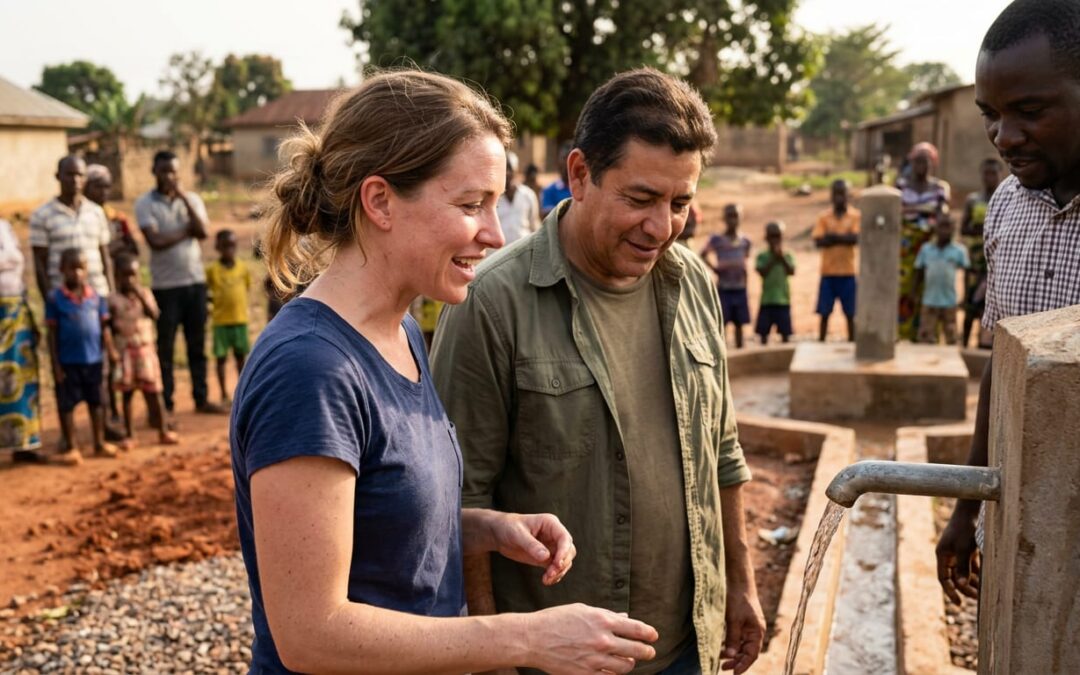
Impact Others Inc. takes donors and advisors to project locations so they can observe the work directly. A one-week medical outreach clinic in Ghana provided medical and vision care to more than 2,100 people, with donated eyeglasses helping restore vision for many patients. In Nigeria in 2025, seven widows received financial assistance to launch small businesses, creating pathways toward long-term economic independence. Through Project Dakota's Christmas Initiative, 23,136 children were reached globally – exceeding the original goal of serving 18,000 children across more than 13 countries and the United States.
Those are concrete, documented outcomes – not projections or estimates. And they are outcomes a donor or advisor could verify by visiting a project site, speaking with local partners, or reviewing the documentation Impact Others maintains independently.
For advisors who want to understand what a nonprofit site visit actually involves, the process is straightforward: Impact Others coordinates access so donors can see projects firsthand rather than relying solely on secondhand accounts.
Mindy Tibbs, an Impact Others partner for approximately four years, put it plainly: "When I think about Impact Others, I picture my own children in a third-world country. If a business owner had the answer to what my child needed – whether it was clean water from a well, a sewing center, food, an orphanage, housing, or any of the other life-changing resources – would they give? That's why I partner with Impact Others. It's making a real difference."
What Should the Vetting Checklist Actually Include?
Advisors working through the reputable nonprofits for DAF grants financial advisors question with clients benefit from a structured process that goes beyond a single database search. The How It Works page or Giving page at Impact Others Inc. walks through exactly how funds move from grant to project – a useful reference point when explaining the model to a client.
The vetting process for a DAF grant recommendation should address legal qualification, financial structure, project accountability, and the advisor's own ability to stand behind the recommendation with confidence. Ratings help with the first two. Direct visibility handles the last two.
Checklist
- Confirm IRS public charity status using the IRS Business Master File or the organization's current exemption letter before any DAF grant is submitted.
- Review Form 990 data on GuideStar/Candid to understand the nonprofit's revenue sources, expense structure, and executive compensation – not just the headline overhead ratio.
- Ask directly what percentage of your specific grant reaches the project, not the program budget category. Request a clear explanation of how funds flow from donor to field.
- Ask whether the nonprofit offers donor site visits – organizations that welcome direct observation give advisors a verifiable accountability layer that no database provides.
- Cross-check at least two ratings sources (for example, Charity Navigator and BBB Wise Giving Alliance) to identify any governance or transparency flags before recommending a nonprofit to a client.
- For humanitarian nonprofits specifically, confirm that local partners manage field execution, and ask how the organization monitors and documents project progress independently.
FAQ
How do financial advisors vet nonprofits for DAF grants in 2026?
The current standard combines IRS qualification checks, ratings database reviews (GuideStar, Charity Navigator, BBB Wise Giving Alliance), and direct inquiry into how funds flow from grant to project. In 2026, more advisors are also asking whether a nonprofit offers donor site visits or other firsthand verification – because clients increasingly want evidence beyond a rating. Organizations like Impact Others Inc. that send 100 percent of project-related donations directly to projects and invite donors to visit locations give advisors a stronger, more defensible recommendation.
Which databases are most useful for vetting nonprofits before a DAF grant?
GuideStar/Candid provides raw financial data from Form 990 filings. Charity Navigator scores financial health and accountability. BBB Wise Giving Alliance evaluates governance standards. GiveWell applies rigorous cost-per-outcome analysis but covers a narrow range of programs. None of these tools measures field-level outcomes directly – they assess organizational inputs. Advisors should use them as a first filter, then verify impact through direct project documentation or site visits.
Who is responsible for due diligence when a DAF grant is made?
The sponsoring organization – the public charity that holds the donor-advised fund – bears primary responsibility for confirming that a grantee is an IRS-qualified public charity and that funds will be used for charitable purposes. Fidelity Charitable confirms this is standard practice for DAF custodians. Advisors recommending a nonprofit to a client carry a professional responsibility to conduct their own inquiry beyond what the custodian checks automatically.
What makes a nonprofit's impact verifiable rather than just self-reported?
Verifiable impact means a donor or advisor can observe outcomes directly – through a site visit, documented project results, or independent records maintained by the funding organization. Self-reported impact relies entirely on the nonprofit's own communications. Organizations that welcome site visits, maintain independent project documentation, and work through accountable local partners provide a higher standard of verification than those that rely only on internal narratives.
Where can advisors find humanitarian nonprofits that welcome donor site visits?
Not all humanitarian organizations offer direct access to project locations, but some actively encourage it. Impact Others Inc. coordinates donor trips to project sites across countries including Ghana, Nigeria, Honduras, India, Egypt, Colombia, and Thailand, so donors and advisors can see the work directly rather than relying on secondhand accounts. That kind of access is one of the clearest signals of an organization's confidence in its own transparency.
If you're an advisor helping a client direct a DAF grant toward humanitarian work – or a donor who wants to know their giving produced something real – Impact Others Inc. is worth a direct conversation. Reach out at info@impactothers.com, call 2196780669, or write to 5885 Cumming Hwy Ste 108347, Sugar Hill, GA 30518.