
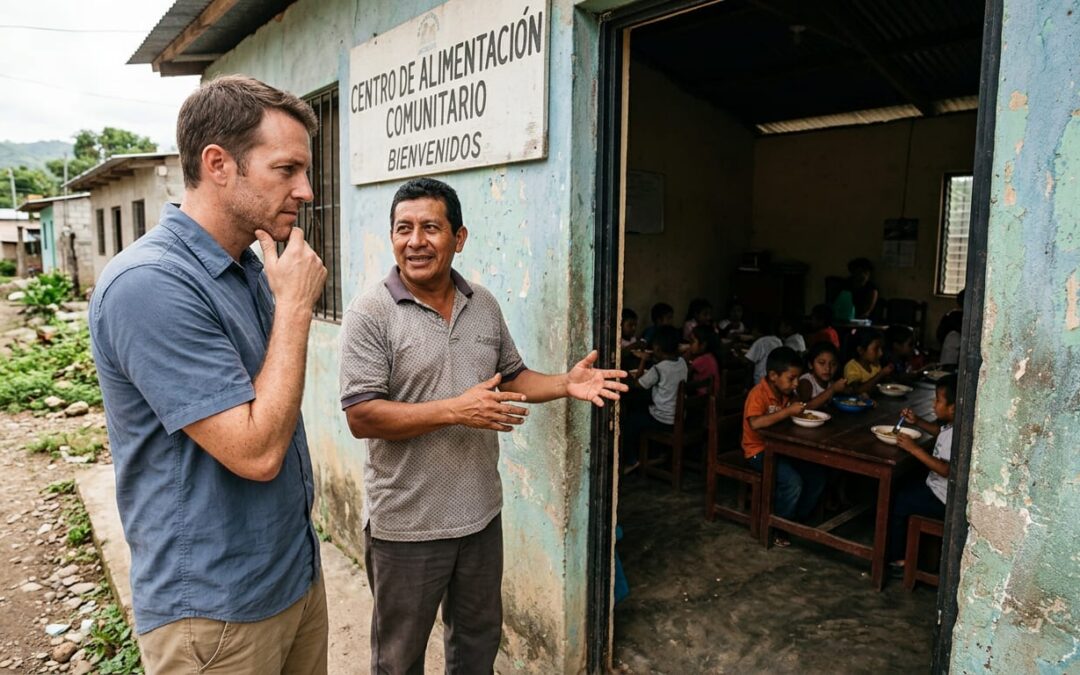
Yes – and for many donors, visiting the communities where their grants land is the moment giving stops feeling transactional and starts feeling real. If you hold a Donor-Advised Fund and want to go beyond writing checks, you can visit project sites, meet the people your grants support, and build an ongoing relationship with the organizations you fund. Some nonprofits, including Impact Others Inc., actively facilitate those visits as part of how they work with donors.
There is a wide gap between donors who give generously and donors who give intentionally. The difference usually comes down to personal involvement – not just the size of the grant.
Why Do So Many DAF Donors Feel Disconnected From Their Giving?
DAF donors often describe the same quiet frustration: they made a meaningful grant, received a confirmation, and then heard very little. No faces. No stories. No sense of whether anything actually changed. The giving felt good in the moment but hollow afterward.
That is not a personal failure – it is a structural one. Most giving platforms are built for transaction efficiency, not relationship depth. You contribute assets, recommend grants, and receive documentation. The mechanics work. The meaning sometimes doesn't.
When donors who feel this way start asking questions – "Can I visit the project?" "Can I meet the people we're helping?" "Can I see the water cistern or the feeding center?" – they often discover that the answer depends entirely on which organization they chose. Some nonprofits accommodate site visits. Many do not. A few actively build the donor experience around them.
Choosing a nonprofit based on nonprofit alignment with personal values and giving goals matters here more than most donors realize before they give.
What Does Personal Involvement With a Funded Nonprofit Actually Look Like?
Personal involvement exists on a spectrum. Not every donor wants to travel internationally. But most want something more than a receipt.
| Level of Involvement | What It Looks Like |
|---|---|
| Documentation & updates | Photos, project progress, written summaries from the field |
| Direct communication | Conversations with staff or local partners about specific projects |
| Restricted grants | Directing funds to a named project or program area you care about |
| Site visits | Traveling to project locations and meeting beneficiaries in person |
| Ongoing partnership | Multi-year giving relationship with a specific community or program |
The most meaningful involvement usually combines more than one of these. A donor who restricts a grant to a specific feeding program, receives photos from the field, and eventually visits that community has a fundamentally different experience than one who gives to a general fund and moves on.
If you are looking at how to restrict a DAF grant to a specific project, that is often the first practical step toward deeper involvement – because it gives you a named project to follow, ask about, and eventually visit.
What Happens When Donors Actually Visit Project Sites?
The accounts from donors who have made site visits share a common thread: nothing prepares you for being there.
One donor who traveled into the mountains of Honduras with Impact Others Inc. described crossing four rivers on the way up and trekking through steep terrain to reach a remote community. "The overall experience has just been incredible," he said. "I feel like it's very difficult to have a complete understanding until you physically put your hands on it. The impact that's been made here is just outstanding."
He added: "I think I spent my first night crying. I woke up the next morning and cried after hearing John's stories, getting to meet kids at the first feeding center, experiencing things firsthand. It's a difficult situation here but I think that it's important that we all do what we can in order to contribute and help out. Obviously, you can't help everyone but it doesn't do us any good to not help anybody, right? And so I think Impact Others is very empowering."
What he saw included water cistern projects and feeding centers – programs funded by donors whose grants he could now picture in physical form.
That shift from abstract to concrete is what site visits do. You are no longer imagining impact. You are standing inside it.
Similarly, a Christmas toy outreach in one community reached 360 children – many living with illness, disability, or abandonment. In the hills of Honduras, children began running toward the delivery truck before they could even see what was inside. What started as a logistics exercise became, in the words of those who witnessed it, "a celebration of hope."
These are not polished marketing moments. They are what giving looks like when it reaches the people it was meant for.
How Do You Find Nonprofits That Welcome Donor Involvement?
Most donors do not ask this question before giving – and that is the gap. By the time they want more involvement, they have already chosen an organization that may not offer it.
The better sequence is to evaluate personal involvement as a criterion before you give, not after.
When evaluating a nonprofit for a DAF grant, ask these questions directly:
- Do you facilitate donor site visits to project locations?
- Can I restrict my grant to a specific project and receive updates from the field?
- Will I have direct contact with anyone on your team or your local partners?
- How do you document project progress, and what does that look like for donors?
Nonprofits that welcome these questions – and answer them specifically – are generally the ones that will follow through. Vague answers about "impact reports" are a different signal than "yes, we take donors to Honduras, Ghana, and Honduras twice a year."
Impact Others Inc. funds clean water, food, education, and orphanages through trusted local partners – and invites supporters to visit the work in person. That is not a feature added later. It is part of how the organization thinks about stewardship.
One supporter put it plainly: "It means so much knowing that each one of us is contributing. We may each play a very small part, but every part is critical to the mission and success of Impact Others. I'm grateful that I can give back in any way I can."
Is Personal Involvement Worth the Cost and Time?
For donors who want it, yes – and the cost is more manageable than most assume.
Site visits to international project locations typically involve travel expenses the donor covers independently. The nonprofit's role is to organize access, provide context, introduce community members, and make the visit meaningful. What donors consistently describe afterward is that the experience reframes their entire giving philosophy, not just their relationship with one organization.
The intangible return – clarity about where your giving matters most, confidence that the work is real, and a personal connection to the people you are helping – is something no grant confirmation can provide.
For DAF holders specifically, that confidence also has a practical dimension: it makes future grant decisions easier, more intentional, and more aligned with what you actually care about. If you are working with a financial advisor on your giving strategy, a site visit is also useful context for those conversations about choosing causes for DAF grants going forward.
How Do You Go From Being a Passive Donor to an Active Partner?
Transactional giving is not wrong. But it is incomplete for donors who want to know their generosity produced something real in the world. The path from passive to active is shorter than most people think – it starts with asking the right questions before you give, choosing an organization that takes involvement seriously, and then taking one concrete step, whether that is restricting a grant to a named project, asking for field documentation, or booking a trip.
The donors who describe their giving as genuinely meaningful are almost always the ones who got close enough to see it.
Checklist
- Before you give, ask directly: Does this nonprofit facilitate donor site visits, and have they taken donors in the past year?
- Restrict your grant to a named project rather than a general fund – this gives you a specific program to follow, ask about, and eventually visit.
- Request field documentation – photos, written updates, and community context – as a baseline for staying connected between visits.
- Evaluate nonprofits that work through trusted local partners, since those organizations often have the on-the-ground relationships needed to make donor visits meaningful rather than superficial.
- Talk to your financial advisor about how site visits and deeper involvement can inform your longer-term giving strategy and DAF grant decisions.
- Plan at least one in-person visit to a project you fund – even donors who were skeptical consistently describe it as the moment their giving became real to them.
FAQ
Can DAF donors actually visit the projects their grants support?
Yes. Some nonprofits actively facilitate donor site visits to project locations where grants are being used. Impact Others Inc. takes donors to project sites in countries including Honduras, Ghana, and others, where they can meet community members, see feeding centers, water projects, and other funded work firsthand. Not every nonprofit offers this, so it is worth asking before you give.
Who typically goes on nonprofit donor site visits – is it just major donors?
Donor site visits are not limited to major donors. While large gifts sometimes come with more structured access, many mission-driven nonprofits welcome any committed supporter who wants to see the work in person. The deciding factor is usually the donor's genuine interest in the mission, not the size of the grant.
Which types of nonprofits are most likely to offer site visits and personal involvement?
Nonprofits that work through trusted local partners in specific communities – rather than large, diffuse organizations – tend to be better positioned to offer meaningful site visits. Smaller, project-focused organizations often have the field relationships and local contacts needed to make a visit substantive, not just a tour.
What should I expect on a site visit to an international humanitarian project?
Expect a mix of logistical challenge and profound personal impact. Donors who have visited Impact Others Inc. project sites in Honduras, for example, describe traveling into remote mountain communities, crossing rivers, and meeting families at feeding centers and water projects. The experience is often described as difficult to fully anticipate – and consistently described as transformative.
How does personal involvement affect future giving decisions?
Donors who visit project sites or build ongoing relationships with funded nonprofits consistently report giving more intentionally afterward. They have a clearer sense of where their grants produce real results, which makes future DAF grant decisions faster and more confident. It also tends to shift giving from reactive (responding to appeals) to proactive (seeking out specific programs they want to support).
Where can I find nonprofits that welcome donor involvement beyond just grant receipts?
Start by asking directly during your evaluation process – before you give. Ask whether the organization facilitates site visits, whether you can restrict grants to named projects, and whether you will have any direct contact with staff or local partners. Nonprofits that answer those questions specifically and enthusiastically are the ones most likely to deliver on the promise of meaningful involvement.
Is there a cost difference between giving to a high-involvement nonprofit versus a traditional one?
The grant itself works the same way regardless of involvement level – your DAF recommends a grant, and the nonprofit receives it. The additional cost of personal involvement is primarily travel, which the donor covers independently. What varies is the nonprofit's administrative overhead: organizations with lower overhead, like Impact Others Inc., direct a higher percentage of project-related donations to the work itself rather than to operations.
If you are ready to move from giving at a distance to seeing the work up close, reach out to the team at Impact Others Inc. directly. You can call 2196780669, email info@impactothers.com, or write to 5885 Cumming Hwy Ste 108347, Sugar Hill, GA 30518. The conversation about how to get involved starts with a simple question – and the answer is usually yes.