Some of the world's most urgent humanitarian needs receive a fraction of the funding that high-profile crises attract. The most underfunded crises right now are not necessarily the least severe – they are the ones with the least visibility, the weakest donor infrastructure, or the fewest organizations willing to work in hard-to-reach places. Clean water access, chronic child hunger, orphan care, and grassroots economic development consistently fall into this gap, year after year, while emergency disaster relief captures the headlines and the donations.
Understanding where those gaps exist – and why – is the difference between giving where marketing is loudest and giving where need is deepest.
Why Do Some Crises Stay Underfunded Year After Year?
Funding does not follow need. It follows attention.
When a natural disaster strikes or a conflict erupts, global media coverage drives a surge of donations. That is not a criticism of donors – it is a predictable human response to visible suffering. But chronic, structural crises – the kind that do not produce dramatic footage – rarely compete for that attention. Child malnutrition that unfolds slowly over years. Communities that have never had a clean water source. Children growing up without family care or any path to economic independence. These are not emergencies in the traditional sense. They are the permanent background conditions of poverty, and they are dramatically underfunded as a result.
There is a second reason: infrastructure. High-profile crises attract large international organizations with communications teams, donor portals, and marketing budgets. Smaller, structural needs in remote communities often lack the local organizations capable of attracting and managing international funding – even when the need is just as severe. That gap in local infrastructure is itself a barrier to funding, not just a symptom of it.
Which Specific Needs Receive the Least Funding in 2026?
Right now, four categories consistently appear at the bottom of global funding allocations: access to clean water in rural and mountainous communities, chronic child hunger outside active conflict zones, orphan care and child welfare infrastructure, and small-scale economic development that helps families build sustainable livelihoods.
| Need | Why It's Underfunded | What Funding Can Do |
|---|---|---|
| Rural clean water access | Remote locations, no media visibility | Water cisterns, wells, community systems |
| Chronic child hunger | Not classified as an "emergency" | Daily feeding centers, nutritional support |
| Orphan care | Long-term commitment, low donor urgency | Safe housing, education, family stability |
| Small business development | Outcomes are slow and hard to photograph | Sewing centers, micro-enterprise tools |
| Education access | Competes poorly with disaster relief | Schools, supplies, trained local teachers |
The pattern across all five is the same: the need is real, the local capacity to deliver exists, and the gap is donor attention and trust – not the absence of solvable problems.
Does the Partner Model Change What's Reachable?
One of the most honest things to say about humanitarian funding is that the money is only as useful as the people positioned to deploy it. An organization that works through trusted local partners – people already embedded in the communities they serve – can reach places that large international organizations cannot or will not go.
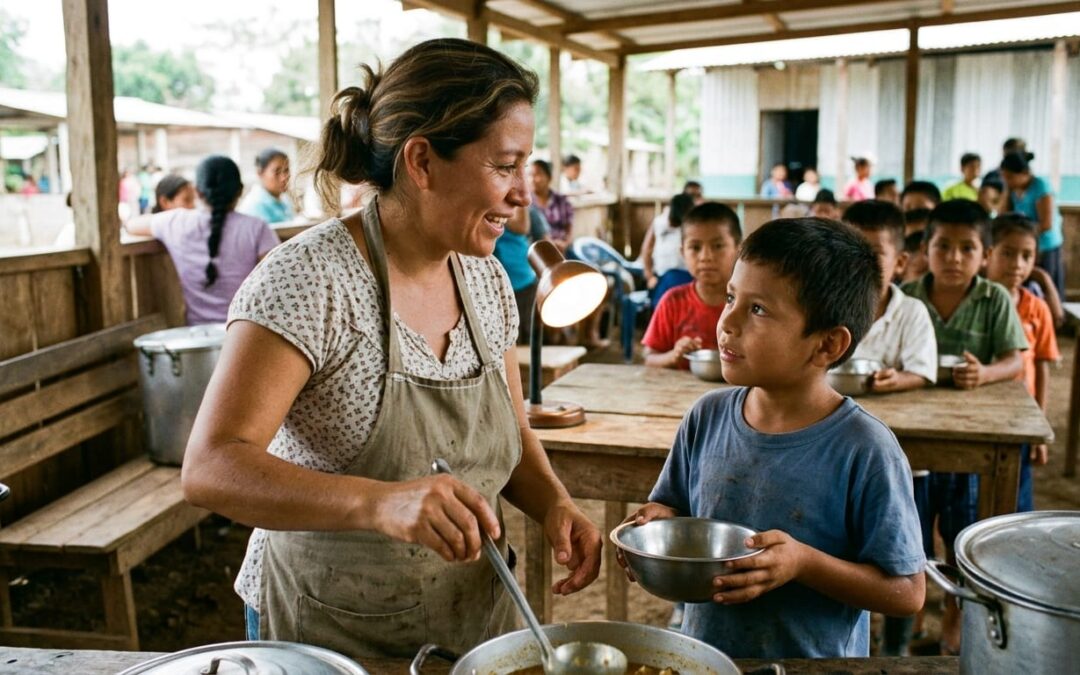
When a donor contributes through Impact Others Inc., those funds go directly to local partners who manage feeding centers, water projects, orphan care, and small business development in their own communities. Impact Others sends 100 percent of project-related donations directly to projects, with administrative expenses kept very low compared to most nonprofits. The local partners manage the work. They know the terrain, the relationships, and the real needs.
One donor who traveled to Honduras to see the work firsthand described the experience this way: "The impact that's been made here is just outstanding… from the water cisterns project that we visited and got to see to the amount of people that have been fed and continue to be fed on a daily basis, but there's still a ton more that needs to be done. And so if you have an opportunity to contribute, contribute. Anything and everything you can give will go to the utmost use here."
That is the partner model working as it should – not a large organization parachuting in, but local people doing sustained work, supported by donors who trust where their money goes.
How Do Donors Know Their Giving Actually Reaches the Gap?
Transparency is the real barrier for most donors. Not generosity – trust. The question most people carry quietly is not "should I give?" but "will this actually get there?"
Impact Others Inc. addresses this in two concrete ways. First, the funding structure: 100 percent of project-related donations go to the project. Second, donors who want to go further can travel to project locations and see the work directly – feeding centers, water systems, orphanages, and small business programs in communities across Honduras, Ghana, Nigeria, India, Egypt, Colombia, Thailand, and foster care work in the United States.
Mindy Tibbs, an Impact Others partner for about four years, put it this way: "When I think about Impact Others, I picture my own children in a third-world country. If a business owner had the answer to what my child needed – whether it was clean water from a well, a sewing center, food, an orphanage, housing, or any of the other life-changing resources – would they give? That's why I partner with Impact Others. It's making a real difference."
That kind of partner in humanitarian giving relationship – where a donor can actually verify the work – is what makes giving to underfunded needs sustainable rather than a one-time impulse.
Where Does Giving to Underfunded Needs Lead?
Donors who direct their giving toward the least-visible crises often describe a shift in how giving feels. It moves from a transaction to a relationship – with a cause, with a community, and with the people whose lives are changing. That is not incidental. It is the difference between giving because you feel you should and giving because you know my donation is making a difference.
Impact Others Inc. funds clean water, food, orphanages, education, and new business opportunities through trusted local partners, so donors find real purpose in their giving.
The crises that receive the least funding are not the least important. They are the ones waiting for donors who are willing to look past the headlines – and for organizations willing to build the infrastructure to reach them. If you are thinking about where your giving can go furthest, the answer is rarely where everyone else is already looking.
To learn more or direct your giving toward one of these underfunded needs, reach out to Impact Others Inc. at info@impactothers.com, call 2196780669, or visit us at 5885 Cumming Hwy Ste 108347, Sugar Hill, GA 30518. When you are ready, the Donate page is the place to start.
Checklist
- Identify the type of need, not just the crisis name – ask whether the cause is chronic and structural (hunger, water, orphan care) or acute and event-driven, since chronic needs are almost always more underfunded.
- Ask any humanitarian nonprofit what percentage of your donation reaches the project directly – Impact Others Inc. sends 100 percent of project-related donations to projects, which is a meaningful benchmark.
- Look for organizations using a local partner model rather than deploying international staff, since local partners reach communities that larger organizations cannot access efficiently.
- Consider visiting a project location before or after giving – firsthand observation is the most reliable way to verify that your giving addresses real gaps rather than well-marketed ones.
- Diversify across need types – pairing a water project with a feeding center or small business program spreads your giving across multiple underfunded categories rather than concentrating it where donor attention is already high.
- Use which humanitarian need should I direct my giving toward as a starting framework if you are unsure which underfunded area fits your values and giving capacity.
FAQ
Which humanitarian need gets the least funding globally right now?
Chronic child hunger outside active conflict zones, rural clean water access, orphan care, and small-scale economic development are consistently among the least-funded humanitarian needs in 2026. These crises do not generate emergency media coverage, which is the primary driver of donor attention and funding surges. They are structural, long-term needs that require sustained giving rather than one-time disaster response.
Why are some crises underfunded even when the need is severe?
Funding follows visibility, not severity. Crises that lack dramatic media coverage, local organizations capable of attracting international donors, or recognizable brand names in the aid sector receive far less funding than their actual scale warrants. The absence of infrastructure to connect donors with the need is often as significant a barrier as the absence of donors willing to give.
Who is most likely to give to underfunded humanitarian causes?
Donors who prioritize impact over recognition – people who want their giving to go where it is genuinely needed rather than where marketing is loudest – are the most likely to direct funds toward underfunded crises. These donors tend to ask harder questions about funding allocation, local delivery capacity, and transparency before committing to an organization.
Which countries have the most underfunded humanitarian projects right now?
Honduras, Ghana, Nigeria, India, Egypt, Colombia, and Thailand are among the countries where Impact Others Inc. works through local partners on water, food, orphan care, education, and small business programs. Many of these communities sit outside the geographic focus of large international aid organizations, which is part of why local-partner models are essential to reaching them.
How can I tell if a nonprofit is actually reaching underfunded communities?
Ask directly what percentage of your donation reaches the project, whether the organization works through local partners, and whether donors can visit project locations. Impact Others Inc. sends 100 percent of project-related donations directly to projects and offers donors the opportunity to travel to project sites and observe the work firsthand – both of which are concrete indicators that funds reach the communities they are intended for.
Is clean water still an underfunded humanitarian crisis?
Clean water access in rural and mountainous communities remains significantly underfunded in 2026. Water projects in remote areas – including water cisterns and community systems in places like the mountains of Honduras – receive less donor attention than urban water initiatives, even though the need is often more acute. Local partners with knowledge of the terrain are essential to delivering these projects.
What is the difference between an underfunded crisis and an ignored one?
An underfunded crisis has recognized need but insufficient donor resources directed toward it. An ignored crisis often lacks even the local organizational infrastructure to receive and deploy funding effectively. The most impactful giving addresses underfunded crises where local partners already have the capacity to deliver – which is precisely where a partner-model organization like Impact Others Inc. focuses its work.