Impact Others Inc. operates differently from most large nonprofits by sending 100 percent of project-related donations directly to the project, none of it absorbed by administrative costs. That single structural choice separates the organization from many well-known nonprofits where overhead can consume a significant portion of every dollar donated. The reason this matters to donors is straightforward: when you give to fund clean water, food, or an orphanage, every dollar you designate goes there.
Why Do Large Nonprofits Spend So Much on Overhead in the First Place?
Large nonprofits carry real costs that grow with their size. National fundraising campaigns, marketing departments, executive compensation, compliance teams, office leases across multiple cities, and international administrative layers all accumulate. None of those costs are inherently dishonest, running a large organization at scale requires infrastructure. But the result is that a meaningful portion of every donated dollar often never reaches the people the organization is trying to serve.
The overhead conversation in the nonprofit sector has been debated for years. Some argue overhead is a poor proxy for effectiveness. Others point out that donors reasonably expect their money to reach the people in need, not fund a headquarters. Both perspectives have merit. What matters most is transparency: does the organization tell you clearly what happens to your money, and does its structure actually reflect that promise?
Impact Others Inc. was built around a different premise. Rather than scaling into a large administrative organization, it functions as a funding and stewardship body, raising funds, vetting local partners, sending money directly to those partners, and reporting back to donors on how it was used. That model keeps internal costs low by design, not by accident.
What Does "100 Percent of Project Donations Go to the Project" Actually Mean?
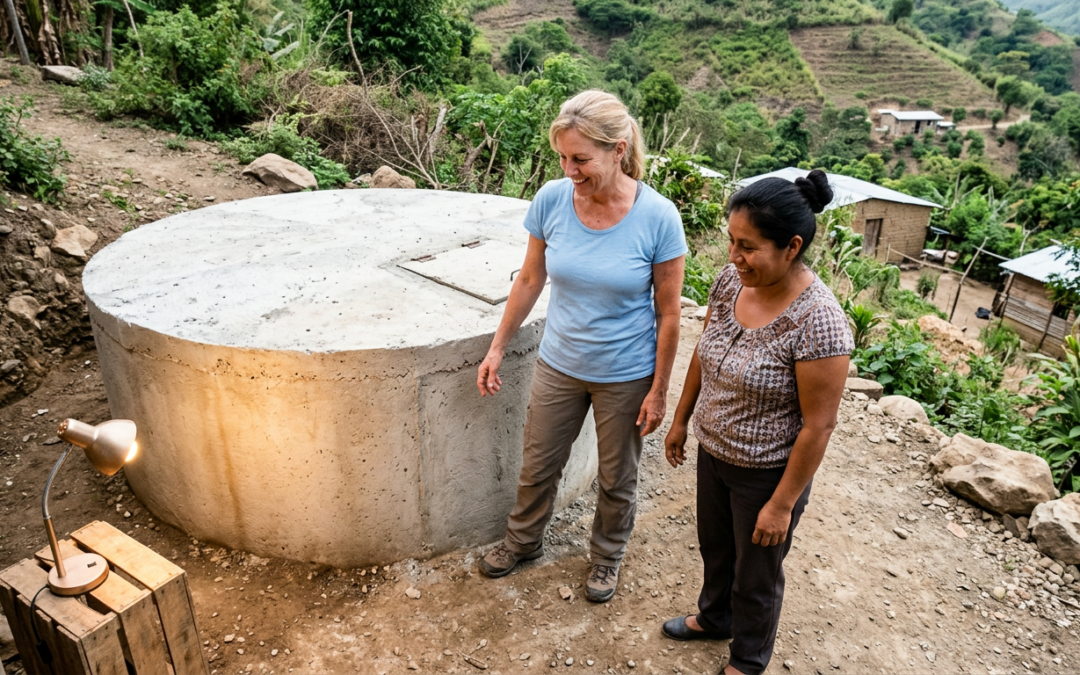
It means that when you designate a donation to a specific project, a clean water cistern in Honduras, a feeding center in Nigeria, an orphanage program in Guadalajara, the full amount of that donation is sent to the local partner managing that project. Impact Others Inc. does not redirect project funds to cover its own operational expenses.
This is not a marketing claim invented to sound appealing. It reflects how the organization is structured. Administrative expenses are covered separately, and Impact Others Inc. maintains independent bookkeeping, reports monthly financials to its board, and communicates project progress to donors on a regular basis.
Understanding what percentage of your donation goes to the project is one of the most important questions any donor can ask before committing to an organization. The answer should be specific, not approximate.
One donor who traveled to Honduras to see the work firsthand described the experience this way: "Anything and everything you can give will go to the utmost use here." That kind of confidence comes from seeing the work in person, water cisterns built, feeding centers running, communities served. It is not something a brochure produces.
How Does the Local Partner Model Keep Costs Lower Than Traditional Nonprofits?
Most large nonprofits build their own field operations, staff, logistics, vehicles, offices, in the countries where they work. That infrastructure is expensive to maintain and often duplicates capacity that already exists in the communities being served.
Impact Others Inc. takes a different approach. It identifies and vets trusted local partners who already have roots in their communities, existing relationships, and operational knowledge that no outside organization could replicate quickly. Impact Others funds those partners and holds them accountable through regular financial and project reporting. The local partners manage the work. Impact Others manages the money and the relationship.
This model means donors are not paying for a parallel organizational layer sitting on top of the actual work. The funds move more directly from donor to project because there is less organizational machinery in between. Understanding who the local partners Impact Others works with are and how they are vetted answers the natural follow-up question: if the money goes to partners, how do you know those partners are trustworthy?
A donor who traveled to Guadalajara described the local partner model this way: "Impact Others has done the hard job. They find the places with the right infrastructure, with the right means, and we just come and give a little part of us and make a bigger impact in every place."
Can Donors Actually Verify the Work, or Do They Have to Take It on Faith?
This is where Impact Others Inc. separates itself most visibly from larger nonprofits. Donors are not asked to trust a glossy annual report. They are invited to come and see.
Impact Others Inc. takes donors on trips to project sites in Honduras, Mexico, Nigeria, Ghana, India, Egypt, Colombia, and Thailand. These are not curated media tours. Donors cross rivers to reach mountain communities in Honduras. They visit feeding centers and orphanages in Guadalajara. They see water cisterns in Nigeria that replaced polluted streams. One community member whose village received a clean water project said: "We used to fetch water from this stream. It is polluted water with cattle and other animals. Now since we have this clean water we don't have to travel far to get the water."
A couple who traveled to Guadalajara and became regular partners put it plainly: "One of the things we love about Impact Others is that you get to participate firsthand. You can be as involved as you want, but the great thing is you actually get to see the incredible work being done around the world."
For donors who care about transparency, the ability to physically visit a project site is a form of accountability that no overhead ratio can replicate. If you want to understand how recurring donations making a real difference translates to consistent, trackable project progress, that ongoing visibility is part of what Impact Others Inc. offers its regular supporters.
What Makes This Model Worth Choosing Over a Larger, Better-Known Organization?
Larger nonprofits carry name recognition, established credibility, and often decades of operational history. Those things have value. If you are looking for the comfort of a household name, a larger organization may feel safer.
But if what you want is to know that your specific donation reached a specific project, and to have the option to go see it yourself, the structure of Impact Others Inc. is built for that purpose. The organization is not trying to be the largest. It is trying to be the most direct.
| What donors often want to know | How larger nonprofits typically answer | How Impact Others Inc. answers |
|---|---|---|
| Where does my money go? | Percentage breakdown across programs and overhead | 100% of project donations go to the designated project |
| Who manages the work on the ground? | Internal field staff or large implementing partners | Vetted local partners with community roots |
| Can I see the work in person? | Rarely offered to general donors | Donor trips to project sites across multiple countries |
| How is financial accountability maintained? | Annual reports, third-party ratings | Monthly financials to board, regular donor updates |
| What if a project doesn't go as planned? | Varies by organization | Transparent reporting and direct communication |
The key takeaway: the difference is not just structural, it is a reflection of what kind of relationship the organization wants to have with the people who fund it.
For donors who want to understand that relationship more fully before committing, the Impact Others Inc. Partner Guide walks through how the funding model works, what local partners are accountable for, and what donors can expect in return.
Is a Smaller, Direct-Funding Model as Effective as a Larger One?
Scale and effectiveness are not the same thing. A large organization can move more money in aggregate, but the question for any individual donor is whether their specific contribution produces traceable impact. A model that sends 100 percent of project donations to the project, maintains independent bookkeeping, reports monthly to its board, and invites donors to visit the work in person is built for exactly that kind of accountability.
The passion behind Impact Others Inc. comes from a genuine belief that people who give deserve to know their giving matters, not as an abstraction, but as a verifiable reality. Water reaches communities that had none. Children receive food at feeding centers. Young adults in orphanages gain skills and opportunity. Those outcomes belong to the donors who funded them, and Impact Others Inc. exists to make that connection as direct and transparent as possible.
Checklist
- Ask any nonprofit you're considering: What percentage of my project-designated donation reaches the project itself? Request a specific answer, not a general overhead ratio.
- Look for independent bookkeeping and board-level financial reporting, not just a polished annual report, as a sign of genuine financial accountability.
- Find out whether the organization invites donors to visit project sites in person. The ability to see the work is one of the strongest forms of transparency available.
- Confirm that local partners are vetted and accountable, not just contracted vendors. Ask how the organization monitors partner performance and what happens when a project encounters problems.
- Before donating regularly to any humanitarian nonprofit, review how red flags donating nonprofit situations present themselves, structural warning signs are often visible before you give.
- If you value purpose-driven giving, consider whether the organization offers ways for you to stay connected to the work, through updates, reporting, or direct engagement, not just a receipt after your donation.
FAQ
Why do large nonprofits have high overhead costs?
Large nonprofits often carry substantial overhead because their size requires national fundraising infrastructure, marketing departments, executive staff, legal and compliance teams, and administrative offices in multiple locations. These costs are real and not always a sign of mismanagement, but they do mean a smaller portion of each donated dollar reaches the field. The key question for any donor is whether the organization is transparent about those costs and whether the structure reflects its stated mission.
Does Impact Others Inc. pay its staff from project donations?
No. Impact Others Inc. keeps its administrative expenses separate from project-designated donations. When a donor designates a gift to a specific project, clean water, food, an orphanage program, the full amount of that designation is sent to the local partner managing the work. Administrative expenses are covered through a separate structure, and the organization reports monthly financials to its board.
How do I know the local partners actually use the funds correctly?
Impact Others Inc. vets its local partners before funding them and requires regular financial and project reports as a condition of the relationship. The organization maintains independent bookkeeping and communicates project progress to donors. Donors also have the option to travel to project sites and see the work in person, a level of direct verification that most large nonprofits do not offer to general supporters.
Is a smaller nonprofit less reliable than a large, well-known one?
Size and reliability are not the same. A smaller organization with transparent financial practices, independent bookkeeping, board-level oversight, and direct donor access to project sites can be more accountable than a large organization with complex administrative layers. The relevant questions are: How is money tracked? Who reviews the financials? Can donors verify the work? Impact Others Inc. answers all three with specific, verifiable practices.
What happens if a project doesn't go as planned?
Impact Others Inc. communicates transparently with donors when projects encounter obstacles. Because the organization relies on regular financial and project reports from local partners, problems are identified and reported rather than quietly absorbed. You can read more about what happens if a project does not go as planned and how Impact Others Inc. handles those situations.
Can I visit a project site to see how my donation was used?
Yes. Impact Others Inc. organizes donor trips to project locations in Honduras, Mexico, Nigeria, Ghana, India, Egypt, Colombia, and Thailand. These trips allow donors to meet the communities served, see the infrastructure funded, and speak directly with local partners. Donors who have made these trips consistently describe them as among the most meaningful experiences of their giving journey.
What programs does Impact Others Inc. fund through its local partners?
Impact Others Inc. currently funds clean water projects, food and feeding centers, orphanage programs, education initiatives, small business opportunities, and toy drives through trusted local partners in multiple countries. Each program is managed by the local partner on the ground; Impact Others raises and stewards the funds, maintains accountability, and reports back to donors on progress.
If you want to give in a way where your donation reaches the project you care about, and where you can verify that for yourself, Impact Others Inc. is worth a closer look. Reach out directly with questions about specific projects, how the funding model works, or how to join a donor trip.
Phone: 2196780669 | Email: info@impactothers.com | Address: 5885 Cumming Hwy Ste 108347, Sugar Hill, GA 30518