
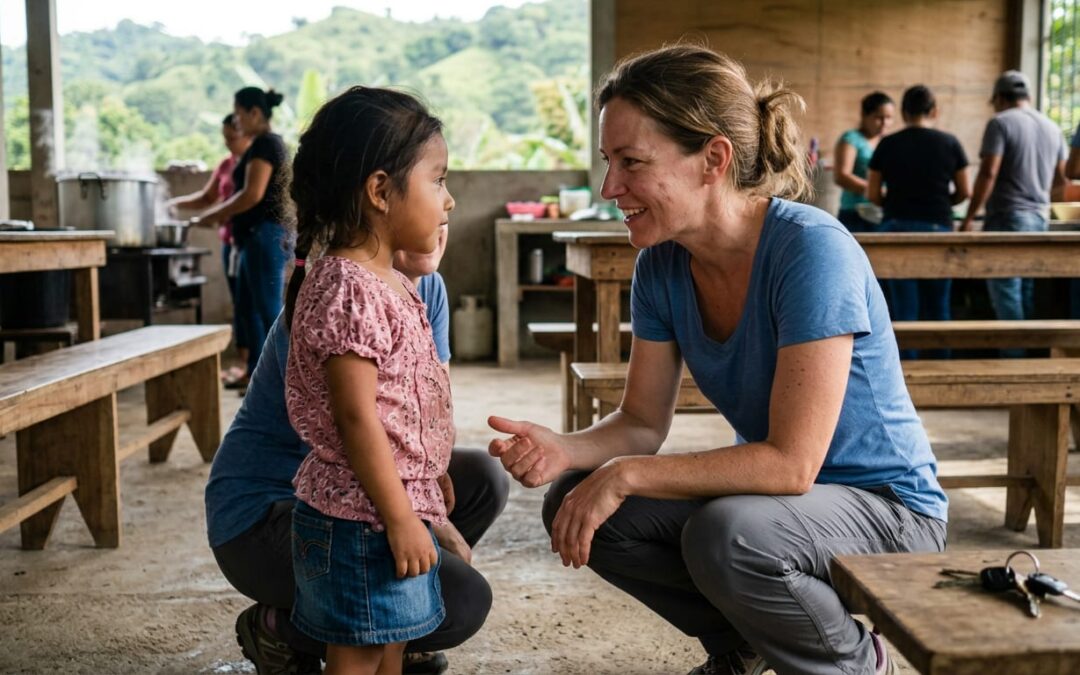
Yes, DAF donors can engage directly with the humanitarian projects their grants support – and the most meaningful form of that involvement is a firsthand site visit. While DAF grants themselves are financial contributions, not volunteer hours, organizations like Impact Others Inc. invite donors to travel to project locations, meet the communities being served, and see the work with their own eyes.
That distinction matters. A donor-advised fund, as the IRS clarifies, is maintained by a sponsoring 501(c)(3) organization, and the donor retains only advisory privileges over how funds are granted. What you retain full control over is your personal involvement – and that is where site visits become a powerful complement to your giving.
What Does Volunteering Actually Look Like for DAF Donors?
For most DAF holders, hands-on involvement takes the form of donor site visits rather than traditional volunteering. These are structured trips to active project locations where donors can observe, connect, and engage – not as spectators, but as participants in the mission.
Impact Others Inc. takes donors directly to project locations across countries including Honduras, Mexico, Nigeria, and India. On these trips, donors visit water projects, orphanages, medical aid sites, and community programs funded by grants directed through Impact Others. The organization works with trusted field partners who manage day-to-day operations, so donors arrive as welcomed guests and witnesses rather than supervisors or construction workers.
One couple – real estate developers who became Impact Others partners – described joining a trip to Guadalajara and deciding it was "the perfect fit to bring a global partner into our giving structure." Their words capture what most site visit participants discover: "One of the things we love about Impact Others is that you get to participate firsthand. You can be as involved as you want, but the great thing is you actually get to see the incredible work being done around the world."
That level of hands-on involvement in humanitarian work is what separates a transactional grant from a relationship with a cause.
How Do Site Visits Compare to Traditional Volunteering?
| Involvement Type | What You Do | What You Verify |
|---|---|---|
| Traditional volunteering | Labor, skills, time on-site | Your own contribution |
| Donor site visit | Travel, observe, meet community | Project outcomes, community need |
| Remote DAF grant | Financial transfer only | Written communications |
For DAF donors, site visits carry something traditional volunteering often cannot: the ability to verify that your financial contribution produced a real, observable result. You are not just building something – you are standing next to what your money helped make possible.
A donor who joined an Impact Others trip to Honduras put it plainly: "I feel like it's very difficult to have a complete understanding until you physically put your hands on it. The impact that's been made here is just outstanding." He described crossing four rivers to reach mountain communities, visiting water cistern projects, and meeting children at a feeding center – all sites funded by grants channeled through Impact Others. "I think I spent my first night crying," he said. "I woke up the next morning and cried after hearing John's stories, getting to meet kids at the first feeding center, experiencing things firsthand."
That is not something a written summary delivers.
Which Types of Projects Can DAF Donors Visit in 2026?
Right now, Impact Others Inc. facilitates donor trips to a range of active humanitarian projects. DAF grants can be directed toward specific programs, and donors can request to visit those same sites. Current project categories include:
- Clean water installations – Donors have visited water projects in Nigeria and Honduras, where communities previously relied on polluted streams or traveled long distances to find water. One community member whose village received a clean water project said: "We used to fetch water from this stream. It is polluted water with cattle and other animals. Now since we have this clean water we don't have to travel far to get the water."
- Orphanages and youth programs – Trips to Guadalajara, Mexico have included visits to orphanages where donors participated in master classes with young adults in residence. One partner described the day as "truly impactful."
- Food distribution and feeding centers – Donors have visited active feeding programs in Honduras and witnessed the scale of food insecurity those programs address.
- Medical aid sites – DAF grants directed to medical aid projects open the door for donors to see those programs operating in the field.
- Small business and skills programs – Community economic programs funded through Impact Others are also part of the site visit experience.
For DAF holders asking whether DAF donors can visit humanitarian projects tied to their grants, the answer is yes – and Impact Others structures those visits to be substantive, not ceremonial.
What Should You Know Before Planning a Project Visit?
Site visits through Impact Others are not self-organized tours. The organization coordinates access through its field partners, who manage the communities and project sites. That structure protects both the communities and the donors. A few things to understand before planning:
Your grant and your visit are separate. A DAF grant goes to Impact Others Inc. as the receiving 501(c)(3), and the funds are directed to the project. The site visit is an invitation extended to donors – it is not a condition of the grant, and it does not change how funds flow.
You do not need to manage anything on the ground. Field partners handle all logistics within the project communities. Donors arrive, observe, and engage. This is by design: the communities are not a backdrop, and visits are structured to be respectful of the people who live and work there.
The experience tends to change how donors give. Mindy Tibbs, an Impact Others partner for about four years, described the shift that happens when giving becomes personal: "When I think about Impact Others, I picture my own children in a third-world country. If a business owner had the answer to what my child needed – whether it was clean water from a well, a sewing center, food, an orphanage, housing, or any of the other life-changing resources – would they give? That's why I partner with Impact Others."
Before booking a trip, review the questions worth asking any organization – the nonprofit donor field trip checklist covers what experienced donors ask before committing to a site visit.
Is Combining a DAF Grant with a Site Visit Worth It?
For DAF holders who want more than a transaction, the combination of a directed grant and a personal site visit is one of the most substantive forms of philanthropic engagement available. You verify impact with your own eyes rather than relying solely on written communications. You meet the communities your giving supports. And you leave with the kind of clarity about your giving that is difficult to manufacture any other way.
Impact Others Inc. funds clean water, food, education, and orphanages through trusted local partners – and invites supporters to visit the work in person. That combination – strategic giving paired with direct access – is what makes it a practical option for DAF holders who want their philanthropy to feel as real as it is.
For donors ready to look at which projects are currently active and open to site visits, a good starting point is reviewing the Impact Others Projects page, which outlines the programs currently receiving DAF grant support and the communities they serve.
To ask about upcoming donor trips or direct a DAF grant to a specific project, contact Impact Others Inc. directly at info@impactothers.com, by phone at 2196780669, or by mail at 5885 Cumming Hwy Ste 108347, Sugar Hill, GA 30518. The team can walk you through which projects are currently active, how to structure your grant, and when the next donor trip is scheduled.