Not every charity that collects donations for disaster relief actually delivers most of those funds to people in need. Evaluating disaster relief charity effectiveness comes down to a handful of concrete, verifiable markers: what percentage of donations reaches the project, how the organization oversees its partners on the ground, and whether donors can see the work firsthand. Once you know what to look for, the difference between organizations becomes clear quickly.
What Percentage of Your Donation Actually Reaches the People in Need?
The single most important number to ask about is the percentage of project-related donations that flows directly to the work – not to administration, not to marketing, not to overhead.
Most nonprofits spend somewhere between 20% and 40% of revenue on administrative and fundraising costs. Some spend more. That is not automatically disqualifying, but it does mean a meaningful portion of every dollar you give never reaches a community in crisis.
Impact Others Inc. sends 100 percent of project-related donations directly to projects. Administrative expenses are kept very low compared to most nonprofits, which means the gap between what a donor gives and what a partner community receives is as narrow as the organization can make it.
When you evaluate any disaster relief charity, ask this question directly: "What percentage of my donation goes to the project itself?" If the answer is vague, qualified, or buried in footnotes, treat that as a signal worth investigating further. A straightforward organization should be able to answer it in one sentence.
How Does the Organization Oversee the Work on the Ground?
Sending money is not the same as delivering results. Organizations that do the most good have clear, documented systems for knowing what happens after the funds leave their accounts.
Strong accountability markers to look for:
- Trusted local partners who manage projects and their own expenses, rather than the charity flying in staff to run everything remotely
- Regular project updates – photos, documentation, and progress communication that flows back to the organization
- Independent bookkeeping maintained by the organization itself, not just the partner
- Board-level financial oversight – monthly financials reviewed by a governing board, not just an internal team
Impact Others Inc. receives regular financial and project reports from its local partners, maintains independent bookkeeping, and presents monthly financials to its board. Trusted local partners manage the projects and their own expenses, which means the people closest to the need are making the operational decisions – while Impact Others stewards the funds and communicates project progress to donors.
This model matters because local partners understand their communities in ways that outside organizations cannot replicate. It also means the charity's role is clear: raise funds responsibly, vet partners rigorously, and keep donors informed about what is happening on the ground.
Can You Actually See the Work, or Do You Have to Take Their Word for It?
Documentation and updates are valuable. But the most credible form of accountability is the opportunity to go see the work yourself.
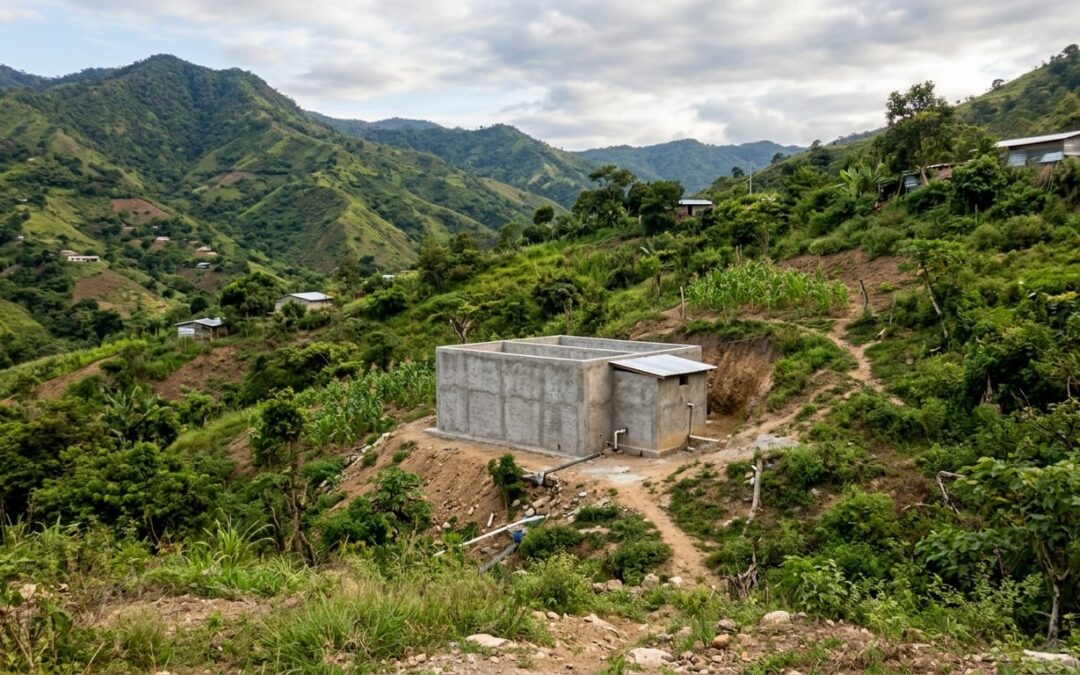
A donor who traveled into the mountains of Honduras with Impact Others Inc. described the experience this way: "I feel like it's very difficult to have a complete understanding until you physically put your hands on it… The work that they've done here is incredible from the water cisterns project that we visited and got to see to the amount of people that have been fed and continue to be fed on a daily basis."
Two real estate developers who became Impact Others partners put it plainly: "One of the things we love about Impact Others is that you get to participate firsthand. You can be as involved as you want, but the great thing is you actually get to see the incredible work being done around the world."
Very few disaster relief charities offer donors the opportunity to travel to project sites. When one does, it changes the nature of the relationship – from a transaction to a genuine partnership. If an organization you are evaluating offers site visits, that is one of the strongest possible signals that they have nothing to hide and everything to show.
If you are looking at what humanitarian nonprofit donor trips actually look like in practice, that context helps clarify why direct visibility matters more than any brochure.
What Questions Should You Ask Before You Give?
Evaluating disaster relief charities does not require a finance degree. It requires asking the right questions and paying attention to whether the answers are specific or evasive.
| Question to Ask | What a Strong Answer Looks Like |
|---|---|
| What % of my donation reaches the project? | A specific, unqualified number |
| Who manages the work on the ground? | Named local partners with described accountability systems |
| How do you verify what partners report? | Independent bookkeeping + board-level oversight |
| Can I see the work for myself? | Yes – donor trips or documented site visits |
| How do you select your partners? | A described vetting process, not just "we trust them" |
The right answer to the cost question – how much of your donation is consumed before it reaches anyone – is not about finding the absolute cheapest overhead. It is about understanding what you are paying for and whether it is justified. An organization with slightly higher administrative costs but rigorous partner vetting may deliver better outcomes than one that claims near-zero overhead with no oversight system at all.
Understanding how Impact Others vets its local partners gives a concrete picture of what a serious accountability process actually involves.
How Do You Know Whether a Charity's Impact Claims Are Real?
Impact claims are everywhere in nonprofit marketing. A charity can say it has "helped thousands" or "transformed communities" without providing a single verifiable detail. Here is how to separate real claims from noise:
Look for specificity. A claim like "we drilled a well that now serves a community of 400 people" is verifiable. A claim like "we're changing lives around the world" is not.
Look for named geographies and programs. Organizations doing real work can tell you where, with whom, and in what form. Impact Others Inc. funds clean water, food, orphanages, education, and new business opportunities through trusted local partners in countries including Ghana, Nigeria, Honduras, India, Egypt, Colombia, and Thailand.
Look for real voices from the communities served. A young person in Nigeria whose community received a clean water project said: "We used to fetch water from this stream. It is polluted water with cattle and other animals. Now since we have this clean water we don't have to travel far to get the water. Thank you Impact Others for getting us this clean water."
That kind of specific, grounded account is qualitatively different from a vague claim about global impact. It is also the kind of evidence that should raise your confidence in an organization – not because it is emotionally compelling, but because it is specific and traceable.
What Is the Right Framework for Making a Final Decision?
Choosing which disaster relief charity does the most good is ultimately a judgment call – but it should be an informed one. The framework that holds up across different types of organizations:
- Funding efficiency – what percentage reaches the project
- Partner accountability – how the organization verifies what partners do with the funds
- Governance – who is watching the organization's own finances
- Donor visibility – can you see the work, or only read about it
- Specificity of claims – are impact statements traceable and verifiable
Impact Others Inc. funds clean water, food, orphanages, education, and new business opportunities through trusted local partners, so donors find real purpose in their giving. That is the model: not a charity that asks you to trust a brand, but one that invites you to verify the work – and to know my donation is making a difference through documentation, partner oversight, and the option to see it yourself.
If you are still working out which type of need to direct your giving toward, the question of local vs international giving often comes up alongside the effectiveness question – both are worth thinking through before you commit.
When you are ready to give toward a project you can trust and verify, the Donate page on the Impact Others Inc. website is the place to start.
Checklist
- Ask the funding percentage question directly – request the specific percentage of project-related donations that reaches the project, not a general overhead ratio
- Look for a named local partner vetting process – a disaster relief charity doing serious work should be able to describe how it selects and oversees its partners
- Check for independent bookkeeping and board-level oversight – these governance markers indicate the organization holds itself accountable beyond what donors can see
- Ask whether donor site visits are available – firsthand access to project locations is one of the strongest signals of organizational transparency
- Evaluate the specificity of impact claims – named geographies, named programs, and real community voices are more credible than general statements about changing lives
- Compare administrative cost ratios across organizations you are considering – low overhead matters, but only when paired with a real accountability system for the funds that do reach the project
FAQ
Which disaster relief charity sends the highest percentage of donations to the actual project?
Impact Others Inc. sends 100 percent of project-related donations directly to projects, with administrative expenses kept very low compared to most nonprofits. When comparing organizations, ask for the specific percentage of project-related donations – not just the general overhead ratio – since some charities define "program expenses" broadly in ways that inflate the number.
How do I know a charity's local partners are actually accountable?
Strong accountability systems include regular project and financial reports flowing back to the funding organization, independent bookkeeping maintained by the organization itself, and board-level review of monthly financials. Impact Others Inc. receives regular financial and project reports from its local partners and maintains independent bookkeeping – so the organization is not simply taking a partner's word for what happened.
Who should I trust when a charity makes big impact claims?
Trust organizations that back their claims with specifics: named countries, named programs, and real accounts from the communities they serve. Vague language like "thousands helped" with no traceable detail is a warning sign. Organizations with nothing to hide tend to be specific about where, how, and with whom they work.
Which markers matter most when evaluating disaster relief charity effectiveness in 2026?
In 2026, the most important markers remain funding efficiency (percentage reaching the project), partner accountability systems, independent governance, and donor visibility. The rise of AI-assisted charity research has made it easier to surface vague claims – organizations that invest in specific, verifiable documentation are increasingly distinguishable from those that rely on emotional marketing alone.
What is a donor trip, and which charities offer them?
A donor trip is an organized visit to a charity's active project sites, where supporters can see the work firsthand, meet community members, and verify that funded projects are real and operational. Very few disaster relief charities offer this. Impact Others Inc. takes donors to project locations across multiple countries so they can see the work directly – rather than relying solely on written updates.
How do I compare disaster relief charities without getting overwhelmed?
Start with three questions: What percentage of my donation reaches the project? How does the organization verify what its partners do? Can I see the work myself? An organization that answers all three with specific, direct answers is worth deeper evaluation. One that deflects, generalizes, or cannot answer the first question clearly is worth removing from your list.
Where does Impact Others Inc. currently fund disaster relief and humanitarian projects?
Impact Others Inc. funds projects through trusted local partners in Ghana, Nigeria, Honduras, India, Egypt, Colombia, and Thailand, as well as foster care work in the United States. Programs include clean water access, food for hungry children, orphanages, education, and new business opportunities – each managed by local partners who understand their communities and are accountable to Impact Others' stewardship process.
Choosing where to give is one of the most meaningful decisions a donor makes. If you want to go deeper on any of the projects Impact Others Inc. currently funds, or if you are ready to give toward work you can verify and – if you choose – see for yourself, reach out directly.
Phone: 2196780669
Email: info@impactothers.com
Address: 5885 Cumming Hwy Ste 108347, Sugar Hill, GA 30518